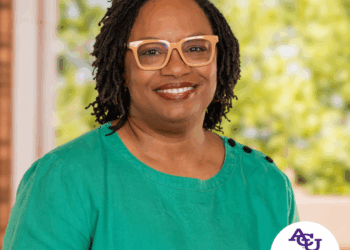
Phonslyn Tity Turner, who turns 17 this month, has never known the horror of war.
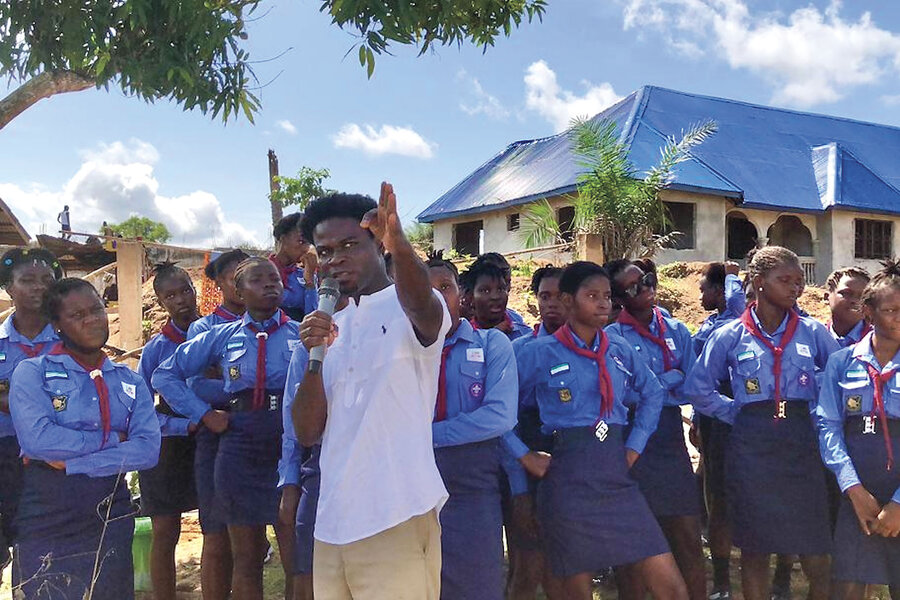
Her country, Sierra Leone, has settled into an uneasy peace two decades after its brutal, protracted civil conflict killed more than 50,000 people. She did not even understand why that war happened until a team led by Joseph Ben Kaifala, founder of the Center for Memory and Reparations, visited her school four years ago and explained why this rising generation must protect peace.
“Getting to know that most of the fighters were little children – like, child soldiers – was actually shocking for me,” Phonslyn said from Lungi, a coastal town north of the capital, Freetown, during a video call. Mr. Kaifala’s team “taught us that we should have mutual understanding. … Now, I talk to people in my community and enlighten them about what I have learned in school about the war.”
Why We Wrote This
In addition to identifying and protecting mass graves, the center that Joseph Ben Kaifala founded elicits pledges from young people to never again allow or participate in war. “The idea of forgetting that the civil war happened to us is the most appalling statement that I have ever heard in postconflict Sierra Leone,” he says.
In a country under pressure to move on from its violent past, Mr. Kaifala believes remembering war is vital to preventing its return.
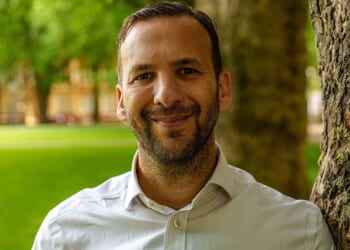
As a child, Mr. Kaifala lost his father after the family fled Sierra Leone’s civil war, which racked the country from 1991 to 2002. He survived another war after fleeing to neighboring Liberia, went on to study on scholarship in Norway and the United States, and eventually returned to Sierra Leone to launch educational initiatives such as the Center for Memory and Reparations. In addition to identifying and protecting mass graves, the center elicits pledges from young people to never again allow or participate in war.
“It is always important for humans to connect with one another because when you know each other’s story, you are less likely to harm one another,” Mr. Kaifala told Innocent Eteng, a Monitor contributor based in Nigeria, during a video interview in January.

Here is a transcript of that interview, condensed and edited for clarity.
Q: How do you promote peace in the next generation?
To promote peace in a generation that has not known war is to teach them their history. It is to show them that their country had gone wrong because it abandoned certain values and principles. That is why the [postwar] Truth and Reconciliation Commission started off by describing where we went wrong as a country. And then they listed all of the errors that we have committed, from colonialism to corruption to violations of fundamental rights to bad governance.

Courtesy of Joseph Ben Kaifala
We keep saying children are the future leaders. In order to make them efficient leaders, we have to teach them their history – the good and the bad. Secondly, I always say conflict is a fracture or failure of fundamental values. Peace is just a collection of good values: forgiveness, tolerance, good neighborliness, generosity, honesty.
What we are also doing is to teach these values to the young generation of Sierra Leoneans, to make sure that they understand that community peace does not fall from the sky like manna from heaven.
Q: How do you talk to young people about peace so that it is age-appropriate?
When I was young, when our parents gave us an encyclopedia to read, we were excited. As a young boy, I listened to radio because my father listened. But you cannot expect Gen Zers to do these things. You know that Gen Z will spend their time on social media watching short videos.
We produce short videos on the civil war and its [postwar] transitional justice system. We also have a podcast, which is not very long, because one of the things about Gen Z is that their attention span is very limited. We have learned to meet them where they are.
We are currently building a civil war museum, and one of the things we are working on now is a children’s section, because we cannot tell this story to children the same way we tell it to adults. One of the things I have done is to create an avatar, which is a child who basically narrates the story of the civil war the way children would want to hear it and to see it.
Q: What questions do young people ask when you talk about your work?
Oftentimes, when we discuss the violence and destruction that took place in this country, young people now wonder how the country actually got to that point – especially when we tell them that most of the civil war was fought by children. They find it difficult comprehending that adults could arm children to fight their wars. That is a question that is difficult to answer beyond saying that we lost our way.
There are some schools where children want to know why other countries did not come to help us early enough, which also gives me the chance to emphasize that [the Economic Community of West African States, through its military wing, the ECOWAS Monitoring Group] was always with us. Our neighbors were our neighbors when we needed them the most.
Q: How does your work as chairman of Sierra Leone’s Monuments and Relics Commission translate to preserving history for the younger generation?
Monuments and relics are very important for teaching the younger generation their identity and the things we aspire to be as a people. When you honor a hero – for example, in Sierra Leone, we have a hero like Sengbe Pieh, who led the [1839] Amistad revolt – what we are telling young people is that courage is important.
Secondly, I mentioned earlier that our primary task at the center was to identify, map, and protect mass graves. The idea is to turn these mass graves into sites of conscience, as monumental places that remind the next generation of Sierra Leoneans that when we went wrong and abandoned our ways, this is the result.
Q: Sierra Leone has lived under pressure to move on after the civil war. What are the risks of a generation growing up without a clear understanding of that war?
One of the things I have been up against was the phrase that our crafty politicians introduced just after the conflict. The phrase is “Forgive and forget.”
The idea of forgetting that the civil war happened to us is the most appalling statement that I have ever heard in postconflict Sierra Leone. I often remind people that, sometimes, that phrase comes from a place of privilege. How does one forget that [one’s hands] were amputated? You were a farmer who can no longer farm? How do you forget that you were gang-raped? How do you forget that as a child, you were conscripted, and to prove your loyalty, you watched your entire family [get] burned to death?
I know that it is impossible to forget these things because the things I saw in both the Liberian and Sierra Leonean civil wars, I can never forget.