Mary Page Marlowe is a subtle, elliptical and affecting piece of work. Cyrano de Bergerac is straightforwardly a triumph
Director Matthew Warchus has assembled quite the array of talent to play the title role in Tracy Letts’s Mary Page Marlowe. Five-time Oscar nominee and making her UK stage debut is Susan Sarandon who plays Mary Page in her sixties. Oscar and Bafta nominee Andrea Riseborough, rising star Rosy McEwen, Eleanor Worthington-Cox (Britannia, The Enfield Haunting) and Alisha Weir, who appeared in the 2022 film adaptation of Roald Dahl’s Matilda (also directed by Warchus), play her variously from child to woman.
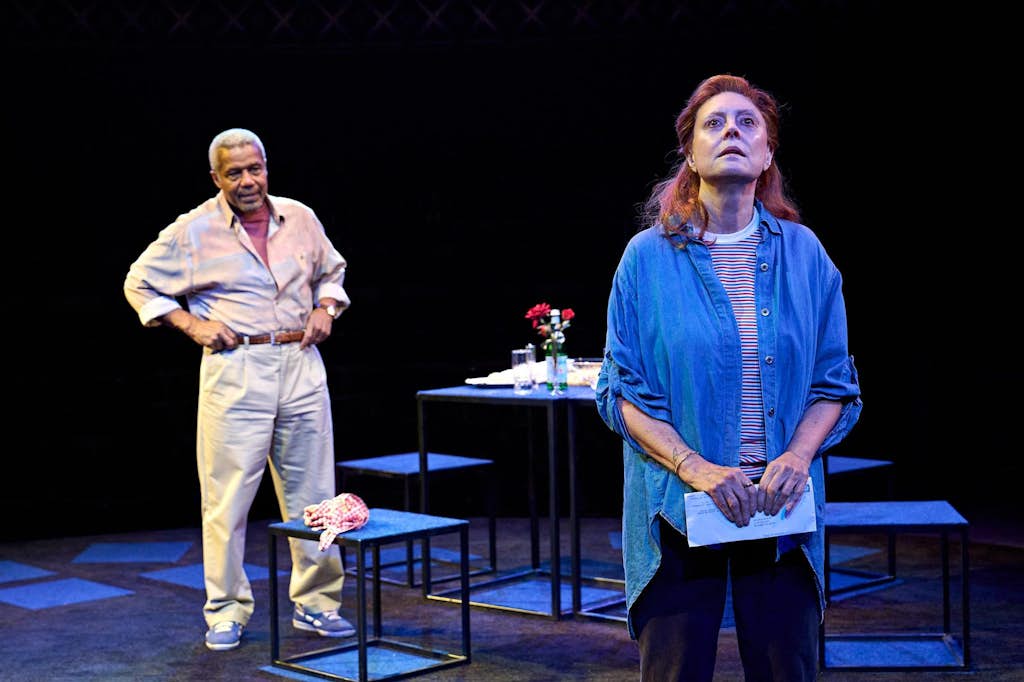
The play comprises 11 relatively short scenes spanning 70 years, snapshots from Mary Page Marlowe’s life from the cradle to, very nearly, the grave. We open with Marlowe (Riseborough) telling her two kids that she and her husband — their father — are separating. We end with Marlowe (Sarandon), an accountant, at a dry cleaner, making enquiries about getting a patchwork quilt cleaned. In between we see her, among other things, watching House on the TV with her third husband and having a tarot card reading with college friends. We also see her, a couple of times, at crisis points in her life.
Because the scenes are not presented in chronological order, we have to work out how these patchwork panels fit together and to follow the threads that link them. A later scene might explain behaviour witnessed in an earlier scene; for example, we know Marlowe has broken the law before we know in what way. The scene in which she is in hospital, dying, is number six — slap bang in the middle of the play.
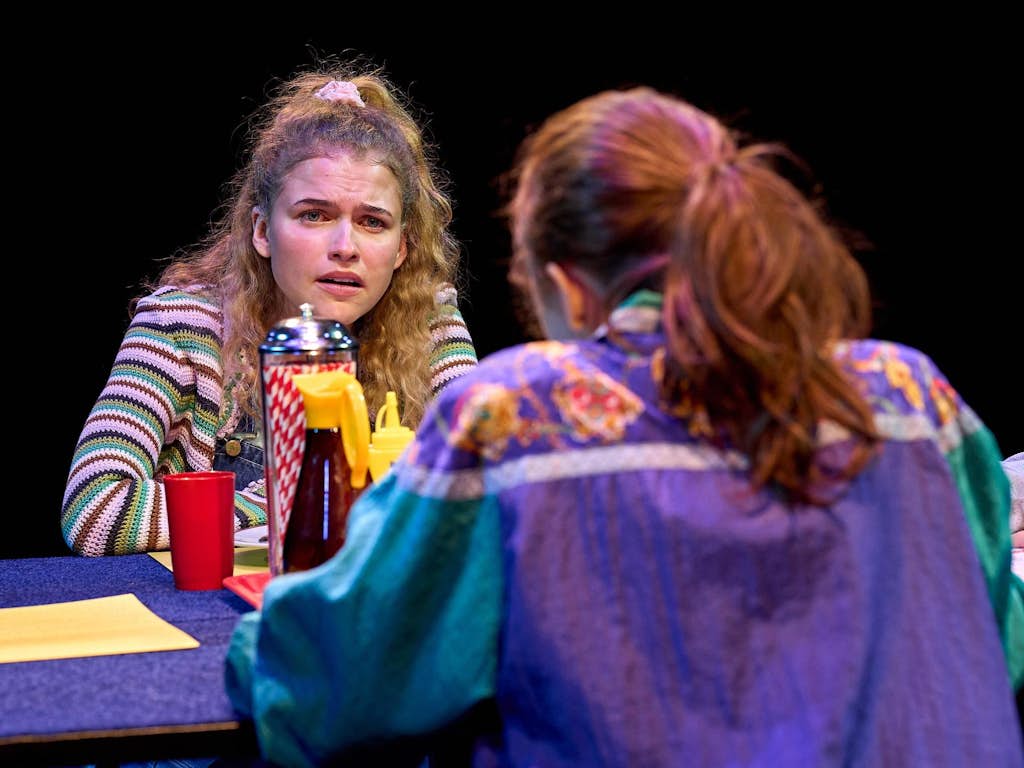
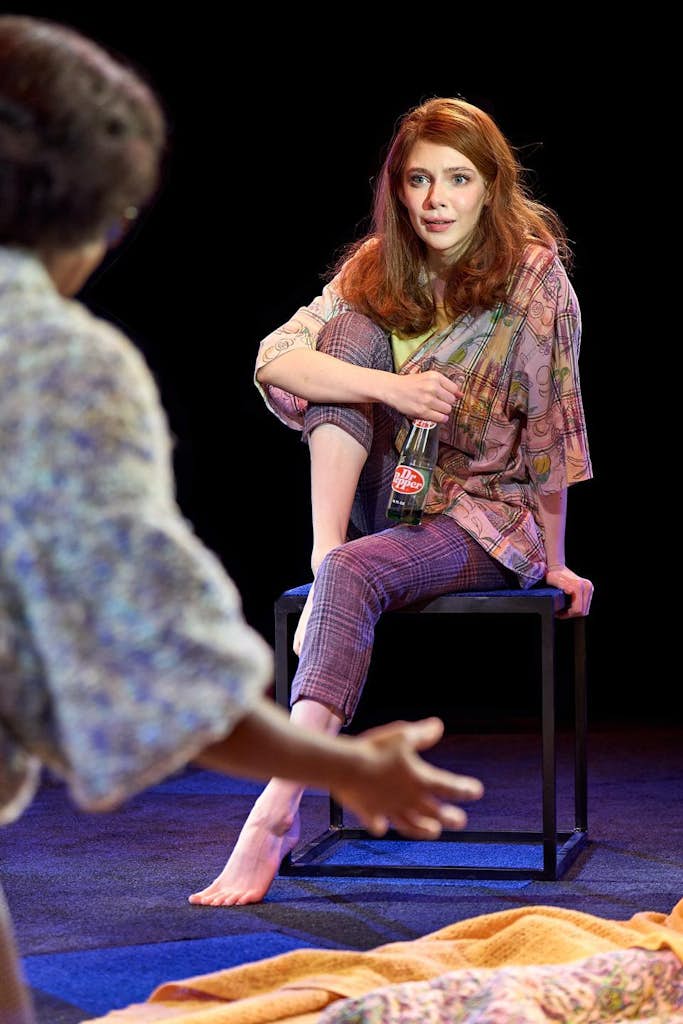
In one vignette, her therapist asks her if she is withholding stuff. “I’m still a person outside of this room, you know,” says Marlowe (McEwen). “I still live life even when you’re not watching me.” This gets to the heart of the play. Her life goes on outside the scenes we watch and she’s a different person at different times of her life. (In case we didn’t get the message, “Hymn to Her” by The Pretenders plays at the start and end of the show.)
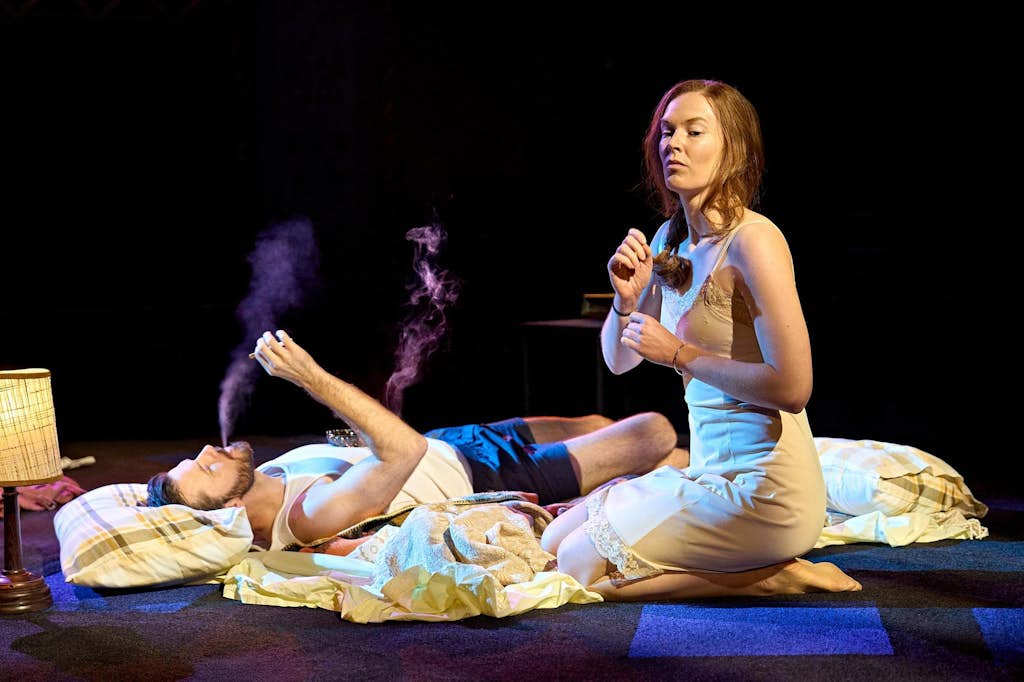
The Old Vic has been configured in the round for this, an arrangement which provides a sense of immediacy and intimacy. Sarandon may be the box office draw, and she’s as great as you would expect, but it’s Riseborough and McEwen doing the heavy lifting and they were the standouts for me, especially the latter, in both the therapy scene in which she maintains a silence for so long I feared she had dried (she hadn’t) and in a scene in which she has a post-coital conversation with a man with whom she’s embarked on an affair.
Letts, best known for his Pulitzer winner August: Osage County, wrote this play after the death of his mother, the novelist Billie Letts, to whom it is dedicated, although he has also been clear it is not about her. I found it moving while watching it but also felt it was slight. However, I’ve thought about it often since and interpret some scenes differently now, after reflecting upon them. Is the future laid out for us? Are we always moving inexorably towards some predetermined end point, like a recorded TV show? Mary Page Marlowe is a subtle, elliptical and affecting piece of work.
Meanwhile the RSC’s Cyrano de Bergerac is straightforwardly and uncomplicatedly a triumph. The audience who gave it a noisy ovation knew it, and we could see on the actors’ beaming faces that they knew it too.
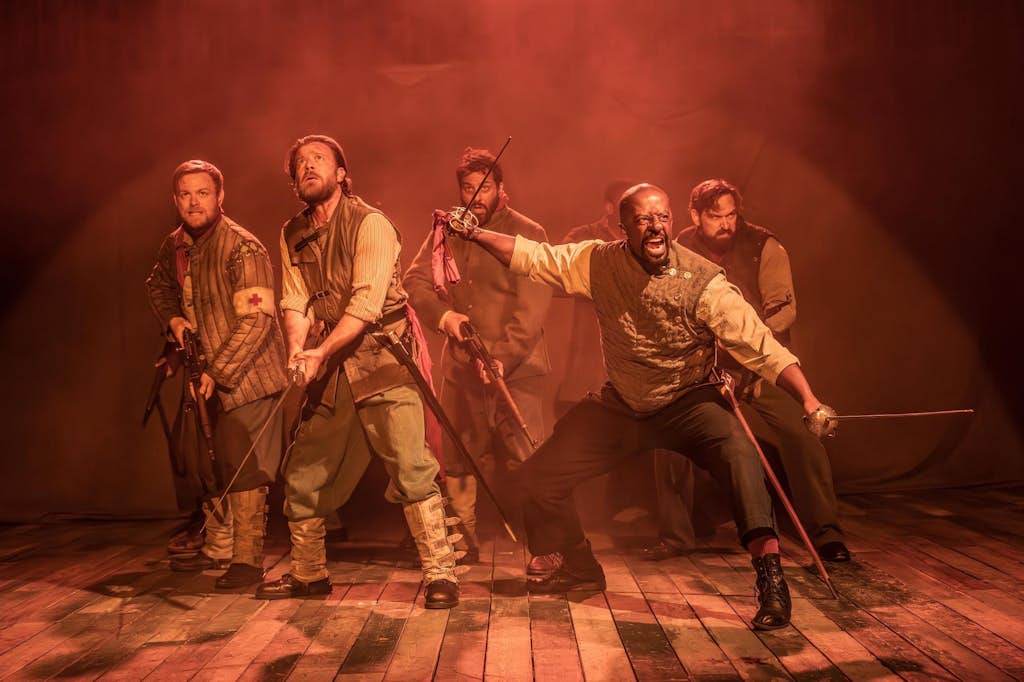
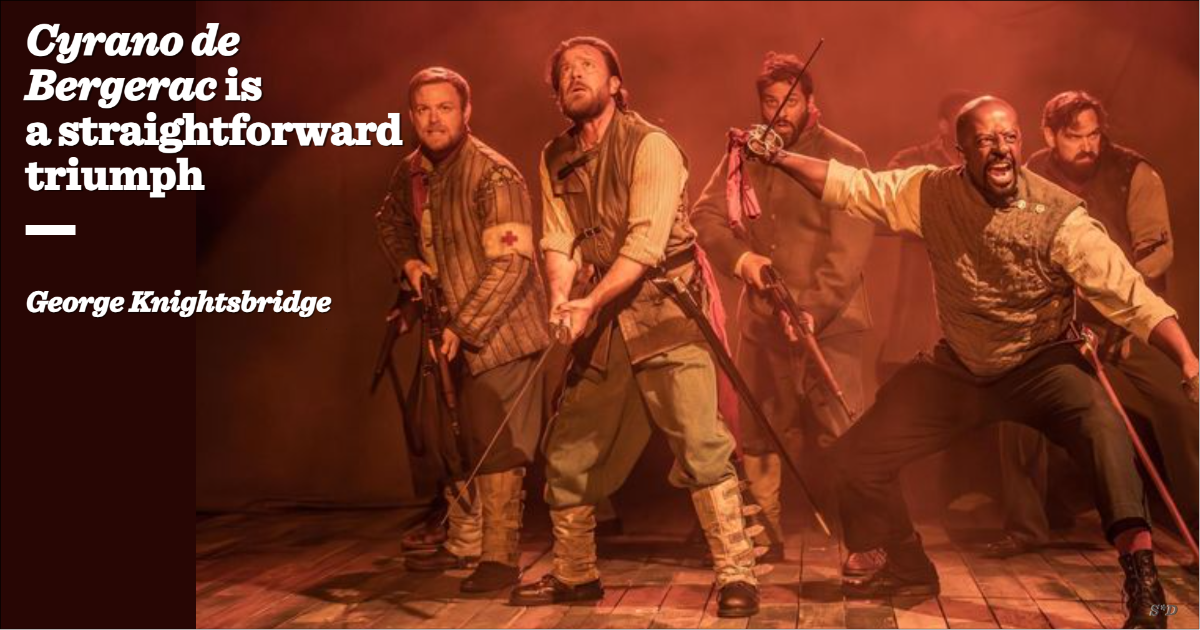
Cyrano (Adrian Lester, in his RSC debut), a swashbuckling soldier and poet, is in love with the gorgeous Roxane (Susannah Fielding) but is afraid to tell her because he believes his big nose rules out the possibility of romance. Instead this consummate wordsmith, winds up helping another soldier, Christian (Levi Brown), to woo her by writing her beautiful, yearning letters. This adaptation by Debris Stevenson and director Simon Evans sticks closely to the plot of Edmond Rostand’s 1897 original but lets the language breathe. It is deeply romantic and very funny and it tugs at the heartstrings until they snap. Also, imagine, if you can, a classic play actually set in the milieu in which the original playwright set it — mid seventeenth-century France, in this case, rather than contemporary Leeds, say, or on a 25th century moon base. Extraordinary.
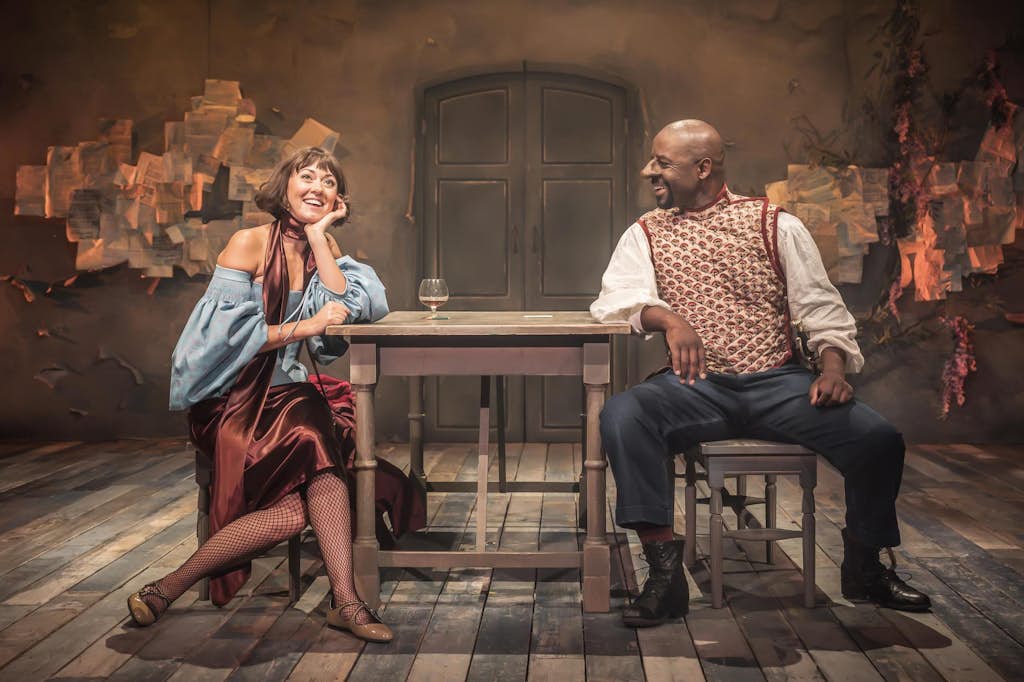
Lester is terrific as Cyrano: nine parts braggadocio to one part vulnerability, utterly fearless except when it comes to affairs of the heart. Fielding brings a warmth and sensuality to her portrayal of the witty, beautiful Roxane. The balcony scene, with Cyrano hiding in the shadows pretending to be Christian as he courts Roxane, is a particular highlight — both poignant and comic. The final scene, which prompted an awful lot of snuffling and some unabashed open weeping, is mesmerising. The fact that so much of what has gone before has been so hilarious makes the denouement all the more deeply moving.
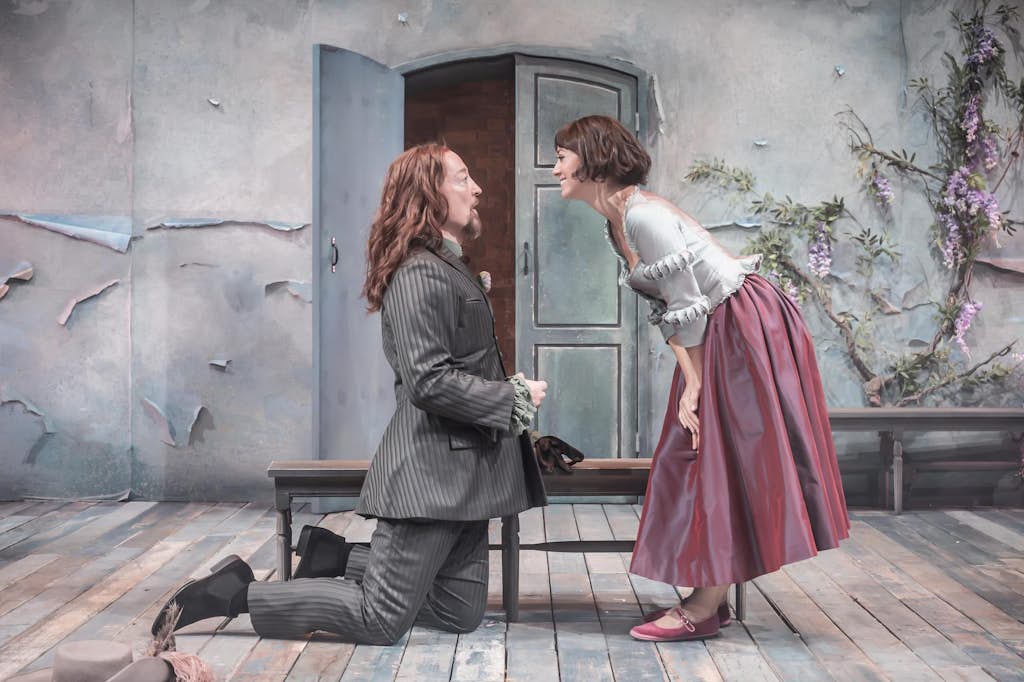
The performances, the sets, the costumes, the music (Cyrano is trailed everywhere by three musicians he won in a wager), the lighting; every element works beautifully. This is a long play but it was over all too quickly. It is an absolute delight.
Mary Page Marlowe at www.oldvictheatre.com runs until 1 November.
Cyrano de Bergerac at www.rsc.org.uk Swan Theatre runs until 15 November