Echoes of the 1920s are growing louder and unless we act, we may repeat the complacency of the 1930s too
It was reputedly Mark Twain who said that “history doesn’t repeat itself but it does rhyme”. So far the 20’s have been rhyming strongly with that of a hundred years ago; just as today the 1920s were a decade which began with a global pandemic, marked by political turmoil in the UK, a new party rising to prominence and a near constant churn of prime ministers. And now the 2020’s are on track to be the worst for economic growth since the 1920’s.
While the 1920’s saw truly anemic growth of just 0.8% per year, we’re hardly doing much better, with average growth per year of just 1.1% since 2020. What’s worse is that unlike in the 1920’s we lack the explanation of having just been through one of history’s most destructive wars or made the mistake of reentering the Gold Standard at the wrong rate, or had the disruption of a general strike like that in 1926.
While it’s true that Brexit (and more importantly the drawn out process after the referendum) has been somewhat disruptive and the pandemic caused significant damage, an inherently strong and healthy economy would have shrugged these setbacks off and caught up with strong growth. But that hasn’t happened.
If anything the headline GDP growth figures are too rosy, concealing the impact of population change. Looking at GDP per capita the picture is even bleaker with declines of 0.1% in both the last quarters of last year. Furthermore, the headwinds for UK economic performance going forward aren’t particularly good. An ageing population means more spending on pensions, healthcare and social care is all but certain. Even just to hold the tax burden steady at current (historically high) levels would require average growth of 2.9% per year over the next half century.
Since the financial crisis (excluding the unusual circumstances of the pandemic recovery) we’ve only managed to exceed that rate in two years (2014 and 2017) let alone average it over the entire period. In fact, looking at the ONS data on GDP growth, which goes back to 1949, even in the fifty years between 1949 and 1998 when the UK (like most Western countries) grew at historically high rates, growth only averaged 2.8%.
Despite strong rhetoric from both this government and its predecessor, neither has properly grappled with the regulatory state or resisted the temptation to introduce regulations every time there’s a bad news story or a moral bandwagon a politician can jump on. Whether it’s Martin’s law, the second staircase regulation or the Employment Rights Act – to name but a few – the government and regulators have carried on increasing costs on UK businesses, making them less competitive and driving up prices for consumers. The supposed benefits of many of these regulations are often dwarfed by the costs, and based on doubtful premises such as classifying any outcome disliked by ministers or civil servants as “market failure” to justify government intervention.
One bright light among the current gloom is the potential of AI. Indeed the US has now seen productivity growth nearly double in the last year, likely due to AI. However, even if it is able to increase UK growth by an additional 1% annually (and that’s probably being a bit optimistic), growth would still be insufficient to ensure taxes didn’t need to go up.
Most likely, the growth impact of AI will peter out after a few decades. Much the same is true for automation: a significant boost from it is feasible, but the increase will eventually fade away. This is the pattern we see with all general purpose technologies such as electricity, the internal combustion engine and information technology.
So we can’t expect new technology like AI or automation to ride to our rescue. If we are to generate the levels of growth we need and avoid taxes rising further (let alone falling) then radical structural reform is necessary. In many ways working out what needs to change is the easy part: planning reform, a more proportionate pro-growth regulatory system, rationalising the tax system to remove its numerous distortions, rolling back some of the post financial crisis regulations which have distorted credit allocation in the UK, are a few of the most important.
Some of this has already been started, such as the government saying it will implement the recommendations of its Nuclear review and reign in the excesses of some of the regulators. Provided the government carries through with this it’s a start. But much more radical reform will be necessary and history holds a warning for Britain about the long term cost of failing to be radical enough with reform when the opportunity presents itself.
The doldrums of the 1920s were followed by the 1930s, in many ways a much better decade. Growth increased, a private-sector-driven building boom occurred (over 2.7 million homes built with a considerably smaller population) and new industries such as automobile manufacture and electrical engineering emerged in the Midlands and the South of England.
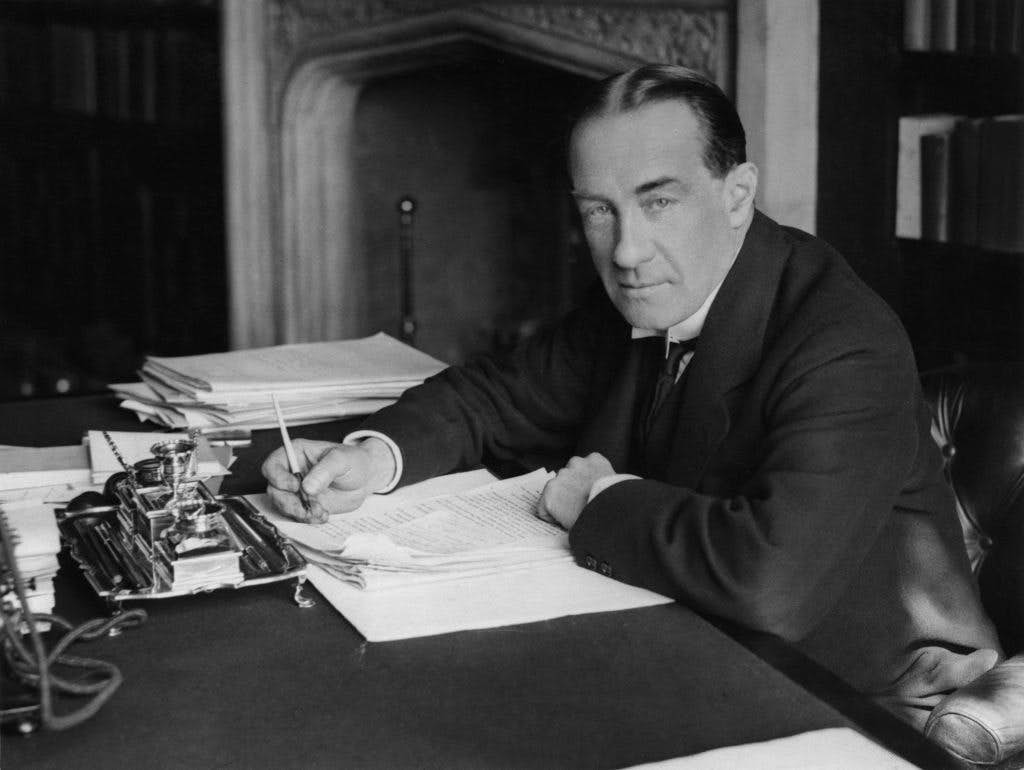
However, despite some progress — such as the 1933 decontrol of rent and mortgages — the governments of the 1930s (dominated by Stanley Baldwin) failed to implement the fundamental reforms needed. As the economic historian Nicholas Craft has shown, they deferred tackling the key issues: strike and union power, and industrial cartelisation and competition reform. With a lull in industrial relations disputes and the emergence of new industries, the 1930s were a prime opportunity for the crucial structural reforms needed. Instead they were ignored, and British economic performance suffered.
While growth increased, Britain continued to fall behind the US in terms of productivity. In fact many of the new industries that sprang up in Britain in this period fell even further behind than the UK economy as a whole, unable to keep up with the dynamism and high productivity growth of their US counterparts.
Protected from foreign competition by high tariffs and purposefully weak competition policy, British firms survived being less productive than they needed to be. However, post-war, as the global economy gradually opened up, they increasingly suffered as not only America grew strongly, but other peer countries like France, West Germany and Japan rapidly overtook the UK. It was only after the chaos of the 1970s that the Thatcher government finally addressed the long-term impediments to UK economic performance (and many additional problems that had been created post-war like mass nationalisation).
So far the 2020’s have been a dire decade, it’s crucial that the next ten years is not a repeat of the missed opportunity that the 1930s were. Given the ageing population and the already stretched public finances this time we don’t have fifty years to wait for a government willing to make the hard choices and implement the key reforms necessary.