A million families could face having their council tax doubled as Rachel Reeves scrambles to raise more cash at the Budget.
The Chancellor is said to be looking at dramatically hiking the charge for the top bands amid a welter of measures to squeeze more out of the ‘wealthy’.
That could mean an eye-watering rise from £3,800 to £7,600 for residents of a band G household in England – and from £4,560 a year to £9,120 for those in band H.
The move would hammer London and the South East, where property prices are higher. Critics warned it would spark a crisis for pensioners on fixed incomes and families who have stretched themselves to afford a dream home.
The potential raid emerged as insiders revealed the Treasury has been ordered to find ways of getting more money out of everyone with incomes of more than £45,000 a year.
Insiders claim that only Brits below that threshold – the bottom two-thirds of earners – are being defined as ‘working people’ to receive protection from Labour‘s tax assault.
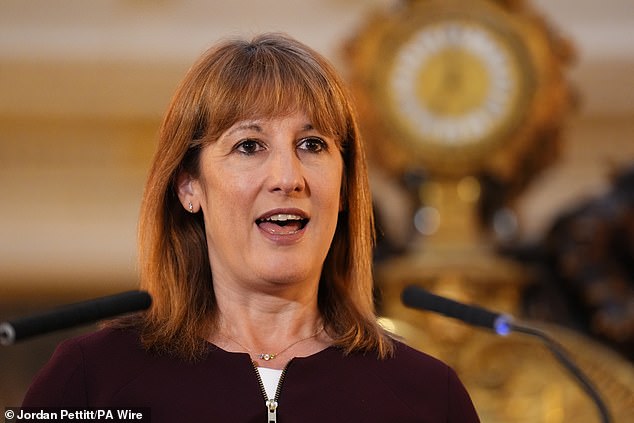
Rachel Reeves is said to be looking at dramatically hiking the charge for the top bands amid a welter of measures to squeeze more out of the ‘wealthy’
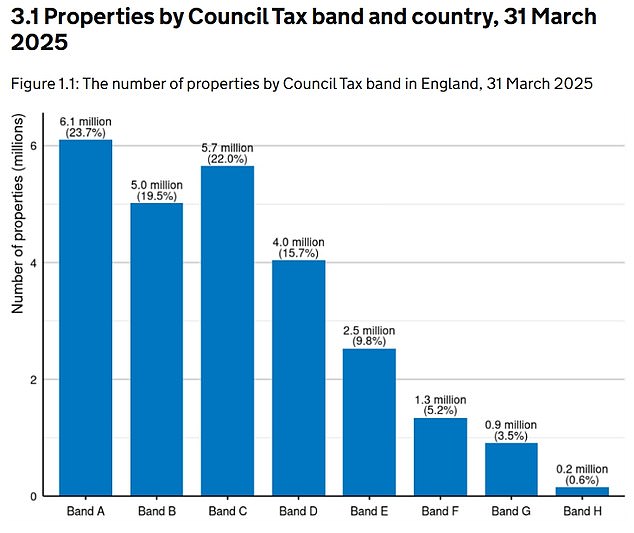
More than a million homes could see their council tax doubled if Ms Reeves goes ahead with the idea
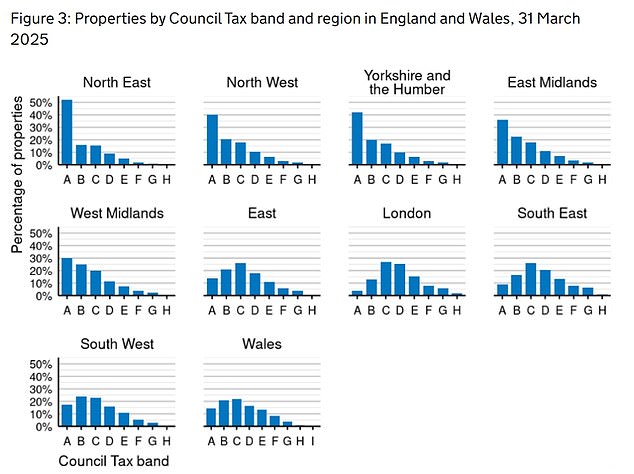
The move would hammer London and the South East, where property prices are higher
That effectively brands the top third of earners as ‘wealthy’ – encompassing jobs such as HGV drivers, teachers and head chefs at the Wagamama restaurant chain.
Ms Reeves is facing an increasingly desperate situation in her fiscal package on November 26.
The Treasury’s OBR watchdog is believed to have downgraded productivity forecasts by 0.3 percentage points – adding an estimated £21billion to the black hole in the public finances.
Sluggish economic growth, rising debt costs and humiliating U-turns on efforts to curb the benefits bill could add a further £20billion to the gap Ms Reeves has to fill.
With seemingly no scope for trimming spending, fears are running high that the Chancellor will rely entirely on raising taxes. Insiders have confirmed that bigger property taxes are on the radar, while Keir Starmer has refused to rule out smashing the Labour manifesto by increasing income tax, national insurance or VAT.
Ms Reeves has already delivered the biggest tax-raising Budget on record last year, soaking Brits for £41billion.
Economists have warned this package might be on the same scale, and could have devastating impacts on growth.
Even a far smaller raid would leave Ms Reeves having announced more tax hikes in 16 months than Gordon Brown did over a decade.
Capital gains, pension reliefs, inheritance tax and partnership structures have also been listed among the ways Labour could seek to drum up funds. Final decisions are unlikely to be made for another fortnight or so, when the OBR will start factoring the government’s plans into its draft forecasts.
Sir Keir has previously mooted a bewildering array of definitions for a ‘working person’ since his election pledge not to increase taxes on them.
At one point he said that it referred to someone who ‘goes out and earns a living’ and can’t ‘write a cheque to get them out of difficulty’.
However, the idea they can be identified by salary opens the prospect that rises in income tax or National Insurance in the Budget on November 26 could make people on £46,000 worse off.
Tory Shadow Business Secretary Andrew Griffith accused the Chancellor of planning to ‘further massacre the take-home pay of millions of hard-working middle earners’.
‘While boosting the pay of their union paymasters, Labour don’t understand or care about those who get up and work hard to make a better life,’ he said.
Tory leader Kemi Badenoch warned that changes to council tax bands would force some pensioners ‘out of their home’.
She said: ‘Creating new higher council tax bands will hammer people who have lived in the same house for decades, particularly pensioners, some of whom will be unable to pay this new tax and be forced out of their home.’
Nigel Farage, leader of Reform UK added: ‘It is an assault on assets and will cause huge consternation amongst older people living in properties they bought many years ago.’
Increasing the charge on existing top council tax bands could raise revenue faster than adding extra bands, another option that has been floated.
Sources have suggested that Ms Reeves has been moving away from more ‘radical’ option such as replacing council tax with an annual levy based on property values.