This article is taken from the February 2026 issue of The Critic. To get the full magazine why not subscribe? Get five issues for just £25.
This isn’t a tipping column, not least because I have no wish to impoverish readers of The Critic. But sometimes a bet comes along which is impossible to resist because the odds seem simply too good, and which — yes, it does sometimes happen — events then prove it right not to have resisted. I think I have found one of those bets, and I am happy to pass it on to you.
But first, let me take you back to 1979 and the run-up to the French Grand Prix. I was 14 and obsessed with Formula 1. That season was Renault’s first in the sport, and it was proving a disaster. Their car was both slow and unreliable, mainly because of its revolutionary turbo-charged engine. Renault was becoming a laughing stock, and the fortune it had invested in F1 looked like a long-drawn-out form of corporate suicide.
I was a slightly odd child and, as well as reading the sport pages avidly, I also read the business news. As Renault’s car seemed to get steadily worse during the first seven races of the season, I remembered an interview I had read the previous year, when the manufacturer’s CEO had announced their entry into F1. He knew, he said, that it would take many seasons for them to properly compete with the likes of Ferrari, Lotus and Williams. But with French Michelin tyres and French Elf petrol, they would initially be focused only on one race: their home French Grand Prix.
My oddity as a child had many facets, another of which was regular betting. As the eighth race drew near I had a look at the odds for the French Grand Prix. Two prices stood out: René Arnoux and Jean-Pierre Jabouille, the Renault drivers, were each 50/1 to win. Not surprising, really, given how terrible they had been so far that season.
But I remembered that interview from the previous year. It seemed clear to me that the team had been using the previous seven races as a form of extended testing, with all their plans targeted on Paris. So not only did I invest as much money as I could cobble together on Arnoux and Jabouille, I told my theory to my dad and to my best friend’s dad, Stan.
They both knew how seriously I took F1. So even though I was just a 14-year-old kid, they listened … and they acted, each putting sizeable bets on. And Stan, who had a market stall, told all the other stallholders to get on. Which many did.
You can guess what happened, because I wouldn’t otherwise be telling you this story. Jabouille won, easily. I was, let me say with some understatement, popular.
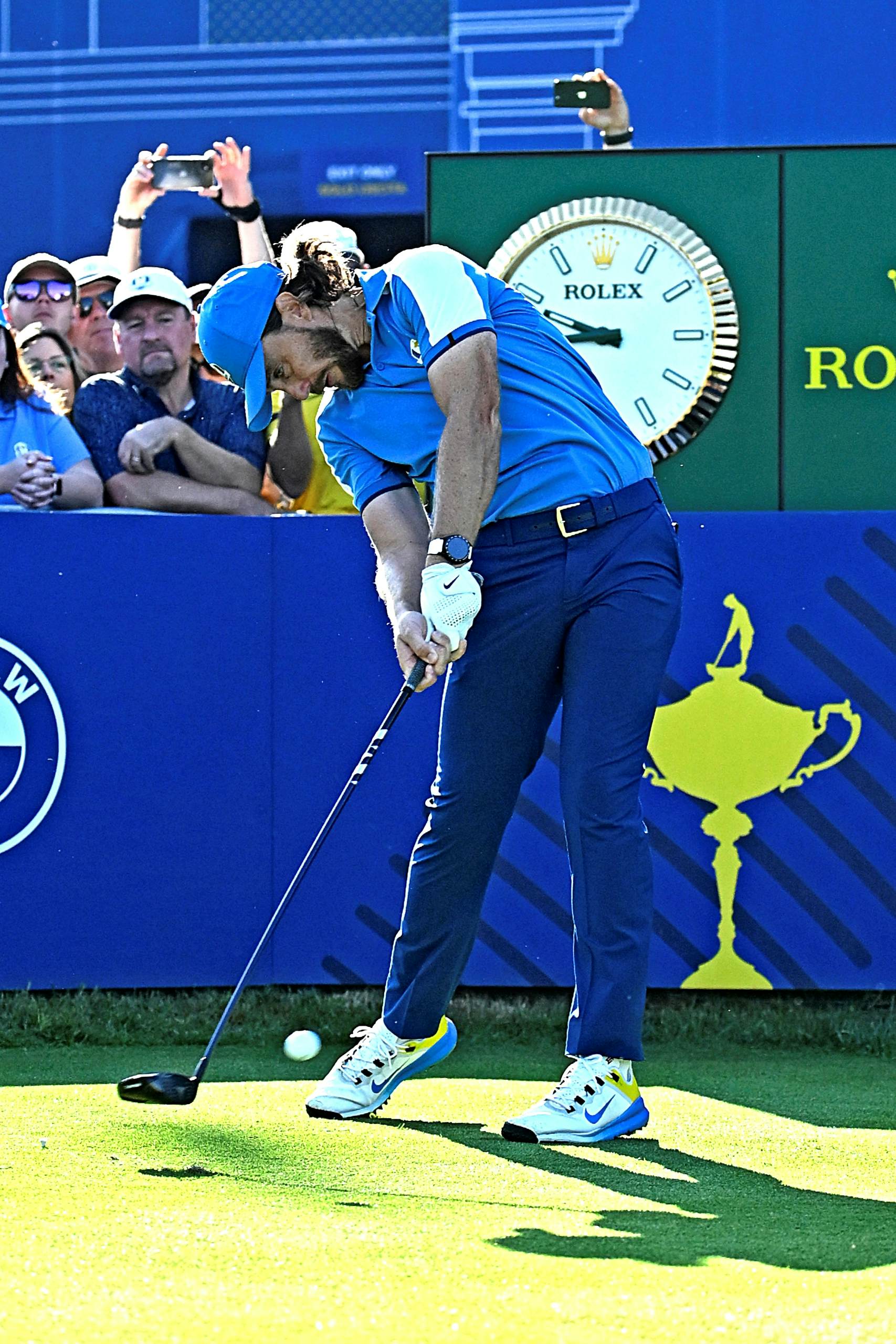
Which brings us to Tommy Fleetwood.
There is always one active golfer who holds the informal moniker of “best golfer not to win a major”. For 11 years it was Ben Crenshaw until he won the Masters in 1984. Then it was Phil Mickelson, who waited 13 years to win his first major, the 2004 Masters. Colin Montgomerie held the title throughout his career, never winning one. Now it’s Tommy Fleetwood.
The Southport-born golfer is probably the most widely liked player around. Golf fans love him — he wears his heart on his sleeve and comes across as the lovely man all his fellow golfers describe. Last summer he finally won on the US tour after 164 tournaments and 30 top-five finishes, many as runner-up. He was outstanding in last year’s Ryder Cup, winning both his foursomes alongside Rory McIlroy.
Fleetwood may not have won a major but he has an excellent majors record, having finished third in the Masters, fifth in the USPGA, and runner-up in both the US Open and the Open. He is clearly not fazed by the big occasion, even if there has seemed until now to be some sort of mental block that prevents him actually winning. But I’d be willing to bet that his maiden US Tour win, followed by his stellar Ryder Cup performance, means that he is poised to break his majors duck.
The price that leapt out at me when I looked at some of this year’s golf bets was Ladbrokes’ 11/2 against Fleetwood winning a major this year. You could, of course, simply back him in each of them: he’s 18/1 for the Masters, 25/1 for the USPGA, 18/1 for the US Open and 14/1 for the Open. But that 11/2 makes the one-off bet a tempting — and, for me, irresistible — investment. The question, of course, is whether this is another Jabouille-type bet, or if it’s yet another of my lifelong contributions to the Bookies’ Benevolent Fund.
For what it’s worth (i.e. almost certainly nothing), I’ve done a combination each-way yankee in the four majors. In other words, I’ve backed these players to finish in the top six in the various tournaments in combined doubles, trebles and an accumulator: Scottie Sheffler in the Masters, USPGA and US Open at 4/1 for each, Rory McIlroy in the USPGA and Open at 7/1 in each, and Tommy Fleetwood in the US Open and Open at 18/1 in each. Good luck to me!