This article is taken from the December-January 2026 issue of The Critic. To get the full magazine why not subscribe? Get five issues for just £25.
The things that I would like to be done to cybercriminals who prey upon the vulnerability of random citizens and small businesses are so brutal — so sadistic — that they would make the Inquisition look like social work.
The consequences of their crimes are bad enough. But there is also a sliminess to their criminality. Say what you like about burglars — who I am definitely not attempting to excuse — but at least they will expose themselves to some physical risk. Cybercriminals will ruin your life — or your grandmother’s life — from the comfort of their homes.
But the hatred contains an element of implicit respect. Beyond the most amateurish fraudsters claiming to be Nigerian princes or Taylor Swift, I couldn’t do what they do. In fact, I barely even understand what they do.
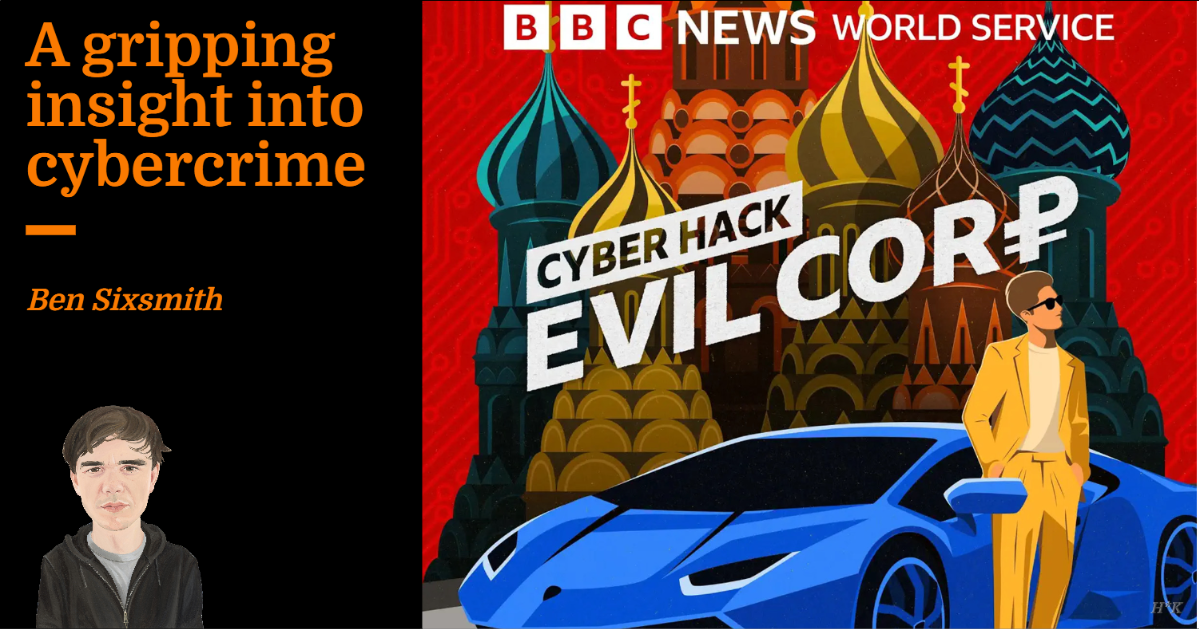
The BBC’s Cyber Hack explores the mysterious worlds of cybercrime. It is rare that I get a chance to praise the BBC, but this series is engrossing and insightful.
The most recent series, “Evil Corp”, takes us to Eastern Europe. A group of criminals based in Ukraine, Russia and the UK is draining the bank accounts of Western small businesses and funnelling the money back to themselves via “money mules” — people recruited to send it abroad. Their victims do not know that they are being stolen from until it is too late.
What the criminals don’t realise, though, is that a cybersecurity expert is reading their internal communications. Soon, the FBI, the British police, the Ukrainian SBU and the Russian FSB will be on their tails.
Or will they? What is clear from Cyber Hack is that hackers and state institutions are rarely far apart. This makes sense. When the hacking group the Cult of the Dead Cow exposed serious vulnerabilities of the internet in the 1990s, the US government smartly brought them in to give advice. One member — Peiter Zatko, better known as Mudge — is now Chief Information Officer at the Defense Advanced Research Projects Agency (DARPA).
Links between hackers and state institutions in Eastern Europe seem altogether more sinister. Evil Corp, from which the latest series of Cyber Hack takes its name, is a group of Russian hackers who appear to have earned protection from the Russian state — because, presumably, they can cause such havoc in the West.

The previous series of Cyber Hack explored a group which does not just have links to a state institution but appears to be a state institution. “The Lazarus Heist” focused on the North Korean Lazarus Group, which appears to be raising funds for Kim Jong Un.
The Lazarus Heist does not have the dramatic tightness that Evil Corp can boast (or, at least, can boast so far). There is a bit too much about US–North Korean relations which has nothing to do with hacking or the internet.
Still, there is a lot of fascinating information — delivered with dramatic flair — about this shadowy and predatory group and their ambitious and sophisticated crimes across the world. We don’t think of North Korea as being on the frontlines of technology unless that technology goes “boom”.
The Lazarus Group, though, appears to have been involved in all sorts of complex crimes — hacking Indian cash machines and Maltese banks and the official website of the Winter Olympics.
Cyber Hack deflates a lot of idle myths about cybercriminals. I imagine them — as, I assume, most people do — as being pasty nerds in hooded jackets. Well, some of them are.
But others can be as surreal as Ramon Olorunwa “Hushpuppi” Abba — a Nigerian man all but smothered in designer clothes who posted photographs to his popular Instagram page of himself on private jets and with celebrities. Hushpuppi has been sentenced to 11 years in an American prison after pleading guilty to money laundering.
Once, mobsters used their muscles and their guns. Now, a lot of them use code. But this is just one example of how everything has been computerised. A lot of the most vital participants in the Russo-Ukrainian War have been drone operators in bunkers far behind the front. We just have to hope that there are more screen-addled tech geeks who will use their powers for good than will use their powers for evil.

If you need proof of how traditional entertainment is being swallowed up by the internet, look no further than This Life of Mine with James Corden. The actor, comedian and TV host is interviewing “a variety of prominent guests” about “the people, places, possessions, music, and memories that made them”.
Corden might have figured out that staying relevant in showbusiness means having a podcast, but he doesn’t seem to get what makes podcasts different from talk shows.
He has a tone of very obviously strained good cheer suggesting he is oblivious to the fact that podcast fans love the apparently organic personality displayed by their favourite hosts. Doesn’t Corden want us to be exposed to his actual personality?
Dr Dre, Corden’s first guest, gets in a funny line when he responds to Corden’s gushing introduction by saying that it made him feel “really happy” but also “old as shit”. Corden cannot match this sort of spontaneous charm. Soon, he is reeling off the most predictable of questions. “What was it like growing up in Compton?” What do you expect him to say? It was lovely. Idyllic.