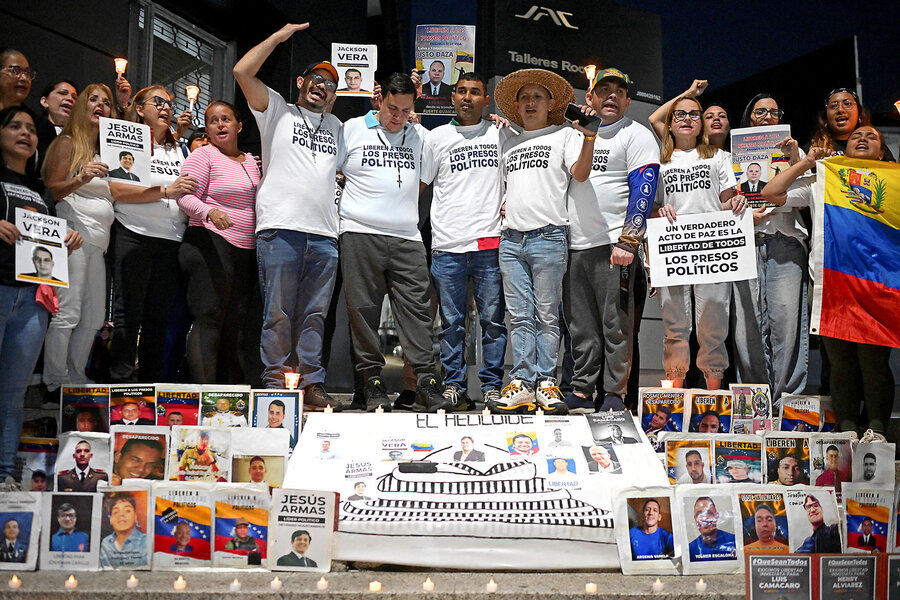
It’s been a month since the United States captured Venezuela’s authoritarian leader, Nicolás Maduro, to put him on trial in New York. Rather than force his regime to dismantle, however, the U.S. chose to work with it, more on economic stabilization than on wholesale political transformation. Yet, while focusing on Venezuela’s vast oil potential, the Trump administration has also pushed its government to take a step toward democracy. So far, about 30% of an estimated 1,000 political detainees have been released.
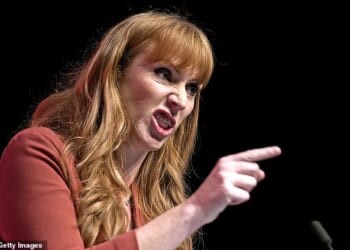
Mr. Maduro’s former deputy, and current interim president, Delcy Rodríguez, announced the release – which she called an amnesty – for all those imprisoned for political activity since 1999, as well as plans to shut down a Caracas prison where political opponents have been held and reportedly tortured.
The aim, Ms. Rodríguez said, is “to heal the wounds left by political confrontation … to restore justice … [and] coexistence.”
These are worthy goals – and if they reflect sincere intent – are ones that would be supported by most Venezuelans who also question whether the Trump administration will pressure the ruling clique for further change or mainly focus on overseeing oil production and sales that benefit the United States.
“We want this [prisoner release] to not just be a gesture and a symbol, but the start of dismantling the repressive system … and of restoring the judicial system,” commented Alfredo Romero, director of the human rights organization Foro Penal.
Venezuela’s pro-democracy opposition leaders, who mostly live in exile, are seeking the release of all political prisoners. But one concern is that the government’s granting of “amnesty” implies that those receiving it have been guilty of unlawful acts.
“These people were arbitrarily imprisoned for exercising rights protected by international [law], the National Constitution, and Venezuelan laws,” the human rights group Provea pointed out in a statement. “The announcement of an amnesty should not be conceived, under any circumstances, as a pardon or act of clemency on the part of the State.”
Typically, political amnesties in Latin America have been granted to rebel forces, to draw them into peace processes, or to military rulers as a way to ease the transition from repression to freedom. Thus, for Venezuela’s political prisoners, drawing the distinction around amnesty or so-called pardons is about more than semantics. It’s about underscoring the exercise of legitimate rights to speak out or call for political change. And about reminding the world that the current rulers of Venezuela lack electoral legitimacy.
Opposition leader and Nobel Peace Prize laureate María Corina Machado said as much last week, telling reporters she would not accept power-sharing with the current government. “We are willing to facilitate a genuine transition,” she said, not one “where mafias remain in control.
“Venezuela,” she said, “needs justice, truth, and freedom.”