This article is taken from the November 2025 issue of The Critic. To get the full magazine why not subscribe? Get five issues for just £25.
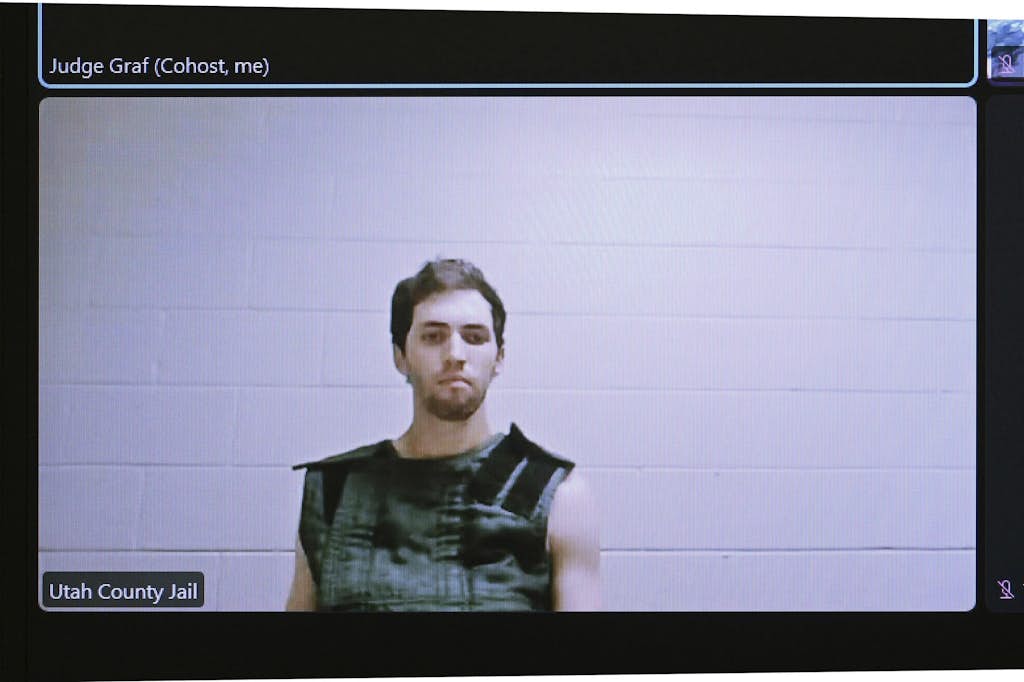
The moment a high-profile figure is gunned down, a thousand conspiracy theories bloom. The death of the conservative commentator Charlie Kirk hadn’t even been confirmed before the speculation started. Immediately upon his arrest, Tyler Robinson was confidently pronounced (including by Vice President Vance) as far-left; others diagnosed him, with equally adamantine certainty, as far-right.
Sometimes, just sometimes, the obvious thing is true. What we do know from the casing of a bullet recovered by Utah investigators is this: the assassin was influenced by pornography. Etched into the cartridge casing were the words “Notices bulge OwO what’s this?” To most, it is gibberish; to the porn-saturated world of online “furries”, it is a familiar code. Robinson, the suspected shooter, played the pornographic dating simulator Furry Shades of Gay and followed accounts producing taboo furry cartoons, some with paedophilic themes.
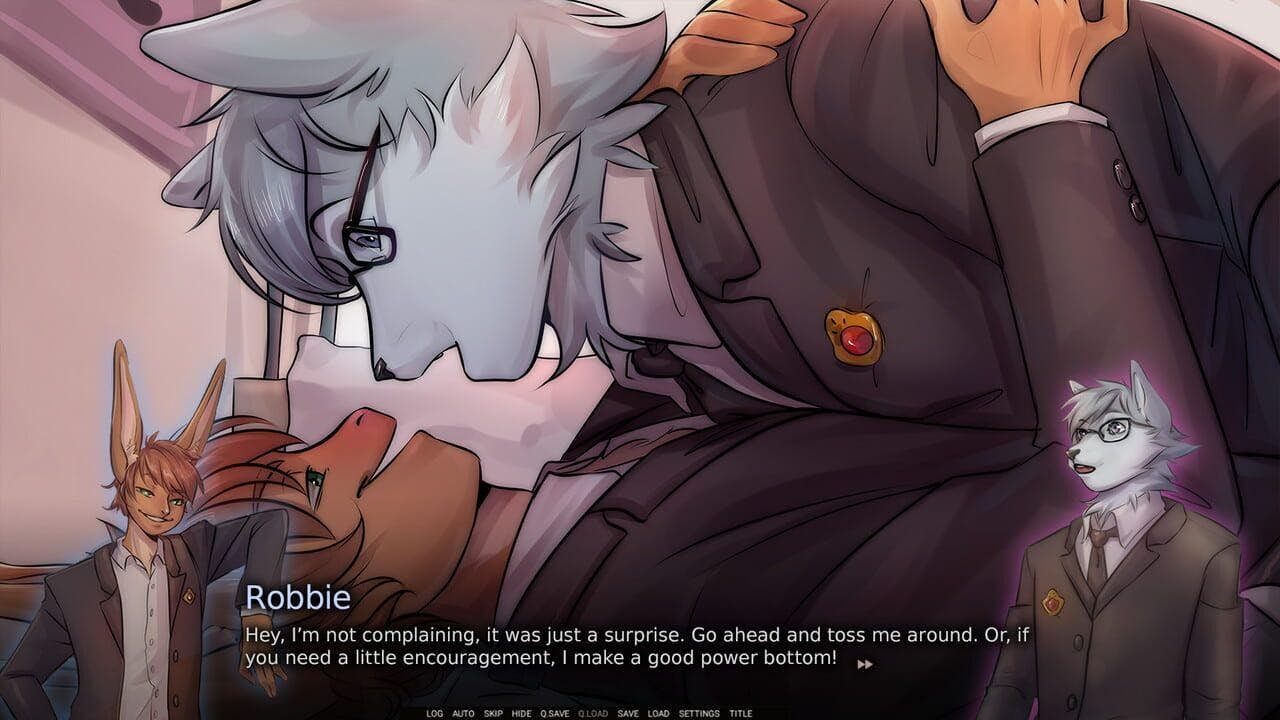
Furries are just one of innumerable online subcultures where social misfits are bound together by their sexual proclivities. Many followers never take their hobby out from behind the screen; others spend thousands on cartoon-animal costumes and gather at conventions. The phrase “Notices bulge OwO what’s this?” is their in-joke for the moment of realising that a sexual partner who appears female is in fact a man.
According to the International Anthropomorphic Research Project, the typical furry is a young man in his late teens or twenties — about 14 times more likely than the general public to identify as gay or bisexual. Twelve per cent identify as trans. Fetishes are common: 40 per cent report an interest in BDSM, 7.5 per cent in pregnancy fetishism and 7 per cent in zoophilia. Amongst male furries, 96 per cent say they consume furry-themed pornography.
For some, retreating into a costume is little more than innocent escapism from the stresses of adult life, and the online communities where furries congregate include everything from gaming forums to galleries of cartoon-animal fan art. But fetish is woven through all aspects of this strange new world. As with the cliché of the High Court judge who visits a dominatrix to feel free of responsibility, the sexual charge beneath these bizarre and childlike costumes is coded into the community.
Like transgenderism, the furry fandom has been granted legitimacy by academia and folded into the ever-expanding LGBTQ+ umbrella. More troubling, this porn-fuelled subculture of infantilised young men has been embraced by the identitarian left — and there it has found political purpose. Tellingly, around 13 per cent of furries say they support Antifa — designated a “domestic terror” group by President Trump after Kirk’s assassination.
The demand for fetishistic validation, and political representation, is now understood as the natural progression from the struggle for gay rights and black emancipation. Though it has been turbo-charged by the internet, this shift was recognised over 40 years ago by the radical feminist Andrea Dworkin, who warned that “the new pornography is a vast graveyard where the Left has gone to die”.
Thus today, furries march shoulder to shoulder with “pups” in rubber dog masks and leather-clad kinksters at Pride parades, presented not as exhibitionists but as civil rights campaigners. The prevailing narrative insists that such “queer identities” are under siege from conservative bigotry, proof that the world is hurtling toward fascism.
But this time the self-styled Weimar hedonists have rewritten the script: they enter the stage already claiming victimhood, with every excess excused as resistance. The result is a bleak conflation of the pornographic with the political — a carnival of grievance in which private perversion becomes a public virtue.
Universities supply intellectual cover. A recent paper by a trans-identified academic titled “What Puppygirls Know? The (in)Human Pedagogy of a Trans Feminine Style” described “puppygirls” — men who role-play as submissive, juvenile female dogs — as if this were a profound new identity rather than a pornographic fetish. It encapsulates how these identities overlap and cluster: trans, furry, pup, kinkster, all creeping out of the pornified online ecosystem to demand validation in real life.
Whereas once shame would have encouraged such men to keep it buttoned, today local councils and non-governmental organisations not only fund the pornified movement of the queer-identified left, but are also changing laws to accommodate their fetishes.

This is not confined to the United States. In 2022, the National Lottery — via Arts Council England — funded Jova Bagioli Reyes, an activist styling himself as a “Queer neuro-diverse Latinx” to give a talk in which he urged trans-identified people to “kill their murderers … Because that’s what we’re about” and “Kill transphobes!” to whoops from the audience.
Meanwhile this year, Queer Heritage South was handed £1.25 million from The National Lottery Heritage Fund. Project director David Sheppeard justified the grant on the grounds that “LGBTQIA+ stories are being forcibly erased from collections, websites, libraries and public life worldwide”. No evidence of this forcible erasure was offered. Anyone who has chanced upon a trans protest will have seen placards calling for the murder of “transphobes” and the arming of “the dolls” (i.e. men who identify as women).
So, when Charlie Kirk said he refused to lie, that he would not call a man a woman or a woman a man, he was seen not as an opponent but as an existential threat. In the debates around transgenderism, even the faintest hesitation to affirm is cast as “erasure” or “violence”. Fragile because they are unmoored from reality, and furious because fuelled by sexual entitlement, these pornogenic identities meet dissent not with argument but with rage and violence.
This is not an isolated pathology. In recent years a series of shootings have been carried out by young people who identify as transgender: female Audrey Hale in Nashville, who killed six at a school; “non-binary” male Anderson Lee Aldrich, who opened fire in a nightclub; male William “Lily” Whitworth, arrested whilst plotting a Columbine-style massacre; and even the murders linked to the trans-led AI cult, the Zizians.
Yet as old taboos fall, a new one has taken their place: noticing the disproportionate number of unhinged trans killers is deemed impolite. So the mainstream media smooths over suspects’ trans or “queer” identities, and the pornography that fuels delusions and bonds these dangerous fetishists is seldom mentioned at all. President Trump recently did seize on this pattern, noting that transgender-identified males are over-represented in violent crime compared with their tiny proportion of the population.
Meanwhile, Utah governor Spencer Cox blamed the internet, saying: “I believe that social media has played a direct role in every single assassination and assassination attempt that we have seen over the last five, six years.”
Both diagnoses contain some truth. But the analyses of these older politicians miss the deeper driver for today’s generation of shooters: a porn-saturated culture that moulds fragile young men into grotesques, an academic establishment that validates them, and a wider narrative across the left that nurtures grievance and hostility to the outside world.
The response to the pandemic, forcing people to stay at home, left these maladjusted youngsters turning inward to their online tribes.
Generations have now been fed into the jaws of the porn industry. Like every other online content provider, its goal is to keep users staring at screens. The business model is brutally simple — lure viewers toward ever more extreme material and trap them in algorithmic vortices.
In December 2023, computer programmer Dillon Rice told an undercover journalist that his employer, a major porn platform, deliberately “push[es] stuff that’s less accepted, like putting a trans male or a trans female in a scene … Test it out, see if you can get a bigger audience with it. See if you can convert somebody. Right?”
It works because porn hijacks the brain’s reward circuits much like crack or heroin. Unlike drugs, there’s no comedown, no hangover — only the endless promise of more. That’s why content escalates: what was once exciting soon feels dull, so users chase the next taboo. A 2017 study published in Archives of Sexual Behavior found that around 20 per cent of straight male porn users admitted that they look at homosexual porn whilst 55 per cent of gay men look at heterosexual porn.
Over a decade ago, a survey of 1,500 members of the NoFap community — men who had sworn off porn and masturbation — found more than half admitted their tastes had become “increasingly extreme or deviant”. Subsequent studies have confirmed the pattern: users describe ending up watching material they once found unappealing, even revolting. It’s an arc of escalation any addict will recognise.
If pornography can reshape what once seemed immutable — human sexuality — it can warp the identities and politics built on it. For a generation curating both online, disagreement from those outside their tribe must feel profoundly unsettling. That’s why, when trans activists claim their opponents want to “erase their existence”, it’s not hyperbole: they genuinely believe it.
Charlie Kirk’s assassination represents the extreme endpoint of this logic: sublimated sexual aggression, incubated in online pornographic subcultures, erupting as political violence. For decades, pornography has produced its casualties in private — women and children living in a world shaped by men’s degrading fantasies. This time, however, the target was different. For the first time, we have witnessed a pornography-driven assassination.
The danger is clear: as long as pornography is treated as harmless, its political offspring — the sexual identity politics of the omnicause — will grow more aggressive. Opposition will not be met with rational debate but with an emotional response, as if a disagreement is a threat to one’s identity. Pornography is the powerhouse of today’s militant left. Until society confronts this, “progress” will be defended not with reasoned debate but with sublimated sexual aggression — online, in law and now, chillingly, through the barrel of a rifle.