A man who survived cancer as a teenager but was left infertile by ‘brutal’ treatment has told how his adopted daughter was later diagnosed with cancer too.
John Pattison, now 68, endured years of gruelling chemotherapy after being diagnosed with late-stage lymphoma at just 18, before facing the devastating irony of watching his four-year-old adopted daughter Donna fight the disease decades later.
He was just 18 when doctors finally realised he was not ‘depressed’, he was dying.
At the time, John was a naïve teenager enjoying life, travelling the country and following his favourite band, when his body began to shut down. He was losing weight rapidly, suffering drenching night sweats, and was crippled by fatigue. Despite repeatedly visiting his GP, he was told he was depressed.
What neither John nor his parents yet knew was that he was seriously ill.
In an exclusive interview with the Daily Mail, he says: ‘I was a very immature and naive 18-year-old when I was diagnosed. However, that diagnosis was kept from me by my parents. They colluded with the medical staff.
‘I had left school with a handful of worthless qualifications. I had been travelling the length and breadth of the country and was enjoying life, but all of a sudden, I was overwhelmed by this incredible fatigue.
‘I was aware that I was losing weight and having these unbelievable drenching night sweats. And I’d also grown a pair of breasts, medically known as gynaecomastia, but again, out of naivety more than anything else, I thought nothing of it.’
But after collapsing at work, John, from South Shields, was rushed to the hospital, where doctors quickly realised something was seriously wrong. Tests followed, and ten days later, his parents were taken aside and given devastating news.
‘I had lymphoma,’ he says. ‘This was a late-stage four lymphoma. My parents were told that the chances of getting rid of this lymphoma were less than 50 per cent.’
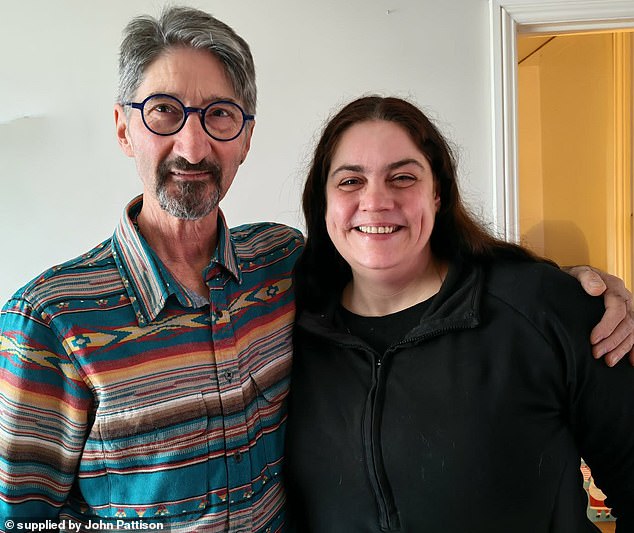
John and his daughter Donna all smiles in a photograph from December 2025. The father has recounted their emotional battle with cancer
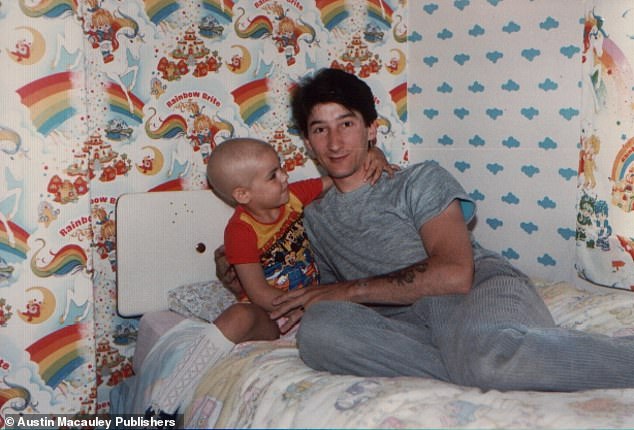
John with Donna during the height of her battle with the disease. Doctors told him there was no treatment for her
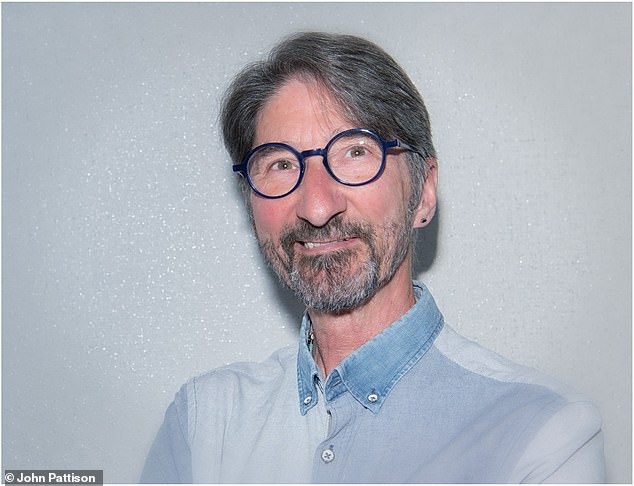
John Pattison went through what he says was an agonising bout with cancer, which left him infertile before watching his adopted daughter battle the disease too
John says his parents, terrified of losing their only son, agreed to keep the diagnosis from him. But the truth found him anyway, by accident, while sitting alone on a hospital ward.
‘I read an article in a newspaper, and it said ‘Crossroads star hides a secret from millions of fans. I started to read, and of course, sure enough, he had lymphoma.
‘I’d overheard the doctor say it, I had lymphoma that meant absolutely nothing to me. And of course, when I continued to read, this is a form of blood cancer.
‘And of course, that was when I then embarked on a roller coaster ride of emotional turbulence, a kaleidoscope of emotions I’ve never experienced in my life.’
What followed was years of brutal treatment that pushed him to the edge.
‘Once I’d started this treatment, the side effects were just absolutely arrant,’ he says. ‘I could not have sat here for the next two years and try to verbalise the way that it made your body feel back in the 70s, the side effects were absolutely brutal.
‘The nausea and the vomiting lasted for 10 solid days between treatments.’
The psychological toll, he says, was as devastating as the physical one. He recalls: ‘I became so fearful that, and I have no shame at all saying that, on more than one occasion, I contemplated suicide.
‘It wasn’t just the physical effects. It was the psychological burden of this cancer diagnosis. It was playing games with my sanity.’
John relapsed again and again, enduring three and a half years of chemotherapy and radiotherapy. At one point, his parents were told the cancer was terminal, and that he would die, a truth he was never told at the time.
‘I was never told that I wasn’t going to survive,’ he says. ‘I was just told that I was going to have treatment to alleviate the symptoms that I had. I never, ever got any direct answers to those questions. I think it’s called bull***, if you like.’
Then, against all expectations, the cancer finally disappeared. Walking down a hospital corridor, John still remembers the moment his consultant emerged.
He says: ‘He put his arms in the air and said, You’re clear. All bloody clear. I still hear those five words to this very day.’
Years later, his mother finally admitted the truth, that doctors had once believed he was going to die.

John was only 18 when doctors gave his parents the devastating news of his cancer diagnosis
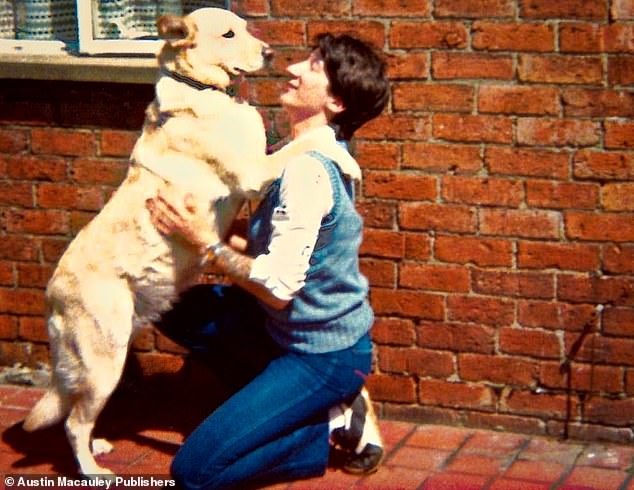
John was told he would not survive and went through several rounds of gruelling chemotherapy before his cancer suddenly disappeared
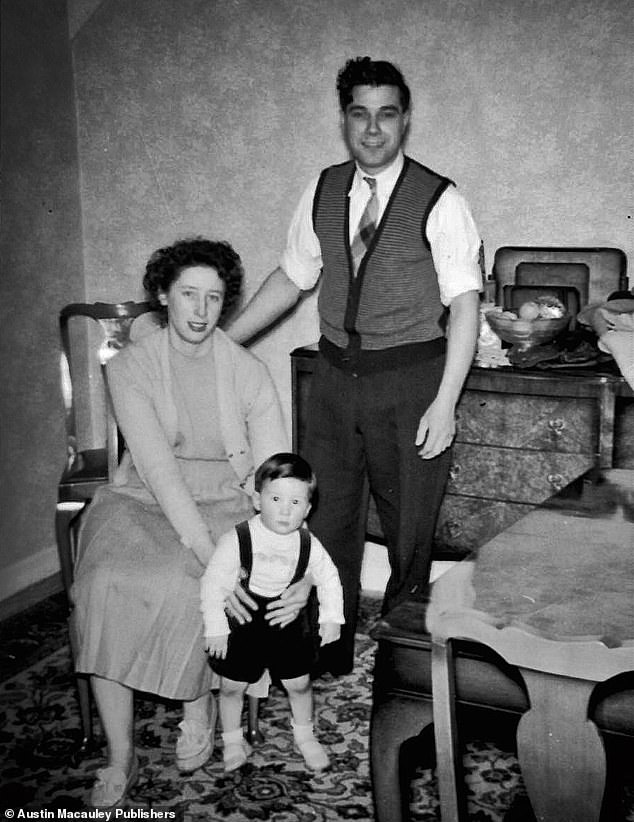
John as a toddler with his parents, who decided to keep the true nature of his diagnosis from him
‘We cried together. An unbelievable scenario, having, I guess, indirectly, been given a death sentence, but not knowing that you’ve been given a death sentence.’
But surviving cancer came with consequences no one had prepared him for.
The chemotherapy that saved John’s life had rendered him infertile, something he only discovered years later, after marrying and trying for a family.
He explains: ‘Biologically, I don’t have any children, because the chemotherapy back in the 70s was so brutal that it rendered me completely infertile.
‘That kind of issue was never mentioned to me way back, unlike today, where obviously we have sperm banking.’
The moment he was told, he says, was devastating, not just for him, but for his wife.
‘The GP was squirming in his seat, and I just knew instinctively that there was a problem. And he said, ‘You know, you won’t be able to have any children because of the treatment that you had.’
‘I felt very guilty for my then wife, because I thought I had trapped her into this marriage.’
His anger and frustration, he says, were directed at the medical establishment. ‘I should have been told that I wouldn’t, many years down the line, be able to have any children of my own. So the emotions were very raw indeed.’
Determined to become parents, John and his wife turned to fostering. They welcomed a two-year-old girl called Donna into their home, with the hope of adopting her.
‘There is nothing more important in the world than children,’ he gushes. ‘They are amazing. They bring so much joy to family. And Donna did exactly that. I raised her exactly as my own.’
For John, adoption felt like a second chance at the life cancer had taken from him.
Then came the cruel twist he could never have imagined. Donna was just four when he noticed a small lump on her elbow.
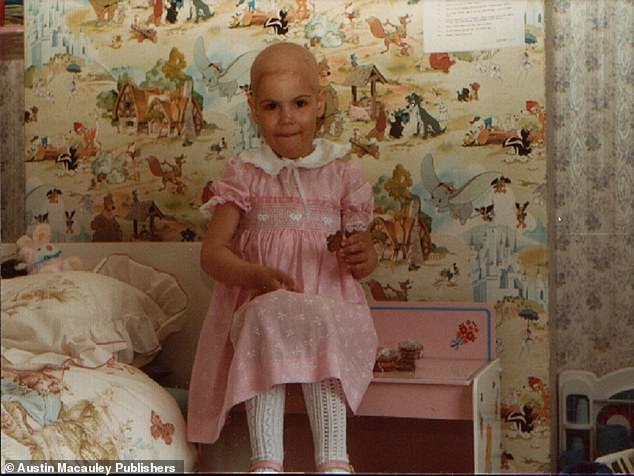
Donna, after doctors told John that she had cancer. The diagnosis came as a huge blow for John and his then-wife
He says: ‘I noticed on her elbow she had this small walnut-sized lump. Didn’t think a great deal of it. Took her down to the GP, and the GP said, ‘Oh yes, this is an infection. We’ll give her some antibiotics.”
The lump did not change. A second course of antibiotics failed. A third opinion followed. Eventually, John took her to A&E.
He adds: ‘She was running around. She certainly wasn’t unwell. They did some blood tests and found that she was slightly anaemic. They admitted her to the children’s ward, did a biopsy, and discharged her.’
Then the phone call came, and John knew something was wrong.
‘I remember sitting outside the consultant’s office. There were two chairs regimentally placed there. I remember the consultant saying to the nursing sister, Get me two cups of tea for these parents. And I just knew.’
Inside the office, the consultant asked one question.
John states: ‘He said to me, tell me what you know about lymphoma. And I said to him, are you telling me Donna’s got lymphoma. He said, Yes.’
For the doting father, it meant watching his daughter walk the same path he had survived, despite the fact that they were not related by blood.
In tears, John says: ‘Four years of age, sitting on that bed, and words could never, ever describe the helplessness of watching your child go through chemotherapy.
‘If I could have accepted that chemotherapy on behalf of Donna, I would have happily done so.’
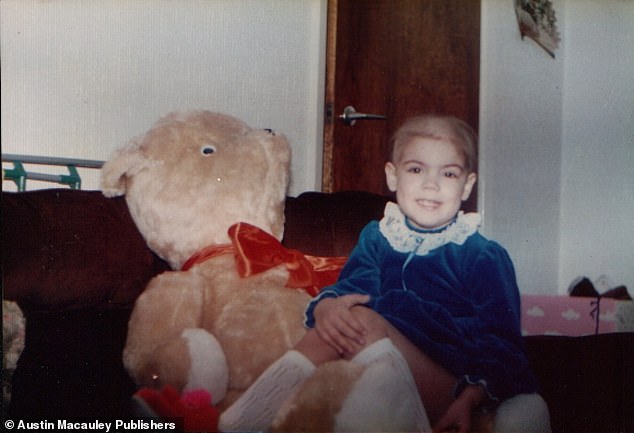
John and his wife crammed a lifetime of love into whatever short time they may have had left with Donna
Four years of age, sitting on that bed, and words could never, ever describe the helplessness of watching your child go through chemotherapy. ‘If I could have accepted that chemotherapy on behalf of Donna, I would have happily done so.
Donna’s condition worsened – doctors later told John that it was not lymphoma after all, but a rare form of adult leukaemia mimicking it, and that there was no treatment.
According to the devastated father: ‘I said to him, What’s the treatment. Then he just looked at me and said, I’m afraid there is no treatment.’
Preparing for the worst, John and his wife spent whatever time they could with Donna, cramming a lifetime of love into whatever short time they may have left.
John says: ‘Donna absolutely loved Blackpool, so we would go to Blackpool for a day, come back, get sorted, and then go back to Blackpool and just spend what time we had with her.’
Then, once again, the impossible happened – a miracle that no one could articulate. Doctors called him to deliver the most spectacular news.
John recalls: ‘He said, ‘We just can’t explain what’s happened. Donna has gone into spontaneous remission. It’s inexplicable, but there it is.”
With each passing day, Donna grew stronger and stronger. After a while, she was discharged completely. Despite suffering minor seizures due to her treatment, John was amazed when she started showing an interest in swimming.
He says: ‘We took her along to swim class and she just went from strength to strength. In her very first competitive event, she went into the pool and had a fit halfway through.
‘I was on the poolside with her instructor, and the lifeguard completely ignored her. I went in fully clothed, and so did her instructor, and we got her out.’
Despite this, Donna refused to give up. She went on to become an international paralympic swimmer, representing England all over Europe before being selected for Team Great Britain in 1998.
She went on to represent her country at the 1998 International Paralympic Committee’s World Swimming Championships in Zealand and won two silver medals.
Speaking about her incredible accomplishments, John says: ‘She made me the proudest dad in the whole world.’
Donna is now 44 and has children of her own. John proudly says: I have two fantastic grandchildren that Donna has presented me with, Kieran and Cara.’
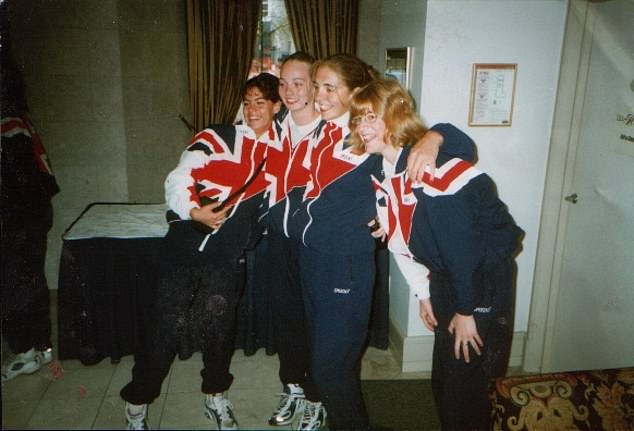
After Donna defied the odds and made a full recovery, she went on to represent Team GB and won silver medals as a swimmer
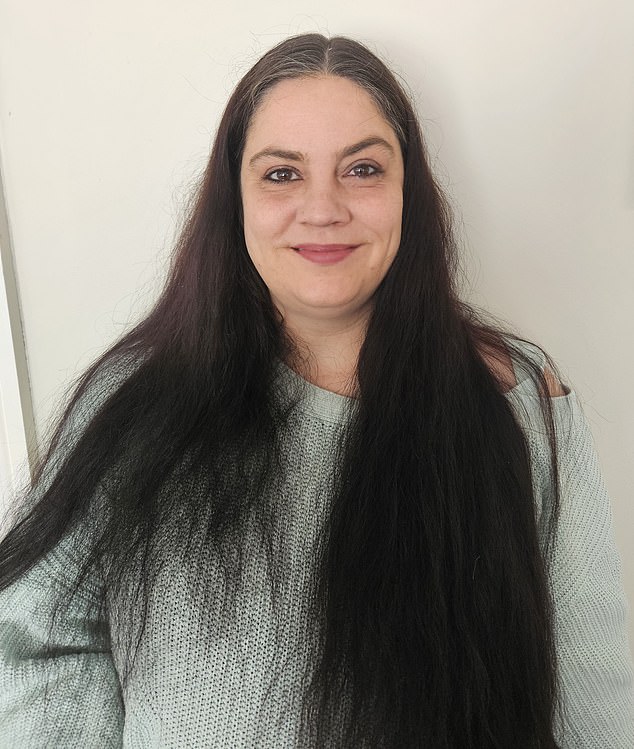
Donna is now thriving and has children of her own. John says he is incredibly proud of what she has achieved
John later became a senior nurse specialist in haematology, caring for patients with the same diseases that once nearly killed him and his daughter, carrying with him a lasting sense of survivor’s guilt.
He admits: ‘I would have to tell patients that the treatment wasn’t working, knowing that I’m there many decades later, surviving, and yet I’m telling these people that they’re not going to survive.’
He also divorced from Donna’s mother in 1998 and remarried in 2003.
But John’s own health battles are far from over. Four decades after his first battle with cancer, he was dealt yet another devastating blow, which he believes stemmed from his cancer treatment.
He says: ‘All of my current chronic health conditions are a consequence of the treatment I received back in the 70s. I received a drug called cyclophosphamide, which is a known urotoxic drug.’
It was in 2018 that those consequences became clear.
‘That year, I was actually on a flight to Washington, DC when I started passing blood, and I immediately knew what that meant,’ he said.
‘So when I returned, I went to the GP, who immediately made a two-week referral.’
John was sent to Newcastle for investigations. Two weeks later, he was given the news he says he suspected all along. He had bladder cancer.
He was admitted to the hospital and underwent surgery, followed by chemotherapy.
‘I was then admitted to hospital and had some surgery,’ he says. ‘I also had some chemotherapy instilled into the bladder, and after that, there was a period of surveillance.’
That surveillance lasted two years before the cancer returned.
‘Unfortunately, the bladder cancer came back again, so I needed further treatment,’ he says. ‘That needed transurethral ablation, which is kind of lasering the tumour inside the bladder itself.’
Since then, he says, there has been no further issues regarding the illness. ‘I’m pleased to say that I’ve had two years of freedom from any further recurrence of the bladder cancer,’ he says. My next repeat camera testing is early 2026.’
On how the diagnosis affected him emotionally, John said it was very different to the terror he felt as a teenager.
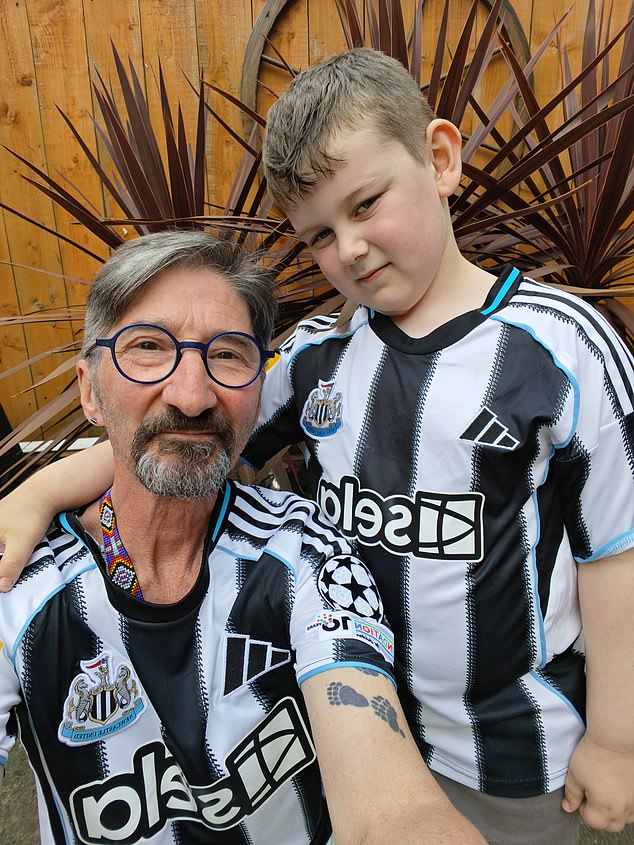
John with his grandson, Daniel, who he says is one of his inspirations
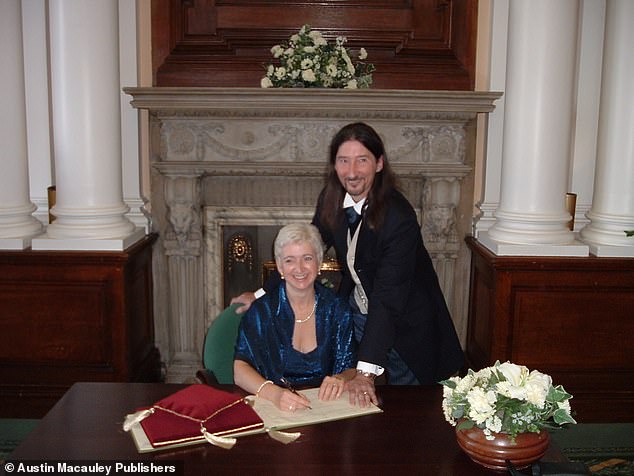
John remarried in 2003 after divorcing from Donna’s mother in 1998
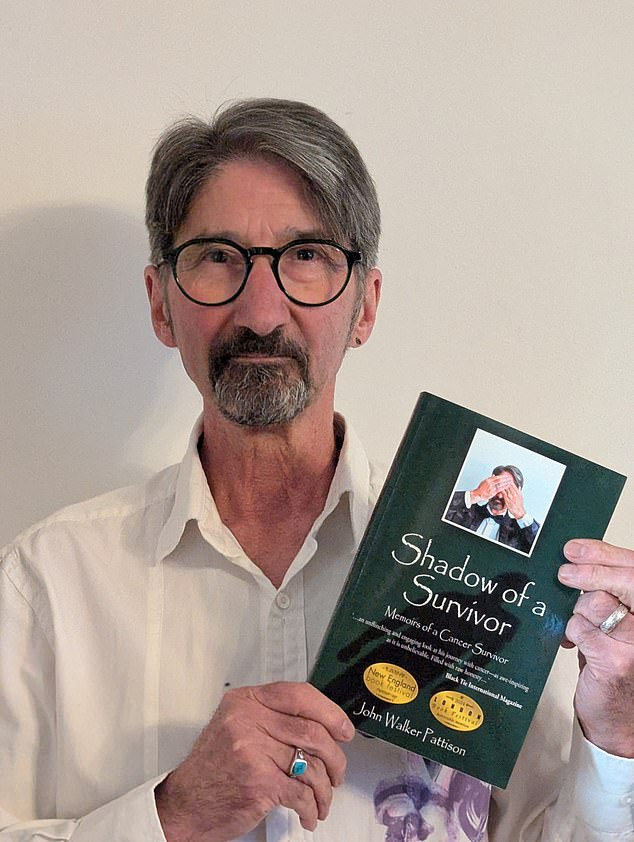
John says his book, Shadow of a Survivor, was written to inspire other people going through adversities such as cancer
He says: ‘Although psychologically I really struggled with my diagnosis back in the 70s, being an immature and naive adolescent, when I started passing blood, I instinctively knew what it meant.’
‘Not wanting to sound flippant, but bladder cancer is one of those illnesses that really is relatively simple to treat. That’s not dismissive; clearly, there are still people who die of bladder cancer.
‘But knowing what it was then, I just had to resign myself to the fact that this is gonna require some intervention.’
Despite his health challenges, John says his positive outlook on life remains unchanged.
‘Life is not a rehearsal,’ he declares. ‘It’s for living. It’s a once only opportunity, but it’s our responsibility to take that opportunity.
‘We should never look back on our lives unless we can be reflective. But importantly, we should never look forward unless we can dream.’
John, who is now known as one of the UK’s oldest living cancer survivors, is an author who has written books for children.
He also authored his memoir, Shadow of a Survivor, which he hopes will inspire other people facing adversities.