On Feb. 12, the heads of the European Union’s 27 member states will gather in an emergency summit at the request of Germany and Italy. Why the urgency? The bloc’s economic competitiveness continues to falter – especially in tech innovation such as artificial intelligence – in what is seen as an overly regulated market.
The EU’s growth rate in productivity per worker is less than a quarter of that of the United States, based on latest figures. In 2024, it collected more in fines from U.S. tech companies than in total taxes on its own tech firms.
Such comparisons, notably the productivity gap, are not the only thing driving the EU into a round of introspection over how to further unleash the talents of its 450 million inhabitants.
Criticism from its closest friends has also grown louder. Surprisingly, the foreign rebukes are welcomed by many Europeans.
At the recent World Economic Forum in Davos, Switzerland, President Volodymyr Zelenskyy of Ukraine said Europe “avoids taking action” on the continent’s future. “Instead of becoming a truly global power,” he said, “Europe remains a beautiful but fragmented kaleidoscope of small and middle powers.” Officials from the Trump administration were equally critical of Europe’s declining economic prowess.
To be sure, the EU is doing much to boost competitiveness. On Tuesday, for instance, it struck a trade deal with India to reduce tariffs, a signal of Europe’s desire to be less dependent on a less-reliable United States. Yet it has made little progress based on a 2024 blueprint for boosting competitiveness, written by former European Central Bank President Mario Draghi.
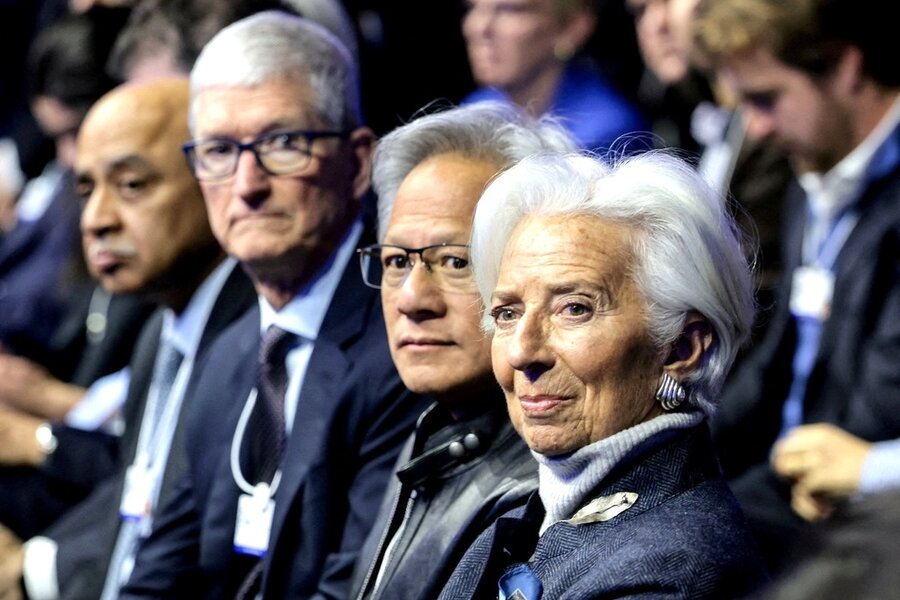
“I think we have heard quite a lot of European bashing the last few days,” said Christine Lagarde, the current ECB president, in Davos. “But if anything it has been good, and we should say thank you to the bashers, because I think it has given us a complete realization of the fact that we have to be more focused” on innovation and productivity.
In a similar vein, European Commission President Ursula von der Leyen said, “Whether on trade or business, capital or energy – Europe needs an urgency mindset.” She admitted that too many European companies “have to look abroad to grow and scale up – partly because they face a new set of rules every time they expand into a new member state.”
As the EU’s top executive, Ms. von der Leyen often invokes humility as essential to the bloc’s tasks, such as during the pandemic. She sees the trait as essential for being open and trusting – something many startup tech firms tap for ingenuity and collaboration.
Or, as C.S. Lewis is often credited with stating: “Humility is not thinking less of yourself, but thinking of yourself less.”
Europe was once at the frontier of inventing technologies, from the printing press to television. It still has many world-class companies. Yet, now, with its emergency summit next month, it might be entering a period of earnest reflection. And it is doing so with gratitude for those nudging it along.