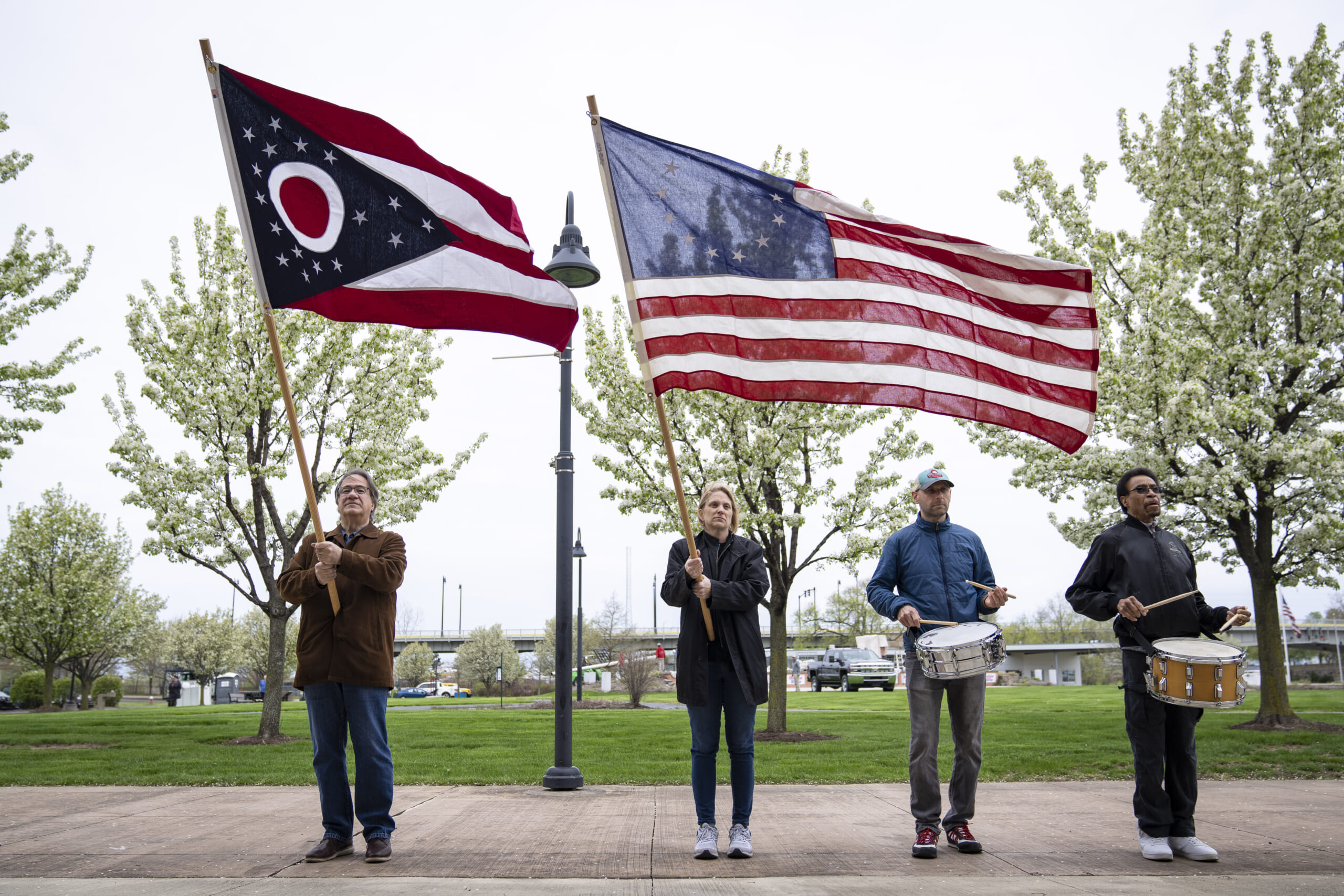
Among the more curious features of my job as a critic who writes regularly about the motion picture industry is explaining to various interview subjects, PR flacks, and sometimes even professional colleagues that I live in Ohio.
In my experience, most people who work in Hollywood assume that nearly everyone who might enter their orbit also works in Hollywood or some other acceptably cosmopolitan locale, which means, in practice, New York. Remarkably, this habit of mind persisted even during and after the age of the Covid-19 pandemic, when, conceivably, it should not have mattered one iota whether I was conducting a phone interview with a Hollywood bigwig from an office in downtown Los Angeles or a coffee shop in Dubuque.
Over the years, I have adopted certain strategies, or coping mechanisms, to account for my apparently unusual decision to live in Ohio. If, when speaking to someone in Tinseltown for a magazine piece, the question of my area code or time zone comes up, I have taken to saying the following: “I am one of the magazine’s farthest-flung far-flung correspondents.” This generally prompts a laugh, and we can move on with the business at hand.
Sometimes, I have been known to refer to the proximity of Indiana University when explaining my decision to live in adjacent Ohio: IU’s Lilly Library, merely one state over, contains a trove of show-business materials that I intend to make use of when I write my biography of Last Picture Show director Peter Bogdanovich. So there—if I didn’t live in the Buckeye State, I would be at a serious disadvantage in writing my book!
I admit there is a certain defensiveness in these answers. Instead of coming up with sheepish excuses for making my home in Ohio, I should proudly tout my state’s normality, affordability, and likely imminent political prominence as the home state of the man I assume to be the next GOP presidential nominee, Ohio-born Vice President J.D. Vance. Well, I would probably leave out that last part when interviewing Hollywood types, even though Vance’s memoir Hillbilly Elegy was made into a perfectly credible Netflix movie starring Glenn Close and directed by Ron Howard (the latter of whom I once interviewed—a genuinely nice guy).
My status as an Ohioan was a nagging source of conversation during my decades-long, long-distance interaction with the great director Bob Rafelson, who should have been the most tolerant of my location given his own wandering ways: By the time I knew him, Bob had long ago said so long to Hollywood and lived, when he was not engaged in various globe-trotting travels at the behest of this or that film festival, in Aspen, Colorado. Furthermore, Bob looked down on directors who made movies in Hollywood, even if their address happened to be there. He preferred to sojourn to the hinterlands to make movies in what he called “odd American places”: Bakersfield, California, in Five Easy Pieces, Atlantic City in The King of Marvin Gardens, Birmingham, Alabama, in Stay Hungry, even Miami in Blood and Wine. “It’s kind of a personal pleasure of discovering these places,” Bob told me about why he made films in such curious spots.
In fact, when I first interviewed Bob in 2004, I was not even living in Ohio myself: I was briefly in Maryland, though I would soon be returning to Columbus—a homecoming to which I looked forward and about which I must have bragged to Bob, who said, darkly, that he had once made a movie in Columbus, sort of. This had not been a happy experience for him: He was fired from the Robert Redford prison movie Brubaker, which was shot, during and after Bob’s reign as director, in Columbus and other Ohio locations.
Thereafter, my home base in Ohio was a source of amusement and prickly condescension for Bob, who, though he routinely expressed appreciation and admiration for my writing on his movies, returned to the subject every so often. After the 2004 presidential election, when I was still in Maryland but bound for Ohio, I remember feeling some unease when talking to Bob since I knew he had supported John Kerry and that Ohio helped give the race to George W. Bush. Years later, Bob seemed annoyed when I referred to professional commitments in Columbus that might keep me from writing a magazine profile of him that would require travel to Aspen. Perhaps I was projecting my own insecurity about living in Middle America onto Bob, a formidable and sometimes fearsome personality.
Subscribe Today
Get daily emails in your inbox
Yet, in the final chapter of our relationship, I was not proved wrong. In the spring of 2022, I impulsively asked Bob to sign my poster for Stay Hungry, his fabulously friendly and fun Birmingham-set comedy-drama starring Jeff Bridges, Sally Field, and Arnold Schwarzenegger. To my shock, Bob agreed, and to my even greater shock, the signed poster arrived on my front porch one day.
“To Peter T.,” Bob scrawled in red ink, “who lives in an odd American place.”
For Bob, who died later that year, I was always associated with a strange, strange land. But which is stranger: Ohio, America’s seventh-most populous state, or the fact that it is regarded as an oddity by people who live and work in Hollywood, also known as the Dream Factory and La-la Land?