This article is taken from the March 2026 issue of The Critic. To get the full magazine why not subscribe? Get five issues for just £25.
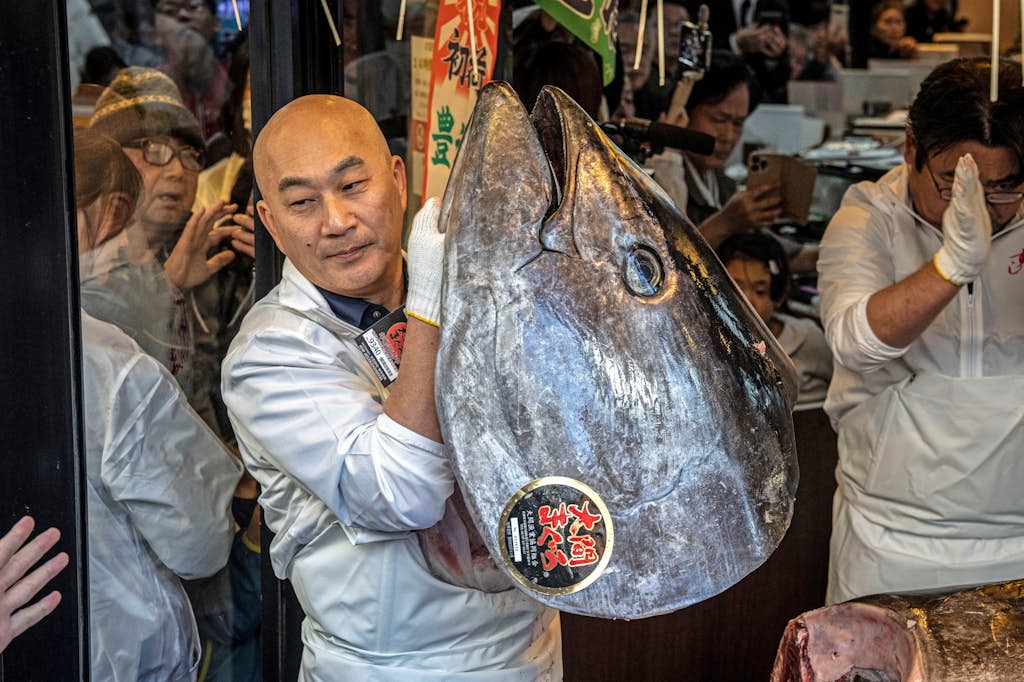
This year’s record-breaking price for an unappetisingly large bluefin tuna worked out at nearly £4,500 per pound. Whilst it was still fresh, bargain-hunters could get five slices for £10.25 or so in a Tokyo branch of the restaurant chain that bought it.
The most puzzling, annoying and irresoluble paradox of food today is that it is, in different spheres, at once abominably expensive and unjustifiably cheap. At rarefied levels of taste or exhibitionism, it is like other luxurious or prestigious products: it commands the kind of premium that buys celebrity.
In the mass market, where food is merely for nutrition or short-term gratification, low prices cheat producers and make consumers gorge. At both ends of the price range, the consequences are appalling: crass consumption for the rich, obese immiseration for the poor.
Japan is uniquely susceptible to showy food-auctions because of superstitious confidence in supposedly auspicious eating. The first tuna of the year — the silver scales, the blushing flesh — glows with illusive good luck.
Fresh bluefin are expensive because of fishing quotas and the speed with which the flesh spoils. Nor are they easy to farm: so the first catch confers the same glamour and exploits the same susceptibilities as the year’s first grouse or gull’s egg.
You can grab publicity even by overspending on more accessible foods
The season for tuna is longer in the Pacific than the Atlantic. The Japanese grab the early catches. In the US the first specimens come to market about now. In Britain, you have to wait for summer or pay an even sillier price for fish flown in from afar.
You can grab publicity, however, by similar overspending on more accessible foods. When I was an undergraduate, Mr Feller of Oxford’s covered market regularly trounced fellow butchers by scooping the fattest, costliest, most newsworthy carcases at auction.
It seems unlikely that the publicity was worth the cost. As in the millionaire-tuna chain, Mr Feller’s customers could enjoy the complacency and gossip-value of a famous bargain, because the turkeys, sheep and oxen sold at a loss to the firm.
So what do the early risers at auctions of obscenely big dead flesh and fish get for their money? Not so much a PR bonus as the satisfaction of beating competitors.
Wastefulness buys status, as in the custom of the potlatch in the American Northwest, where conspicuous consumers flaunt wealth by throwing food into the sea; or the banquets of renaissance Rome, where servants threw soiled gold vessels into the Tiber (though strategically placed nets minimised the hosts’ losses).
Stories about outrageously profligate eating have the appeal of scandal. Tuna and mazuma go together like vicars and knickers. No one, however, seems to appreciate the scandalously low prices at the other end of the market, where poor consumers overstuffed with cheap junk are condemned to greasy guts, pasty faces and flatulence. Along with the welfare gap, a wealth gap glares between producers and consumers.
The former have to accept exploitation by powerful buyers or tyrannous suppliers of proprietary seed, fertiliser and pesticides. Such inequalities can destroy peace and inspire revolution.
The best response is as impractical as it is obvious: average food prices need to be higher, to reduce the amount people eat and improve producers’ rewards. Meanwhile, anyone lucky enough to have fresh tunnyfish will get the best from it — morally as well as gastronomically — by combining it with cheap ingredients.
Chopped onion and garlic simmered in olive oil with a sprinkling of muscovado, sliced tomato, a few capers, a bay leaf and plenty of salt and red pepper perfectly accompany a thin slice of fish, cooked briefly in the same pan so the outside is seared, whilst a ribbon of pinkness shows like a stripe. A slug of sharp, acidic wine to deglaze the pan will offset the sweetness of the flesh.
A cook reduced to using frozen or preserved tuna can achieve spectacular results, ideal for Lenten chill and austerity, by simmering potatoes with colourful vegetables — carrots, say, and peppers — and ineluctable garlic and onions in a well-seasoned liquor of fish stock and wine.
When the vegetables are soft and the liquor hot, the pot can be removed from the heat: lumps of tuna and sprigs of bitter turnip-tops will cook in it, whilst staying juicy and tender.