This article is taken from the April 2026 issue of The Critic. To get the full magazine why not subscribe? Get five issues for just £5.
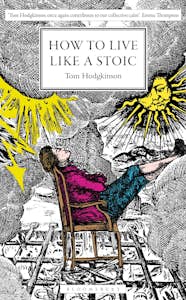
Although purportedly written “to discover how Stoicism matters today as a living, breathing, practical and rich philosophy which can help us on our route to fulfillment”, Tom Hodgkinson’s How to Live Like a Stoic is closer to a snarky polemic than a genuine reflection on Stoicism.
Unfortunately, the author’s contemporary leftward bias bleeds into nearly every page. As a result, rather than learning to live like a Stoic, the reader gets repeated exposure to how to live like Tom Hodgkinson.
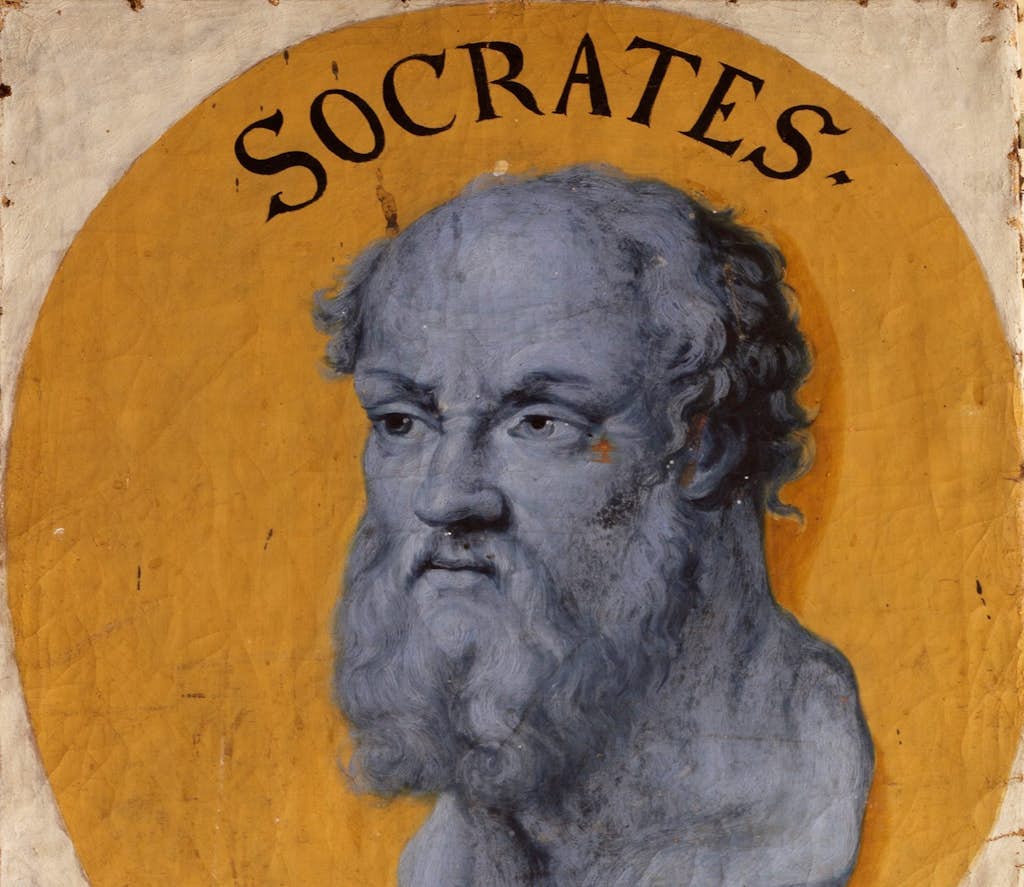
It is difficult to get through even one page without a cringe-inducing reference to the present day. Epictetus is best thought of as delivering “a stirring TED talk”, the Cynics are “punks”, the Stoics are “hippyish”, the Greeks were all “polysexual, non-binary”, Socrates made a “statement of anti-consumerism”, the Delphic oracle is “a glue-sniffer”, and the Stoics’ austere manner of dress is described as “#monkstyle”. You get the point.
Hodgkinson’s pithy, quick-witted style certainly packs a punch and provides entertainment. However, in a book claiming to be a “handbook for happiness”, the relentless whimsy results in a flippancy that verges on, and often surpasses, arrogance.
For example, after a surprisingly poignant and insightful discussion of Stoic grief, Hodgkinson glibly quips, “I experienced severe mental pain when Elon Musk became, briefly, Governor of the Entire World.”
A one-off joke about Musk could easily be ignored, but Hodgkinson’s politics incessantly assert themselves into the text. The book references Donald Trump 14 times over the course of 70 pages. According to the Stoics, discipline is a crucial virtue; this book possesses very little. Examples of careless writing are evident throughout.
Hodgkinson gets basic facts wrong. For nearly the entire book, Cicero is represented, without qualification, as a genuine Stoic — something Cicero would be shocked to learn. Only towards the end does Hodgkinson begrudgingly admit that “the orator sometimes called himself an Academic rather than a Stoic”. Even that is disingenuous, as Cicero never considered himself a true Stoic.
Also, the book calls the Emperor Marcus Aurelius one of several “ambitious coves” who “were writing in the hope of being read by later generations”. In fact, what we now call Marcus Aurelius’ Meditations were not written for fame in posterity (its author being the most powerful and well-known man on the planet) but for his own private edification.
It might be possible to overlook these few basic mistakes — and there are many others — as unimportant oversights. However, graver errors await. The book claims that Socrates “had sex with men and women” and that “he was famously lustful and used to visit high-class brothels”. Intriguing as these scintillating titbits might be, no actual historical evidence is cited. To its credit, the book does not shy away from quoting primary source material — which makes its absence in this instance all the more glaring.
In the first chapter, Hodgkinson writes that “Zeno was probably the first philosopher to talk about the logos”, and then proceeds to debunk his own claim in the subsequent chapter: “Socrates was encouraging his followers to continue his work by engaging in argument, or logos.” Socrates died in 399 BC. Zeno was not born until the 330s. To make matters worse, neither of them was the first; Heraclitus had explicitly done so a hundred years before Socrates.
The book’s best section is its treatment of Stoic cheerfulness, where Hodgkinson perceptively calls upon euthymia, an oft-overlooked Stoic concept, emphasising that “cheerfulness is a form of Stoicism”. The chapter admirably combats the common misconception of a cold, emotionless Stoic.
However, this, too, is undermined by sloppy writing. Earlier, Hodgkinson fell prey to the same misconception by writing that the Stoics wanted to remain “calm, detached and, yes, emotionless”. Calm and detached? Textbook Stoicism. Emotionless? By Hodgkinson’s own more nuanced analysis later, this conclusion is demonstrably false.
All of these are shades of the same problem: a carelessness and frivolity that sabotages any attempt at a serious discussion. There is no better example of this than the book’s peculiar ending. Hodgkinson here admits that he doesn’t want to be a Stoic because, well, he likes his “gummies and magic mushroom drops” too much. The tone is that of a petulant child who doesn’t want his parents to take away his toys.
Sadly, Hodgkinson’s inability to stoically detach himself from his own biases prevents what could have been a timely, thoughtful analysis of Stoicism. Rather than a handbook for happiness, Hodgkinson leaves a confused mess that does little to provide practical help for anyone’s journey to fulfillment.