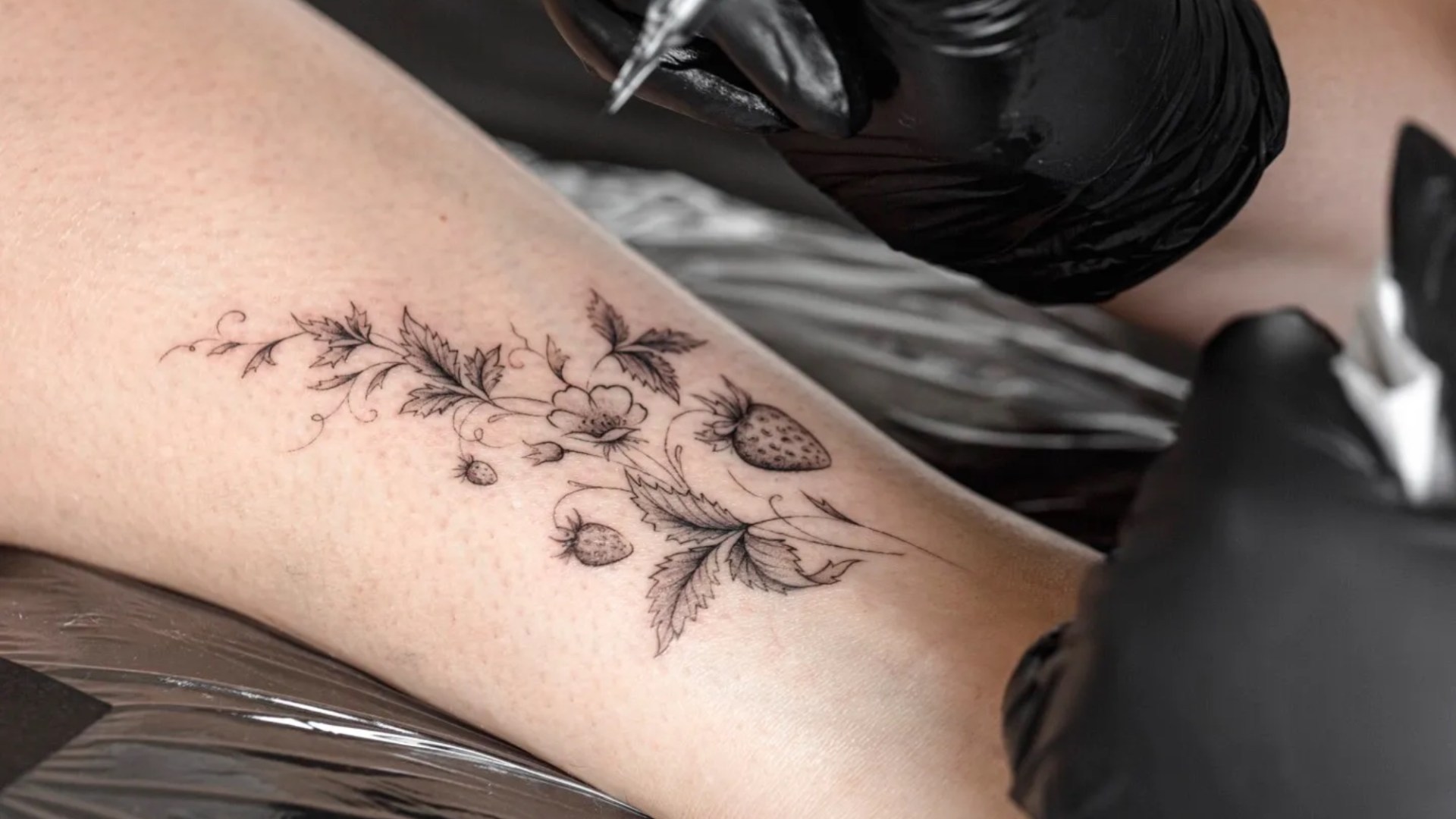
TATTOOS may protect people from the deadliest form of skin cancer, new research suggests.
Melanoma is less common in people with several inkings, according to the American study – but there’s a key caveat.
Scientists from Huntsman Cancer Institute at the University of Utah evaluated 7,000 local people.
They found that getting tattooed twice or more was linked to a lower risk of both invasive and in situ melanoma.
In situ melanoma means the cancer cells remain on the skin’s surface and are more easily removed.
The disease is called invasive when it spreads from the top skin layer, threatening to invade lymph nodes and other organs.

But the researchers also found that participants who’d only had one tattoo session were more likely to have melanoma, especially in situ.
Study leader Professor Jennifer Doherty says the reasons why that may be the case are speculative, and called for more research to understand the surprising pattern.
Prof Doherty said: “Tattoos are increasingly common, and it’s an understudied form of environmental exposure, especially in young people.
“We really need to understand how tattoos could impact risk for different types of cancer.
“For melanoma, the results seem to be mixed.
“But we see people with two, three, and four tattoo sessions having decreasing risk, and that’s a stronger pattern than the increased risk with just one session.”
Research suggests around one in three people today have tattoos.
About 37 per cent of people between the ages of 16 and 54 have at least one tattoo, according to research by Ipsos.
Meanwhile, there are 16,700 new melanoma skin cancer cases in the UK every year – but charities have warned for years that rates are rising.
While it is less common than other types of skin cancer like basal cell carcinoma (BCC) and squamous cell carcinoma (SCC), melanoma is more dangerous because of its ability to spread to other organs more rapidly if it’s not treated at an early stage.
Can you spot the cancerous moles from the harmless ones?
IF you’ve spotted a new mole or lingering mark on your skin, don’t be too quick to dismiss it.
It’s important to know what your skin looks like normally, to help you notice any unusual changes.
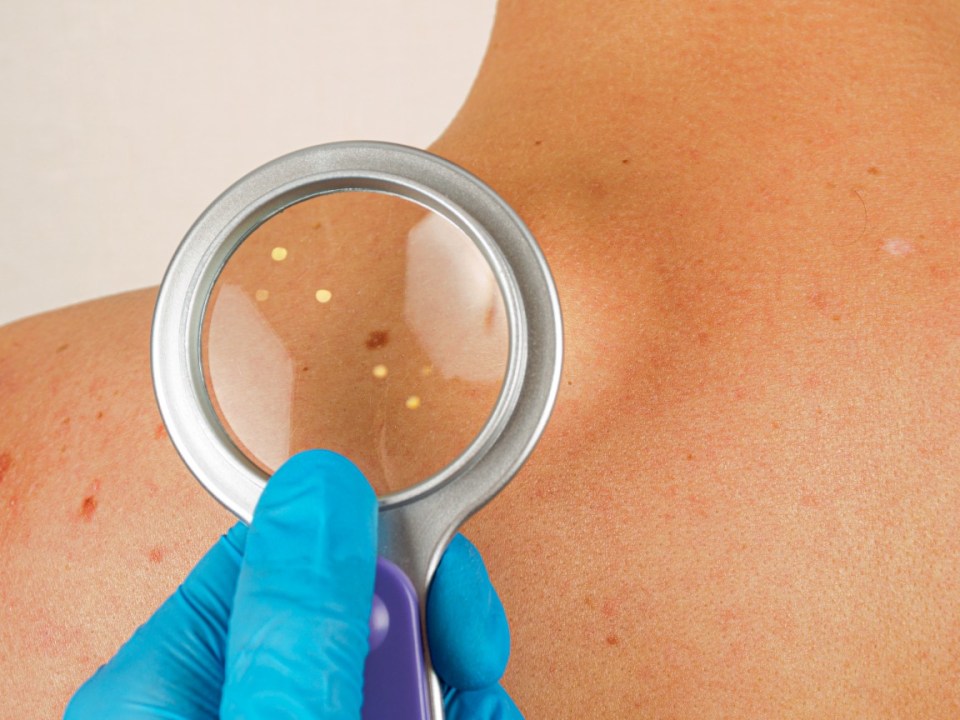
The ABCDE rule can be followed to assess the health of a mole.
If your mole falls into the following, it’s worth getting checked:
- Asymmetrical – melanomas usually have two very different halves and are an irregular shape
- Border – melanomas usually have a notched or ragged border
- Colours – melanomas will usually be a mix of two or more colours
- Diameter – most melanomas are usually larger than 6mm in diameter
- Enlargement or elevation – a mole that changes size over time is more likely to be a melanoma
Most melanomas don’t give you symptoms like pain or itching.
Meanwhile, some non-cancerous moles or abnormal patches of skin can be itchy.
So having some of these changes on their own doesn’t mean you definitely have melanoma, but you should still get it checked out.
There are two main types of skin cancer – non melanoma skin cancer and melanoma skin cancer.
Non-melanoma skin cancer includes:
- Basal cell skin cancer – this is also called basal cell carcinoma
- Squamous cell skin cancer – this is also called squamous cell carcinoma
There are a few different types of melanoma too:
- Superficial spreading melanoma
- Nodular melanoma
- Lentigo maligna melanoma
Find out more about distinguishing moles here.
Localised melanoma has a 99 per cent five-year survival rate, but that drops to less than 35 per cent if it spreads to distant organs.
That’s because it becomes harder to treat as it spreads.
Melanoma is most often caused by damage to the skin from ultraviolet (UV) radiation emitted by sunlight or tanning beds.
Prof Doherty says that her research team originally hypothesised that having more tattoos would increase melanoma risk due to the carcinogens – such as metals and other chemicals – found in tattoo ink.
The ink in a person’s skin can also break down over time and create new carcinogens that weren’t originally in the tattoo.
Tattoos can also cause inflammatory responses, and inflammation is often associated with cancer risk.
Study first author Dr Rachel McCarty, a former PhD student at Huntsman Cancer Institute, said: “The results that tattoos could decrease melanoma risk surprised us.
“But this isn’t a black and white case of ‘get more tattoos, and you could lower your risk of melanoma’.
“Instead, we need to do more research to understand what we are seeing and if this decreased risk is simply due to behavioural or physical factors, or if there could be beneficial immune responses associated with tattooing which lower melanoma risk.”
It may be that people with several tattoos are more cautious with sun safety and take better care of their skin, according to the research team.
They suggest that tattoos could also form a physical barrier that blocks ultraviolet radiation or cause an immune response against precancerous cells.
Dr McCarty says those with tattoos should continue making informed decisions about skin protection.
She said: “Tattoo artists already advise their clients to wear sunscreen and sun protection to prevent tattoos from fading.
“We know wearing sunscreen is an important safety step for everyone, even without tattoos.
“But it’s also important for those with tattoos to take extra precautions to prevent any additional harmful components from forming in the skin when pigments break down from UV exposure.”
While the study revealed a decreased melanoma risk for those with tattoos, the research team say that may not be true for other types of cancer.
An earlier project from Prof Doherty’s team and a Swedish study both suggest that tattooing could be connected to an increased risk of certain blood cancers.
But the research team say the findings of the melanoma study, published in the Journal of the National Cancer Institute, are a “promising” step forward in understanding how tattoos can impact skin cancer risk.
Co-author Professor Douglas Grossman, of the Melanoma Centre at Huntsman Cancer Institute, added: “The Mountain West and the area we serve have some of the highest melanoma rates in the country.
“Better understanding risk factors for melanoma will help us improve prevention strategies across the region, advise our patients about risks more accurately, and ultimately save lives.”