Be the Church you want to see in the world.
If you fancy passing a gloomy hour (more gloom, anyone?) you could do a lot worse than looking at the official C of E website of closed churches for sale (or here if you are north of the border, and here in Wales).
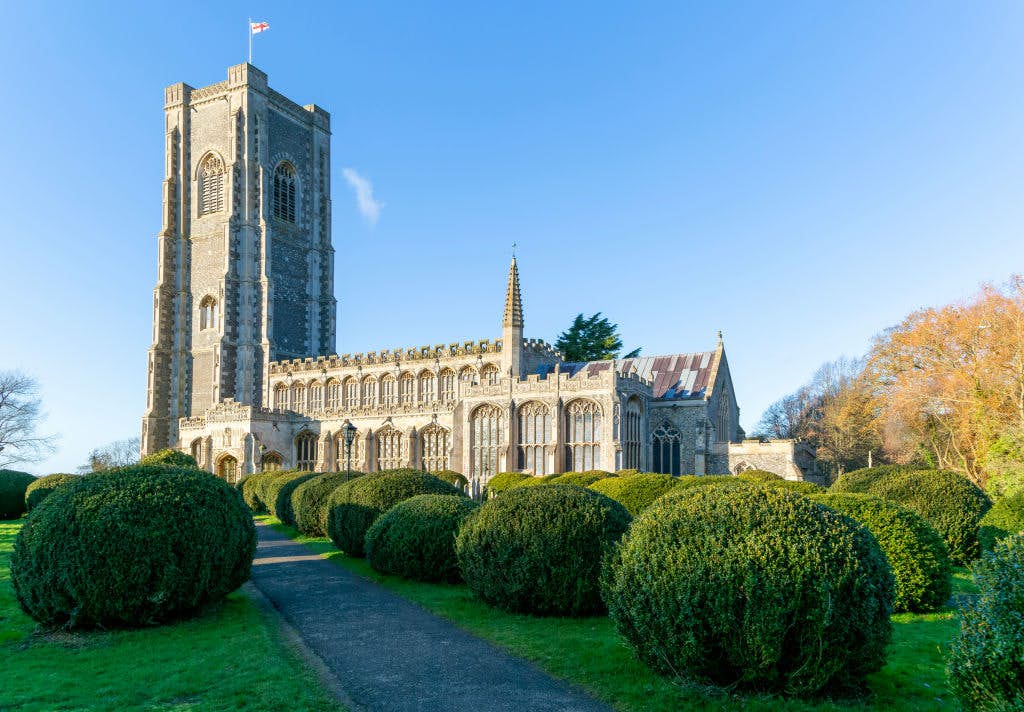
As I write, there are 42 closed churches for sale in England alone. Medieval, gothic, Victorian, listed, the heart of rural villages, the site of burials, memorials, fine art, landmarks in their own right, the houses of God and the gates of Heaven — all under the hammer, some a snip at £50k, all ready to be stripped out, hot tub where the font once was, tasteful breakfast bar instead of the altar. Why not put in a mezzanine so that you can lie in a king-size water bed on Sunday mornings and contemplate close-up the pretty colours of the stained glass windows, which were too complicated to replace?
Around 3,500 churches of all denominations have closed over the last 10 years, and a recent survey by the National Churches Trust suggests that another 2,000 might close by 2030. Bully for estate agents and property developers, less so for the practice of the faith that moulded the country over 1,400 years, the parishes which hold these ancient buildings as sites of memory, the resting places of their forbears, and gathering places for the living community.
But ah, you say, if only something could be done. If only someone could do something to stand against the steamroller of modernity. Who will stop this sacred and irreplaceable patrimony being flogged off by Foxtons for at best, luxury flats. Where are the saviours of the good, the beautiful and the true?
The saviours, needless to say, are you, and people like you
The saviours, needless to say, are you, and people like you. It is often not well understood that the management of parish churches relies not on clergy (now in very short supply) nor on the good offices of diocesan bureaucrats (now thriving) nor government officials or civil servants, but on local volunteers, who have to do all of the heavy work. 83% of churches told a recent survey by the National Churches Trust that the successful management of their buildings depends on an active body of volunteers. The average congregation needs an average of 265 volunteer hours a month for the church to function. However, 70% of them need more volunteers. The survey found that the lack of volunteers had become an ever more acute problem over the last 15 years.
If it is cheering news to you that there is something you can do to stop the loss of your local church — a place which is likely dear to you, even if you do not attend services regularly, or at all — then you will probably want to know what you can actually do, and how you can get involved. These things are not always obvious.
I got involved with volunteering for my local church about eight years ago, even before I started attending regular services. I’d heard that they were trying to raise money to restore some of the windows, but were having difficulty. I attended one of the meetings of the volunteers and asked whether they had been able to apply for grant funding. They had not — they weren’t sure where to apply, and found the paperwork daunting. There was my “in”. Since I’d had a legal training, I was reasonably inured to bumf and paper-pushing. Before long, I found myself sitting on the Parochial Church Council (the PCC, the trustee body of the church, not to be confused with the secular Parish Council) as its secretary.
If you can paper push and are not daunted by forms and rule books, you will be treated as a godsend. Revelation may have the Scroll of the Seven Seals and the Book of Life, but the Church of England leaves these standing with its Electoral Roll returns and the Church Representation Rules. Can you churn out PCC minutes and navigate your way round the correspondence and demands for attendance data without which the diocese think you no more than an insubstantial “vision of the night”? Can you fill in the innumerable and intricate grant forms begging for cash to fix the windows and roof? You are needed. Do you have safeguarding training? Can you expound the hidden depths of safeguarding policies, and deal with the Star Trek-like diocesan dashboards which tell you if anything is lacking in your parish in this regard? You too are wanted.
Can you do numbers? The churches need their treasurers. St Matthew, patron saint of accountants and bankers, will look kindly on you. Can you count, and have muscles? Your bell-ringers need you — according to a recent survey, the tradition may die out here within 20 years. Can you warble, even a little? Join a church choir, or start one if there isn’t. Tinkle on the ivories? Get to the church organ — nine are being ripped out every week, and the number in Britian may halve within 10 years.
Can you ply a lawnmower? The churchyard is yours, and all that therein is. A broom? The temple always needs to be kept cleansed, not just of money-lenders but also bat droppings and general fluff. Do you know about buildings? Can you deal with damp, shimmy up the roof to clean the gutter to clean out the leaves (bearing in mind the church’s working at heights policy, and the promise of the Psalmist that God will not allow your foot to slip), and speak comfortably to the boiler to stop it going “phut” in the middle of the carol service? There is room for you. What if you prefer holy oil to the stuff that you put in the outside tank? Can you deal with the oil of chrism, bread, wine, sacred vessels? Can you master the colour rota for the altar cloths? There is work for you in the sanctuary.
Or are tea-cups and saucers more your thing than the paten and chalice? Can you work a kettle, bake a cake? There are people to be made welcome after services and in the week, and offered the lesser sacrament of cakes, biscuits, or on high-days, crisps. Beyond this, there are the wider acts of charity with which the churches strive to offer: youth groups, food banks, help for the homeless, mental health support, social circles. Over three-quarters of churches offer such help, says the National Churches Trust, and nearly half say they want to do more, but are held back by the lack of volunteers.
If you can dip into any of these things, are good at overseeing everything that goes on, calming down the vicar and the congregation in general, could take a service if you are short of clergy and don’t mind carrying the legal or general can for whatever might arise, you could even be a church warden. It may be that as many as 20% of churches do not currently have wardens, and without them it is not easy for a parish church to function. They are the grandest of dogsbodies. The office dates back perhaps even to the 12th century, and they are the last vestige of the ancient parish elected officialdom, such as the parish constables and overseers of the poor. Tatters of that ancient grandeur still remain: they have ceremonial staffs to carry in church, and even have the power of arrest for anyone being a pest in the church and getting in the way of the vicar doing their duties.
And, superior even to the church wardens, are the flower arrangers.
These are some of the things that take place. But how to get involved? Church wardens generally need to go through a formal process of nomination and election at parish meetings, which are meant to take place before the end of May. PCC members also can be elected at these meetings, or coopted at other times of year. Whatever the case, if you think you can do any of these duties, from church-wardening to cake-making, get in contact with the vicar or anyone on the PCC. Say, like the Prophet Samuel, “Here I am” (even though he didn’t to my knowledge, make any cakes, unlike other Old Testament characters). They will rejoice to hear from you. Whoever you are, there will be something you can bring.
Granted, it is not always made easy. Not unreasonably, there may be DBS checks, and safeguarding training. There may be ecclesiastical bigwigs who take you for granted, or who prowl about trying to put pressure on parishes to surrender their independence in favour of ostentatious and expensive projects not rooted in the local community. You may be infuriated by the behaviour of the Church Commissioners, wanting to spend money on questionable reparations for slavery rather than cash-strapped churches. But in the current world, this must be borne, and you must act for the best — even if the Church Commissioners refuse. It is in your power, by God’s grace, to bring life to your local church, to preserve an ancient patrimony that has been handed down to you through the work of many dedicated generations, to help keep your church open as a place of faith and Christian fellowship for all who need it, and to get to work with some very splendid people in the process. Biscuits, bumf and lawn-mowing are your gold, frankincense and myrrh. A willingness to muck in with “drudgery divine” will bless and keep your church out of the estate agents’ clutches, safe for the generations to come.