One day in 1935, mother-of-two Erna Bernstein was at home at her tenement flat in central Berlin making dumplings when there was a knock on the door. Two Gestapo officers walked in and told her she’d better divorce her husband. ‘If you do, the life of your children will be considerably better.’
Erna had no intention of complying. Her husband Sigi was Jewish by birth. His parents had cut him off when he’d married Erna, who was born a Christian. Not that either of them went to the synagogue or church. They were just a working-class Berlin couple bringing up their children, Heini and Edie.
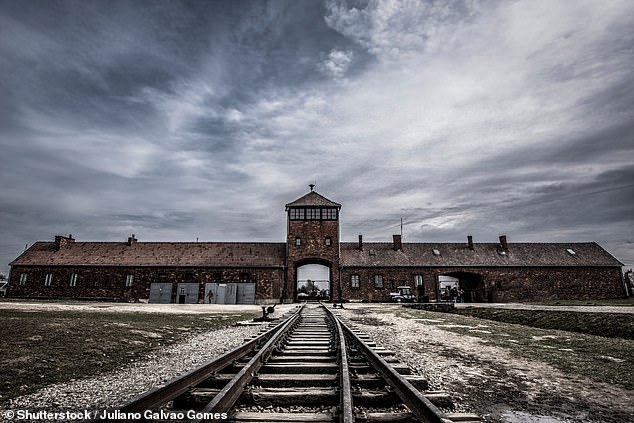
As the Nazis took control, the family was split up with Sigi being sent to Auschwitz
But the Nazis, in the contortions of their vicious anti-Semitism, had decreed that children with mixed heritage were to be branded ‘Mischlinge’ (a derogatory term with the connotations of ‘mongrel’ for a dog) and were to be treated as Jews.
Heini and Edie had never set foot inside a synagogue, yet they were scum in the eyes of the regime. Month by month, racial laws ratcheted up and made life for Jews, and ‘Mischlinge’, increasingly intolerable.
This deeply unsettling account of what happened to Heini and Edie over the following ten years is recounted by Edie’s daughter, Sharon Ring. In a bungalow in Norfolk towards the end of Edie’s life, she pointed to a black box and said to Sharon, ‘That’s your Uncle Heini’s memoir. I’ve never read it, because I know it will be painful. I know it, because I was there too.’
For decades, Edie had avoided talking about her wartime experiences, as had Heini. They’d wanted to look forward rather than back: to embrace life rather than revisit trauma.
But now, at last, Edie told Sharon her story: how she’d been forced by her teachers to leave school aged 12, ‘as we don’t want her to mix with the Aryan race’; how she’d contracted rickets from malnutrition and being cooped up at home for fear of violence on the streets; how, aged 16, she’d been forced into slave labour, picking through Berlin bombsites full of human body parts for 12 hours a day; and how, when the Russians arrived in 1945, she’d narrowly avoided being raped by a Russian soldier who raped the woman next to her.
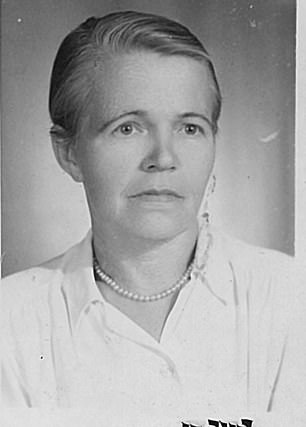
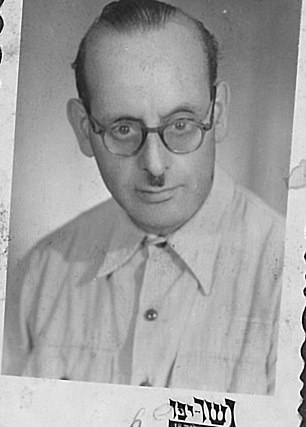
Till death do us part: Erna would not leave her husband Sigi after the Gestapo threatened the family because of his Jewish heritage
What happened to Heini was also appalling. A handsome, fun-loving, resourceful teenager, he refused at first to comply with the racial laws. Earning money as a plumber, he disobeyed the curfew for Jews and visited his non-Jewish girlfriend Margot.
Then one night in 1943 he was taken by the Gestapo, interrogated, and forced to go to an ‘educational camp’ and do 12-hour shifts building a railway in -10C.
Thankfully there was one humane guard, Sergeant Franke, who allowed him to write a postcard home, and his mother visited, bringing him socks, a pullover and boots. He found some coupons lying on the ground, and Franke let him go into the village and exchange them for cigarettes and food.
One day a Russian escaped from the camp, and Heini was sent out to chase him – and he decided to escape too. But there was no way he could survive at home without a ration card, so back he went to the camp.
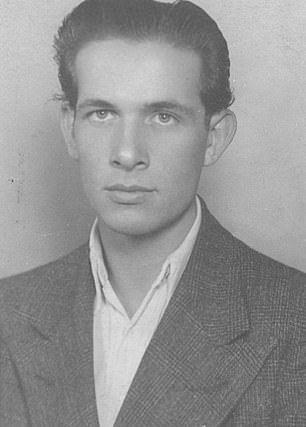
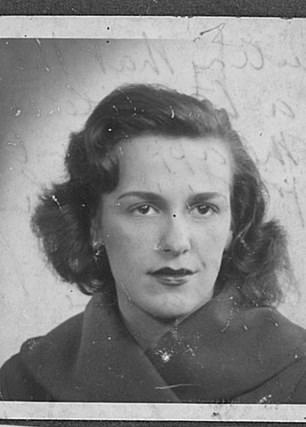
Persecuted: Heini and Edie were defined as ‘mischlinge’, a term for those with mixed Jewish heritage, and were punished by the Nazis
He knew he’d be punished, and he was: demoted to dogsbody for the sadistic SS, who whistled at him to give him orders, one of which was to count out the 25 lashes of the whip given to another prisoner tied to a flagpole.
It got worse. He was bundled into a cattle truck and taken to Buchenwald, where he was greeted by the warning sight of a prisoner hanging from the gallows. Here, he landed a job as an electrician, even though he wasn’t one. A Czech prisoner called Frantisek, who was an electrician, offered to work with him, and this was permitted. The prisoners slept on bare-wire beds, the wires digging into their emaciated bodies.
Heini himself was given 25 lashes when a pair of pliers went missing (he’d lent them to some Russian escapees, but never confessed). With a bleeding back, sleeping on that wire bed was even more agonising.
The ‘thousand-year Reich’ crashed to its end after just 12 years. There was a moment of profound relief when, on April 1, 1945, while Heini was on a forced march from Buchenwald harnessed to trailers carrying the SS’s belongings, the SS suddenly disappeared. The prisoners were free. They helped themselves to a feast of sausages and tobacco from the trailers.
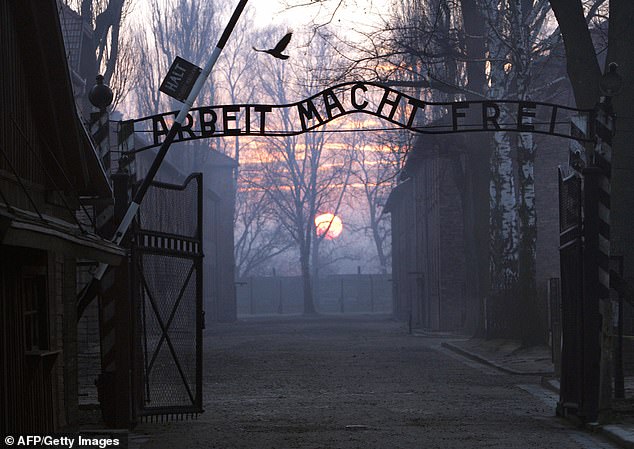
Sigi was so skeletal when the camp was liberated that it took him months to be ready to start the 350-mile journey home to Berlin from Auschwitz
By a miracle, the whole family had survived. Sigi had been a forced labourer in Auschwitz. He was so skeletal when the camp was liberated that it took him months to be ready to start the 350-mile journey home to Berlin. The flat had been destroyed in an Allied air-raid, and his wife was now living in a flat previously owned by Nazis.
There’s a fairytale ending to Edie’s story. Never having left Berlin in her life, in the summer of 1945 she went to the countryside to stay with the family of Heini’s new girlfriend Ruth.
In a country lane, she met a delightful English soldier called Jimmy Ring. They made friends. Five days later, Jimmy said, ‘I’m going to marry you.’ And so it turned out.
They moved to London, got married, had a baby (Sharon), and many years later, with the help of Edie’s compensation from Germany for war deprivations, they bought a three-bed semi in Enfield.
Heini, Sigi and Erna tried moving to Palestine, but they felt homesick for Germany and moved back, separately.
A new horror awaited them: the sudden appearance in the middle of the night of August 13, 1961 of the Berlin Wall. Heini was stuck on the east side with his parents on the west.
This book is an essential addition to history, seen through the prism of two children who happened to have two Jewish grandparents.
Edie said to Sharon, ‘That man [Hitler] didn’t dominate my life. I made it a happy one, and gave you a happy life, too, my daughter. That was my triumph.’