All around the country, grown up children are leaving the family home – and moving into their own place at the bottom of the garden. Soaring youth unemployment, prohibitively high rent and mortgage costs as well as changing social norms mean young adults are flying the nest far later than in previous generations.
Close to one in five 25- to 34-year-olds live with their parents – an increase of around 450,000 in the past 18 years, according to think-tank the Institute for Fiscal Studies.
That leaves family homes groaning at the seams with parents and children under each other’s feet. But growing numbers of families are finding a solution – the so-called grad pad.
These are separate accommodation – typically built in the garden – where adult children can live independently while being close to their parents and younger siblings. They have a separate kitchenette, living area and often a study space to work from home.
So is this the best way of getting boomerang children out from under your feet? Or would you be best giving them money towards a deposit on their first home?
Out with the granny flat
When building business Grannexe was set up in 2004, the focus was on keeping elderly parents close to their children by building traditional annexes in the garden. But as the cost-of-living crisis has hit young people hard, the focus of the business has changed.
Liam Bee, sales director for the Kent-based firm, explains: ‘In the last few years, we have been doing more and more projects for younger people who simply cannot afford to move out of home.
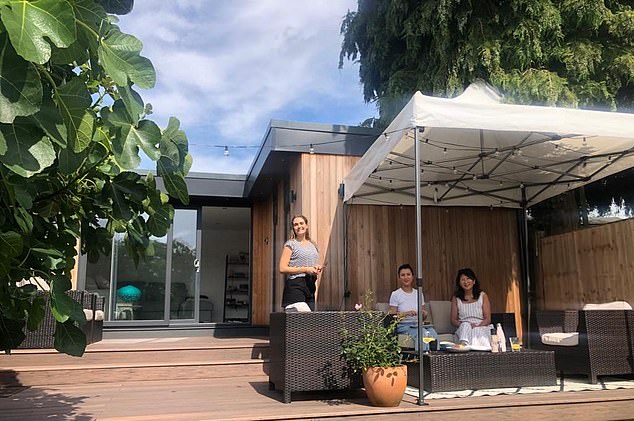
Verity Smith, 26, commutes to her London job in catering sales but lives in a purpose-built studio in her mum and dad’s garden in Kent
‘They range from late teens to people in their 20s and 30s, students and young professionals.’
Grannexe isn’t the only company now focusing on the grad pad.
Rob Harris, marketing manager at annexe provider iHus, says that ‘the tables have turned’ for families who might have previously used his products to house older relatives. He adds: ‘With a national housing crisis, house prices being through the roof, combined with global instability impacting mortgage rates, many young adults are looking for alternative routes on to the property ladder.
‘Increasingly, they’re finding independence and security with garden annexes.’
This means that even where parents have a lump sum to gift their children towards a deposit on their first home, they may not be able to afford the high mortgage costs.
Enter the grad pads
Verity Smith, 26, from Sevenoaks in Kent, has embraced the grad pad lifestyle.
She commutes to her London job in catering sales but lives in a purpose-built studio in her mum and dad’s garden, with a kitchenette and bathroom, and says it gives everybody the space they need.
She also has her own entrance through the garden gate.
‘It all started during Covid,’ says Verity. ‘Everyone was at the house for a long time and we were all on top of each other. We have a small house but the garden is quite long, so we thought it would be good to use the space.’
Her studio was built in 2022 and took around three months.
She says: ‘It’s a bigger space than a studio flat in London, and it’s nice when I have my friends over just because we’re segregated down there.’
The savings Verity makes by living in her parents’ garden allows her to save up for her own place when she wants to move out.
Olivia Baker, 30, also enjoys living in an annexe to her parents’ home in Bexhill-on-Sea, East Sussex. Diagnosed with arthritis as a child, the property in the garden gives her and her family independence but also reassurance when she needs help.
‘It’s absolutely the best thing we ever did,’ says Olivia’s mum Liane. ‘We call it Liv’s Palace because we all love it so much. We’ve even semi-joked that, because we’ve got a lot of land, we’ll build our son one as well.’
Olivia’s annexe has given the whole family more space – her brother Euan took over her bedroom as his own lounge when she moved into the garden.
Getting started
To build a grad pad, you will need to check your plot is suitable. Rob, at iHus, says that the average sized British garden, which is 188 square metres, can usually take an annexe, as sizes start at 7m by 5m.
An annexe should not take up more than 50 per cent of the garden, however, and there may be more work to do if it is not level.
You will also need to assess how to connect to services such as water, electricity and wifi.
Firms – such as ihus, Grannexe, Green Retreats, HomeLodge and Sussex Garden Rooms – have example sizes and layouts on their websites, with indicative pricing. Many offer free consultations.
James Burton, founder of Sussex Garden Rooms which built Olivia’s annexe, says that it is easier if you have some side access.
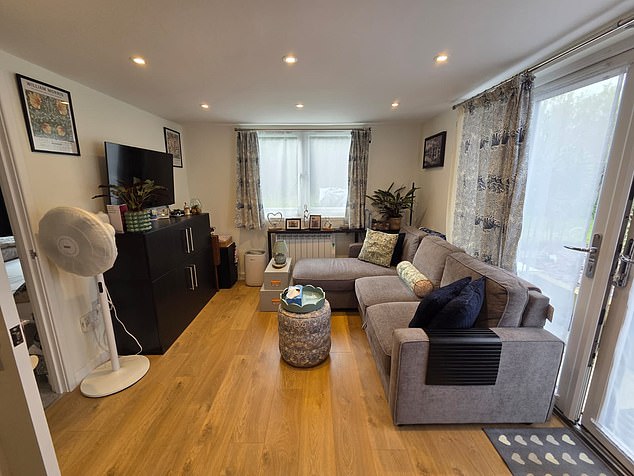
Olivia Baker, 30, enjoys living in an annexe to her parents’ home in Bexhill-on-Sea, East Sussex
Do you need planning?
Rules known as permitted development allow for sheds and offices of a certain size and height in most areas of the country without planning permission. But if your adult child is going to live in the annexe, you will need permission for a habitable structure.
Choose between two routes. If you’re building a traditional brick structure, ask the council for planning permission – something that is often easily granted and many of the companies involved in building grad pads can help with.
In some cases, the council may ask for changes – in Olivia’s case they changed the location slightly and objected to an original grey colour, with the result that the annexe is now sage green.
Getting planning permission can take around three months and the process costs just under £300.
Alternatively, some annexes are designed to be compliant under a rule known as The Caravan Act, which means they don’t require a planning process. They are built offsite and must be capable of being moved again in one piece.
Whichever route you take, you can apply for a Lawful Development Certificate from your local council to ensure there is no issue with your annexe later. These certificates confirm that your build is lawful, and cost just over £105. They take around eight weeks.
Make the right choices
Big decisions include whether to have a separate bedroom or just one room for working and living, and whether to include a kitchenette and other utilities.
Olivia has a washing machine plus a full kitchen in hers and feels it is great to know she is fully independent. Verity says she is glad she did not put a wall in to separate living and sleeping areas, though she does use a dividing screen.
Consider the quality of the insulation offered. Most grad pads are warmer than older British homes as they are designed with high levels of wall insulation – but Verity says in hindsight she might have insulated more under the floor as it can be chilly.
Olivia says that she has hardly needed the heating this winter, however, so it depends on your design and choices.
Other issues to consider include how your child might access the property. For it to be classed as an annexe, it can’t have a separate entrance from the street (though it is fine to use a side gate) as you could then be liable for separate council tax and other payments.
What will it cost?
Putting in an annexe will cost far less than buying a standalone home. Rob, at iHus, reckons it will be half of the price of an average property as well as adding value to your home, but the price can still mount up.
You might need to pay for groundwork for the foundations, utility connections for water, electricity and drainage, plus perhaps a planning consultant if the site is complex. Some firms offer ‘turnkey’ solutions where the whole cost is included.
Grannexe, which built Verity’s annexe, says prices start from £90,000 for a studio, £110,000 for a one-bedroom property and £130,000 for a two bed. That includes kitchen, bathroom, heating, insulation, utility connections and basic landscaping.
Because Grannexe’s properties are designed to be compliant under The Caravan Act, there is no VAT on top of this, whereas there would be if you used a VAT-registered builder for an onsite construction. Olivia’s cost £90,000 with Sussex Garden Rooms.
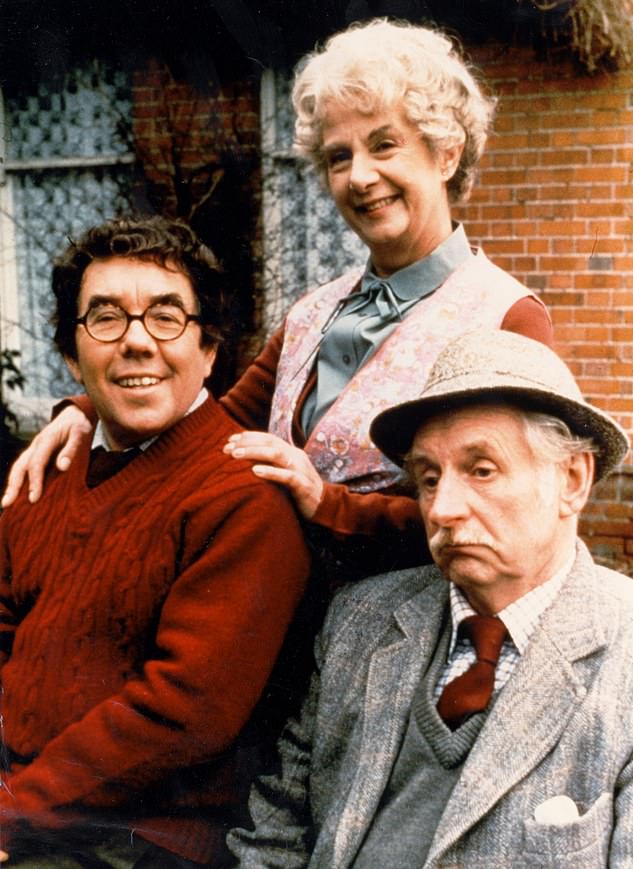
TV sitcom Sorry! in the 1980s highlighted the issue – with Timothy, played by Ronnie Corbett, living with his parents, played by Barbara Lott and William Moore
How do you finance it?
Some companies offer a package to help you pay for the grad pad while other options include remortgaging.
Liane, Olivia’s mother, says they took out a small mortgage on their house to pay for the annexe, which is classed as a home improvement. A personal loan or savings are other options.
This means you don’t always need to have money already set aside to start building works.
In England, the average first time buyer deposit is £63,855, according to mortgage data from UK Finance. This is out of reach for many young adults, and their parents may not have this much money set aside to help them out.
Will it add value?
Provided your annexe is a liveable space, it is likely to add value to your property.
The most recent study from Nationwide Building Society suggests that adding a bedroom to a property is the surest way to add value, with a ten per cent increase in floorspace adding five per cent to the price of a typical home.
One study by Checkatrade even suggests that an annexe can increase the value of your home by 20 per cent. However, this will depend on a number of factors, including how much of the garden you use and how attractive multi-generational living is to potential buyers of your property later on.
Insurance and tax
If your dependent lives in your annexe, the good news is you can cover it under your house insurance. Your premium may rise to cover the extra space.
You may have to pay council tax, however. If an annexe does not have the facilities for independent living, such as a kitchen, you won’t have to pay the tax, but if it is judged a place where you live independently, it should be banded for council tax paid separately.
But if a relative is living in it, there is a 50 per cent exemption, and that rises to 100 per cent if the relative is a full-time student, or under 18, or has severe physical or mental disabilities.
When my child leaves
A grad pad is convenient, but what happens when they move out?
You could change it back into a home office or use it as a spare bedroom. Once it is unoccupied, you won’t have to pay council tax on it unless there is planning permission that allows it to be rented separately – this is unlikely in a garden annexe.
Some people plan to rent out their annexe on Airbnb to provide extra rental income, but the rules around this can be complicated.
As your family changes, you may even find the grad pad takes on a new role as a granny annexe – a full circle moment for multi-generational living.
Do you currently live in a multi-generational household? How do you find it? Tell us all about it at: money@mailonsunday.co.uk