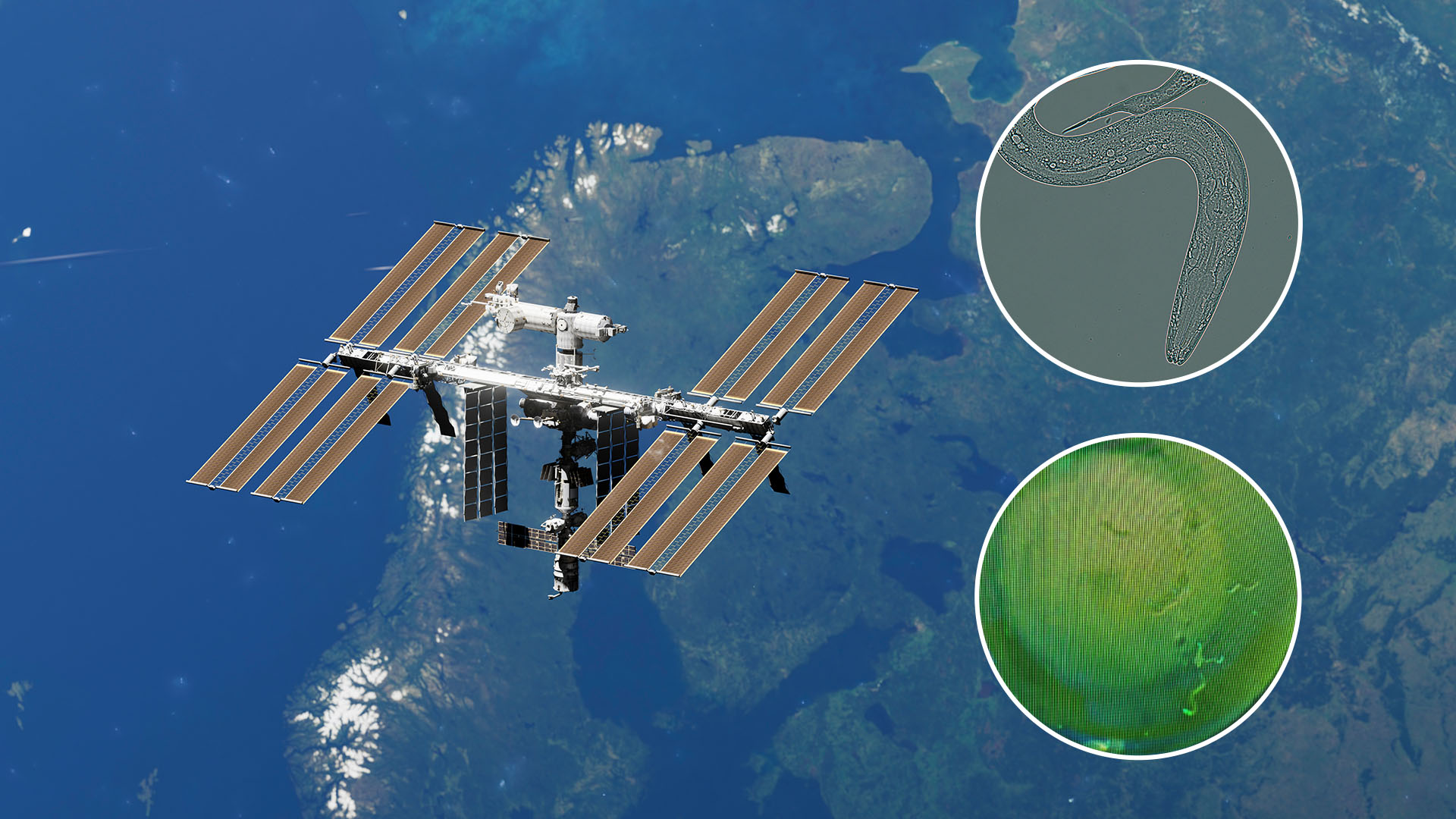
A SLIMY crew of worms is about to be blasted into space just days after the historic Artemis II voyage.
Brit scientists are sending the microscopic space travellers to the ISS on a very important mission of their own – helping mankind explore more of the Moon and beyond.
They’ll embark on a squirmy special experiment to unlock the secrets of long-duration space travel within a mini lab.
Astronauts aboard the ISS will study how living things respond to microgravity and other out of this world extreme conditions.
Lengthy space travel has huge effects on the human body, causing everything from bone and muscle loss to vision problems, while the increased exposure to radiation can lead to genetic damage and greater cancer risk.
Dozens of 1mm worms will wiggle their way into the history books soon after Nasa’s big return to the Moon that launched on Wednesday, more than 50 years since the famous Apollo missions concluded.


Space Minister Liz Lloyd said: “It might sound surprising, but these tiny worms could play a big role in the future of human spaceflight.
“This remarkable mission – backed by government funding – shows the ingenuity and ambition of UK space science, using a small experiment to tackle one of the biggest challenges of long‑duration space travel: protecting human health.
“As we prepare for a new era of exploration, including future missions to the Moon, research like this will help astronauts stay healthy and return home safely.”
The creepy-crawlies are set to hop aboard a cargo vehicle due to leave the Kennedy Space Center in Florida this coming Wednesday.
Initially, the experiment will spend time inside the ISS within a mini lab pod weighing around 3kg.
They’ll then be mounted onto the outside of the ISS by a robotic arm, exposed to the vacuum and radiation of space along with microgravity for up to 15 weeks.
Sign up for The Sun Tech newsletter for gadgets, games & more

Hello! I’m Sean Keach, The Sun’s Head of Technology and Science
I’ve been writing about gadgets, games and the future of technology for more than a decade.
During that time I’ve penned thousands of articles, filmed hundreds of videos, talked tech on TV and radio, and travelled around the world to bring you the latest on Apple, Meta, Google, Amazon, Netflix and more.
And I’ve got a weekly newsletter called The Sun Tech that you can read for free every Thursday.
I bring you the latest from the world of tech, including behind-the-scenes action, exclusive content, expert analysis, and plenty of help advice – so please follow along!
The groundbreaking study is led by the University of Exeter, engineered and built by the University of Leicester at Space Park Leicester, and funded by the UK Space Agency.
Dr Tim Etheridge, from the University of Exeter, said: “NASA’s Artemis programme marks a new era of human exploration, with astronauts set to live and work on the Moon for extended periods for the first time.
“To do that safely, we need to understand how the body responds to the extreme conditions of deep space.
“By studying how these worms survive and adapt in space, we can begin to identify the biological mechanisms that will ultimately help protect astronauts during long-duration missions — and bring us one step closer to humans living on the Moon.”