Petrol pump shortages are being warned of ahead of the Easter weekend, as drivers are likely to try and fill up twice to try in a battle against the ‘eye-watering’ prices.
As it is estimated that 22million journeys will be made across the four-day Bank Holiday weekend, retail experts are warning that the high demand could result in diesel shortages within weeks.
It could be made worse by drivers trying to beat the steep price rises caused by the ongoing US-Israel and Iran conflict, by filling up both before and after their journeys to mitigate further price rises.
Yesterday, the price of one litre of diesel hit 185.23p on average, according to the RAC – a 30 per cent increase since the US began attacks on Iran in February. Petrol, meanwhile, hit 154.45p – a hike of 16 per cent.
Simon Williams, the head of policy at the RAC, said drivers travelling this Easter weekend would face ‘truly eye-watering prices’.
He said: ‘March has been truly unprecedented – fuel prices have never risen this fast in a single month.
‘The increases drivers have had to endure in March 2026 far exceed those seen in the early days of the war in Ukraine.
‘With long-term RAC research showing eight in ten people are dependent on their vehicles, these costs must really be taking their toll on households, as well as businesses.’
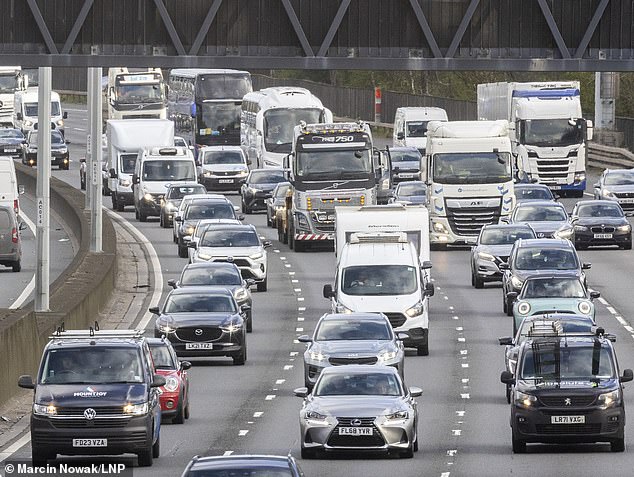
Heavy traffic is seen on the M25 near Egham in Surrey as many travellers’ Easter getaway begins – with motoring organisations predicted this year’s would be the busiest since 2022
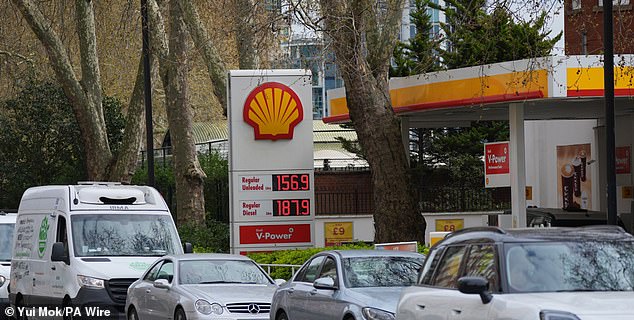
A Shell garage in Pimlico, central London, this week. The average price of petrol has increased by 16 per cent since the US began attacks on Iran in February
Retailers are growing increasingly concerned that stocks will fall in the coming weeks if the Strait of Hormuz blockade continues, which is preventing the safe passage of oil and petrol.
The UK is not expected to completely run out diesel, but supplies could drop by more than 10 per cent by mid-April.
An industry source told the Times that this weekend could be ‘perilous’, saying: ‘People are becoming aware that diesel shortages are weeks away. And this weekend people will fill up on Friday before making long journeys and by Monday have a low tank.
‘This year we expect everyone to fill up again because they want to hedge against further, inevitable price rises.’
The UK imports about 7 per cent of its diesel directly from the Middle East, while the rest is imported from refineries in the Netherlands and Belgium – some of which also originates in the Middle East.
Amid rail shutdowns and packed airports this weekend, millions of drivers will be embarking on Easter getaway trips in the UK and taking to the roads today.
Oil prices – which have a major impact on the cost of wholesale fuel – have hurtled upwards in response to Iran’s stranglehold on tankers passing through the Strait of Hormuz, following US and Israeli-led military strikes on the country.
It could be the busiest Easter on the roads since 2022, according to the RAC, as one fuel station in Chelsea, west London, was seen selling diesel for 299.9p per little, with the equivalent rate for petrol set at 288.9p.
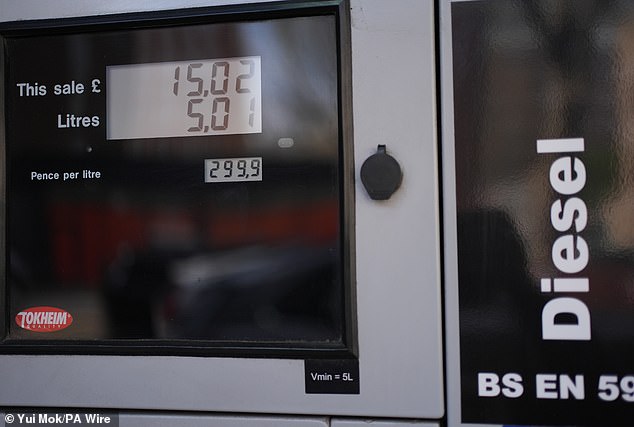
Fuel prices are shown on the pump at 299.9p per litre of diesel at the Gulf Chelsea Cloisters service station in central London on Wednesday
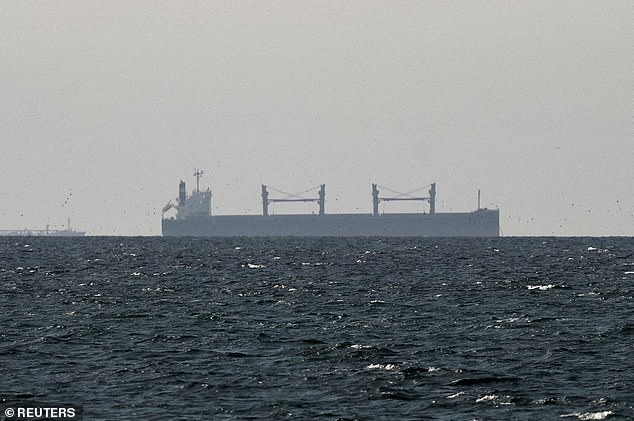
The ongoing blockade of the Strait of Hormuz during the Middle East conflict is driving diesel prices up. Pictured: a cargo ship near the Strait on March 11
Thousands of train journeys will be affected as Network Rail carries out more than 270 upgrade projects, including a six-day West Coast Main Line shutdown.
And the Met Office warned of possible travel disruption as northern England and Scotland are set to be hit with winds gusting at up to 90mph this weekend.
All UK forecourts have been required to report price changes to the Government’s Fuel Finder database within half an hour of a change since February 2 – with the data used by third-party fuel-price apps and websites.
Pump prices rocketed at a record rate last month amid the war, analysis has shown.
Average petrol prices surged by 20p a litre in March while diesel soared by 40p – meaning the cost of filling up an average 55-litre tank in a family car rose £11 for petrol and £22 for diesel between March 1 and 31.
Separate data shows drivers have collectively spent almost £600million more than they would have done had pump prices remained the same level before the conflict – netting Chancellor Rachel Reeves about £100million in extra VAT receipts.
However, despite growing calls, Labour is refusing to scrap its planned fuel duty hike which would add another £3 to the cost of a fill-up from this September.