Do not rush. The pleasures of good writing — like those of good wine, and, indeed, much else — bear not only pauses but also reprises. Take films. The Usual Suspects does not really work the second time, but, knowing what will occur, both LA Confidential and No Country For Old Men — Texas not UK, for which the description is also true — work very well.
And so with numerous classic detective novels, although less so with many modern ones where the character of the writing is less secure. Take R. Austin Freeman’s Mr Pottermack’s Oversight (1931; British Library Crime Classics, 2024, £9.99). The marshes in the Prologue are different to those of Dickens in Great Expectations but surely the escaped convict on the marshes is designed to set off an echo, and the writing here is strongly evocative, albeit of a different crime.
There are two main themes in this month’s piece — first the publication of new editions of old works, and then the appearance of new novels. For the first, Elmore Leonard again delivers trumps, as in Unknown Man No. 89 (Penguin, 2026; £10.99). Originally published in 1977, this is a Chandleresque tale of multiple deceits set not in California but in a very bleak Detroit, with alcoholism and drugs laying waste to some of the characters in a harsh cityscape shot through with some luxury but with more greed and betrayal. Brilliantly written and great pace.
Another one just out in this series is Leonard’s The Hunted, originally published in 1977. Detroit comes to Israel, as, after his philandering leads to a blown cover, a crook who has taken refuge there is hunted by fellow mobsters, one with ‘the hard muscle in his head that narrowed his thinking’. The Leonard dialogue was as sharp as ever:
Rosen hesitated, running a few options through his head, trying to anticipate the idea. “You’re thinking, I can’t reason with Val but maybe I could make a deal with him.”
“Unh-unh.”
“Pay him off.”
“No, I was thinking you could kill him,” Davis said, “Turn it around, hit him before he hits you.”’
…
Rashad pressed the barrel of the Beretta into Mel’s left buttock and said, “Now, if you can keep going my man, that’s savoir faire.”
The story has a good plot, but possibly the transfer to Israel does not work as well as Leonard’s familiar American beats. That is my conclusion. Nevertheless, one to read.
British Library Crime Classics delivers another Edith Caroline Rivett, who usually wrote as E.C.R. Lorac but in this as Carol Carnac. The Double Turn (1956; 2026, £10.99) takes us into an art world that looks back to high Victorian art as a still-present but very dated curiosity, the paintings of the past now thought ‘quite dreadful in their exuberant realism’. Research leads Susan Truby to search out Adrian Delafield, an Academician of that era who is still alive, in a curious household in his house Firenze in St John’s Wood.
There is a strong sense of change, with characters full of lines like “Most young things of your age are unaware that Dante Gabriel Rosetti ever existed – and Tennyson is anathema to them” or “Ground landlords aren’t all that powerful in these days of the welfare state”. There is much dismissal of characters by others: “if Trimming likes to preach to the furniture, no one’s any the worse’ or ‘never expect commonsense or humanity from an academic woman … Medieval history. She’s been a university lecturer most of her life, and written books which only scholars can read.”
There is a locked house dimension, but none of the pressing evil of a Dickson Carr. Some may prefer the feel of landscape that is such a backdrop to Rivett’s stories set in Lunedale but this is a good read and will please many.
Penguin’s Mermaids series reissues Helen McCloy’s Through a Glass, Darkly (1950; 2025, £12.99), with an introduction by Gillian McAllister, at once Gothic fiction and Golden Age puzzle. Necessarily fast-moving, this plot shows the great attraction of a short book. Set in Brereton, an élite American girl’s boarding school, a Gothic setting for an apparent doppelganger, the plot, rich in descriptions of colour and texture shot through with alarm, becomes, just sort of halfway through, a murder story, or is it? The two types of plot described in my Age of Nightmare compete. There are some interesting reflections on change as in:
Your generation has blurred all dividing lines. You don’t even call them demi-mondaines. You call them hostesses or models or starlets and you marry them without thinking twice about it. Your one term of reproach, “floozy”, is usually preceded by the advective “cheap” and you apply it only to the bedraggled, unsuccessful whore. Your generation tolerates any moral lapse, but it cannot forgive economic failure.
From the other camp, that of new novels, the book of the month is T. Orr Munro’s Death Watch Collage (HQ, 2026, £20). Set in a North Devon community assailed by the consequences of incomers and second-home owners, the story begins with an unexplained death from carbon monoxide poisoning, and escalates into and through broader tensions. Brilliantly written, but, as a minor note, the cover illustration shows a cottage totally different to that described in the text.
The excellent Simon Mason offers the fifth in his D.I. Ryan Wilkins Mysteries with The Dangerous Stranger (Riverrun, 2026, £16.99), which begins with the apparent killing by burning of an asylum seeker outside a hotel during a riot. ‘Broken England’ is a theme. This then shoots off into his best yet in the series. There are some flaws, notably the identity of “Head-Hunter” and the caricature of a Chief Constable, but the writing is very good, “the mugshot of a man, middle-aged and jowly, with the expression of someone mildly disgusted by the personal hygiene of the photographer”, the plot has requisite twists, turns and bombshells, and both the characters are given impressive, fresh development. Oxford and Oxonians are shown in a stark light: “Middle-aged, unshaven, balding, fat, with a vacant look in his dim eyes almost otherworldly and ketchup on his chin. Was he our true selves?” Very much one to enjoy and strongly recommended.
Elizabeth Arnott enters a crowded field, that of a murderous southern California, in her
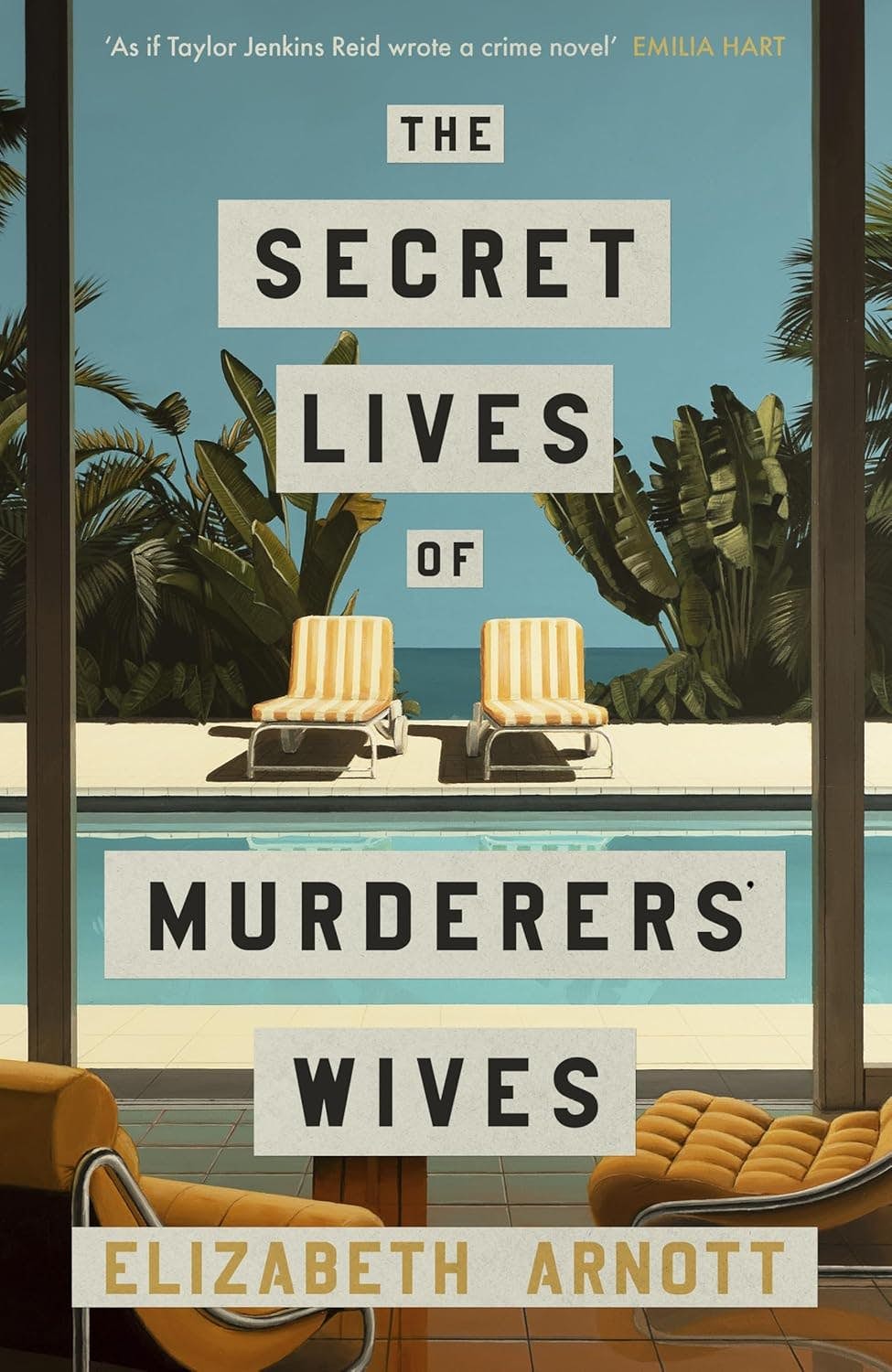
(Viking, 2026, £16.99), and she is no Chandler, not least in her feminism by repetition, and it is far from nuanced: “Yet again, a man in a position of significant power has proved himself to be utterly lacking in integrity. Yet again, women have been let down.”
However, set in a very well-described 1966, including a party where a “pet” crocodile escapes, her central idea is a very good one. Three women, friends because their husbands are convicted murderers, set out to catch someone who is killing young women. The three protagonists are very different and are well-realised, notably Elsie: “she saw the film of grime on everything … She saw that muddy finish on people, too.” Margot is blunt — “I don’t think staying together for the kids is going to cut it if your husband’s an axe murderer.”
Society is observed, with its hypocrisy well on display — “Broderick Arnold would never wear anything sold in his stores.” For the next book, I would try to avoid the clichés, as in “But Margot has never been one to do what men want her to do.” I enjoyed this book and wanted to follow the story and read the resolve. A good summer holiday work.
In the third of his Violet Thorn Mysteries, The Terror of Tannery Lane (Canelo, 2026, £9.99), M.R.C. Kasasian deploys his aristocratic Victorian author of detective novels in a setting made problematic by characters, climate and the cat’s meat man. There is much that might irritate a purchaser seeking a serious read, as with FEAR, the Free East Anglia Revolutionaries, or the repeated dialogue in Lady Violet’s head with her fictional characters. Indeed, the preposterous cascades through both a dialogue and a plot that includes the attempted assassination of the future Edward VII and the stabbing of a mannequin. “An overly elaborate plot that served no purpose” is a phrase from the book that springs to mind. There are plenty of twists: “This was too cruel even by God’s standards.” The writing can awake: “… so straight and thin with all that flaming hair. She reminded me of a vespa just after it had been struck.”
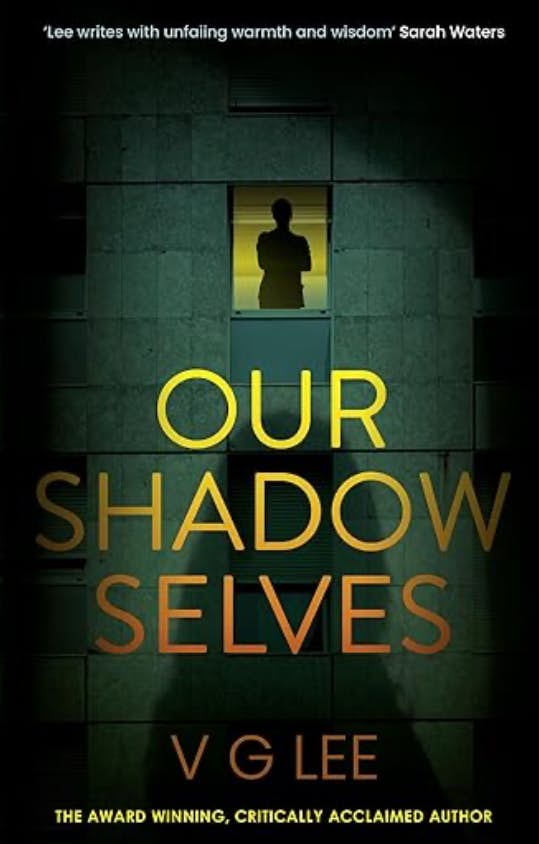
V.G. Lee’s Our Shadow Selves (Muswell, 2026, £10.99) begins with a killing (page 4, so nothing given away) by Shona, the troubled protagonist of this depressing story of deceit and violence set in fictional Hawksbridge, a decayed coastal resort. The psychology of deceit is central in this tale, one in which evil, indeed murder, is a hereditary practice, and there is also a fair dollop of unhealthy desire to go with envy and incompleteness: “my heart as a pale bloodless thing lying on a white enamel plate … And there we are: you and me, very little lighting our fires.” A good novel, ably constructed and written, but empty of any joy or true warmth. A Killer in the Family (Hutchinson/Heinemann, 2026, £16.99) is a bracing speedy approach to wealth and murder in Mumbai and New York. This tale of dysfunctional families and individuals works really well, with the disclosures coming at the right moment, and a plot that offers fresh resolutions with repeated punches of alertness. A book to enjoy.
St Andrews provides a very different background in Marion Todd’s Watch Them Fall (Canelo, 2026, £9.99), although the wealthy again are revealed in an unattractive light. The discovery of a body in the harbour and a break-in at the house of developers planning for expensive new houses interact to press on Detective Inspector Clare Mackay in an ably-constructed and well-written police procedural of great pace. Marion Todd has a justifiably high reputation and delivers again.
For another theme, we have novels published in the last few years that I have only read very recently. Here the best example is Neil Humphreys’ Bloody Foreigners (2021, Muswell, £8.99), one of his brilliant Inspector Low stories. It starts well, with a death in Chinatown ably described, followed by Low’s arrival in Heathrow where, unlike with Changi, the carpet “was faded and frayed”, a sign of the country on the outs. Low is to the point, as ever: “The toilet was cleaner than this carpet. Maybe you should let people piss on the carpet and cut the middle man out”. This calls forth the intervention of an officer: “Low knew the type … some wanted to serve the American movie forever playing in their heads.” Indeed the novel provides Humphreys repeatedly with opportunities to lacerate aspects of Britain, and in all respects as in “affluent, bohemian parents who championed social equality, until it came to their son’s education”. The descriptions are searching: “The pill had reached her childhood council estate all those years ago, but feminism hadn’t…. The café stank of nostalgia, a warm, comforting relic for those unable to cope with the unfamiliar world outside.” A good plot, with the accustomed twists and turns ably handled, although that at the very end somewhat in line with his earlier work. The book is somewhat preachy along the way, but very well worth the read.
As I explained in my piece in The Book Collector last month, reviewing involves individual preferences, so if the following are not really my “thing”, that does not make them without value or interest. Indeed, each of these books will be on many a summer reading list. Readers of psychological thrillers will enjoy J.P. Delaney’s The Move (Quercus, 2026, £22) which draws on the idea of a troubled house with its echoes of du Maurier’s Menabilly. Liz Nugent’s The Truth about Ruby Cooper (Sandycove, 2026, £16.99) finds the trouble in an extended Irish family, with Boston and Dublin key locations. There is, however, too much automatic writing of the ‘Milo tore his eyes from mine’ type. A (human) serial killer is to the fore in Emma Styles’ Australian-set The Shark (Sphere, 2026, £25). Again, the writing does not lift — “The sun’s relentless off the water.… The river’s flat calm” — but the plot works and the tensions between the protagonists are handled ably.
Conspiracy thrillers are another form that can be handled well but that risk all credibility in their pursuit of drama. Neil Lancaster’s The Dark Heart (HQ, 2026, £16.99) is action-packed but forgettable, while James Clary’s Sanctuary (HQ, 2026) proposes the collapse of America and a deadly struggle for safety, with, again, writing of the “grotesquely sprawled” and “struggled for breath, as if hoops of steels…” variety. Lynda La Plante’s Sacrifice (Zaffre, 2026, £22) brings in art fraud, Sicily, the super-rich, and writing in the form of “taut with anger” and “His heart rate spiked: it was Helga”. Not for me, but will please many. For a more measured easy read on the literature, try Christina Hardyment’s Novel Crime Scene