THE Artemis II crew have released their first jaw-dropping images of Earth as they speed towards the moon.
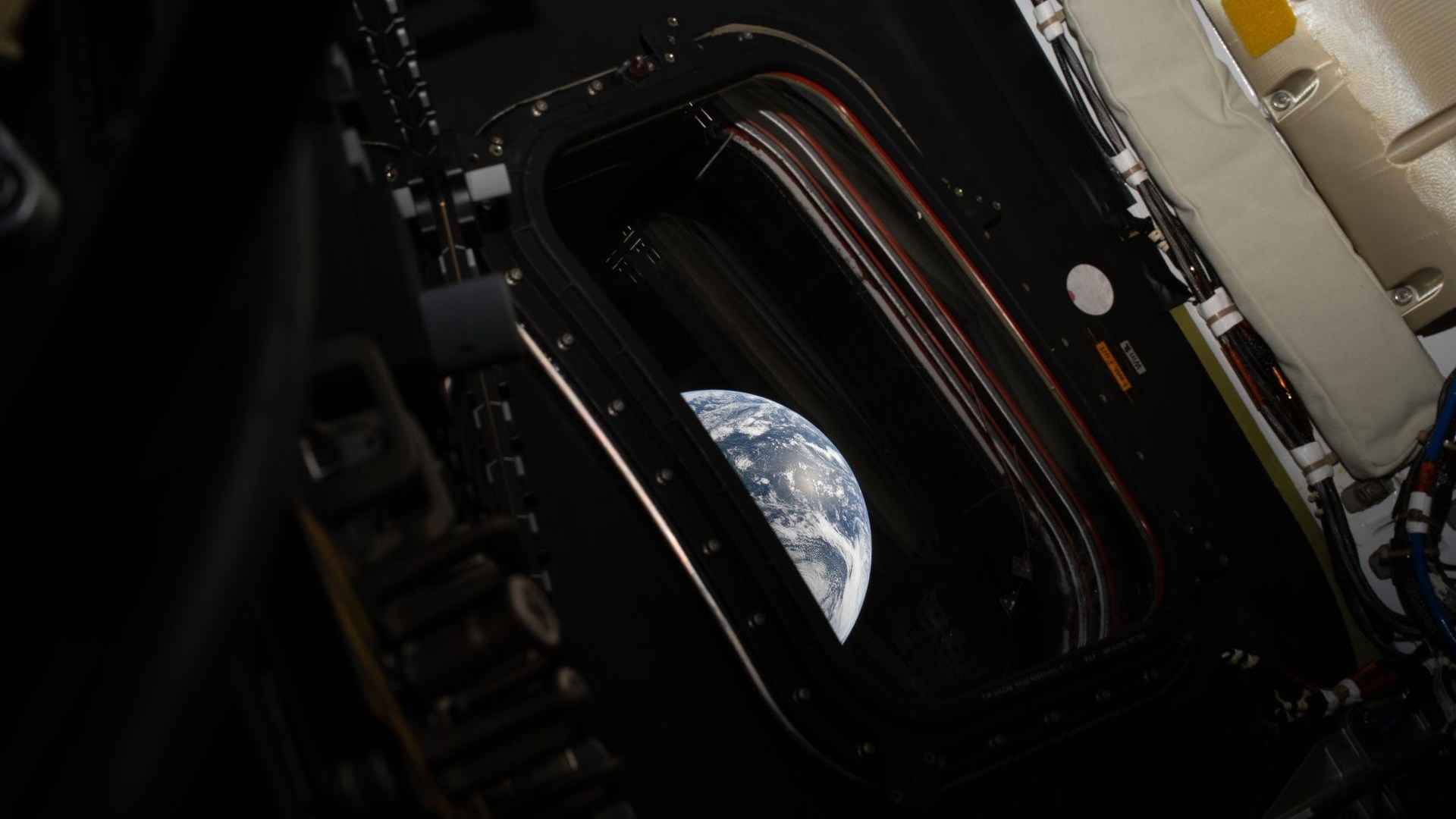
Breathtaking photographs, released 36 hours into the mission, show the blue planet approximately 100,000 miles away through the spacecraft’s window.
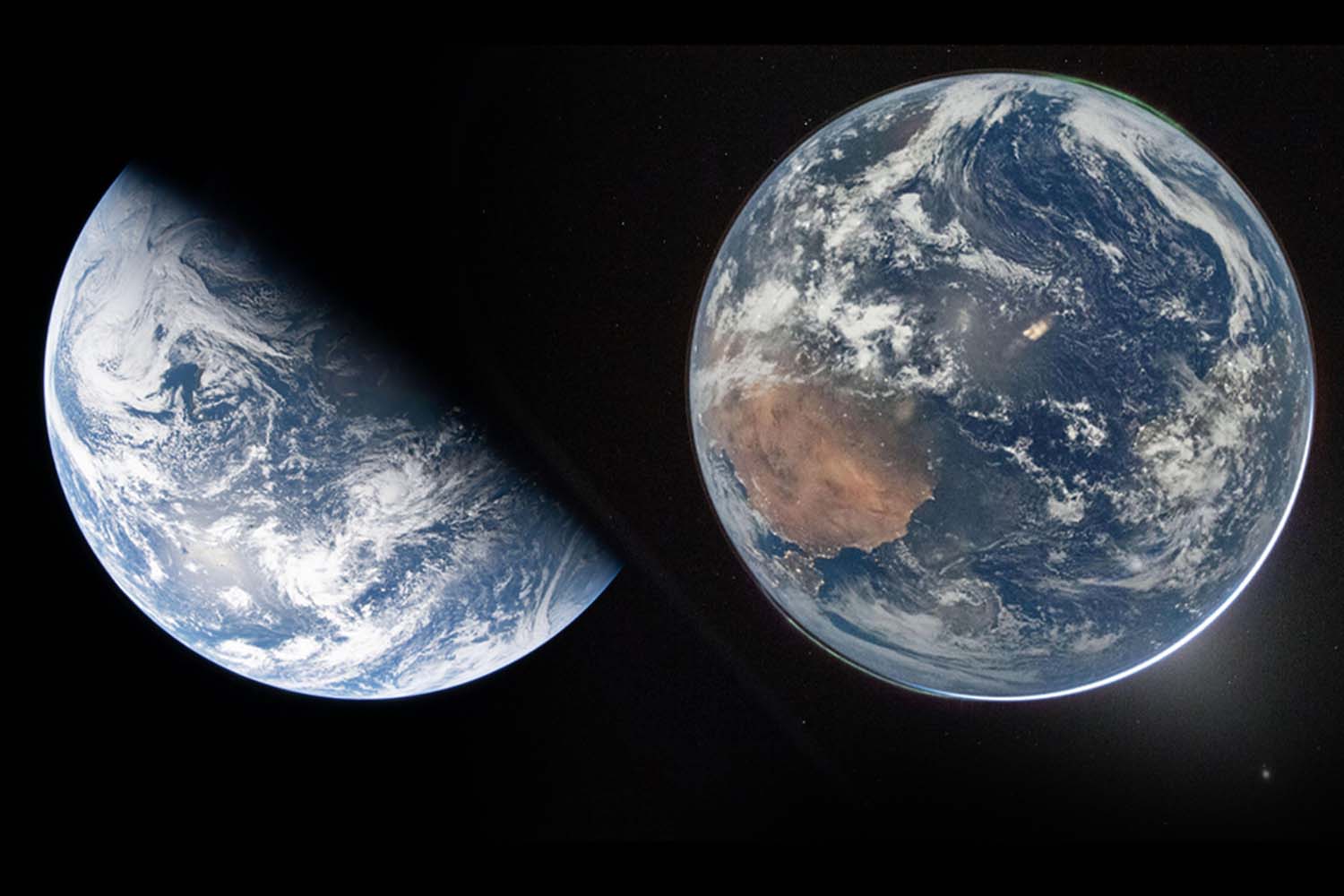
One full view shot taken from the Orion capsule shows the divide between night and day, known as the terminator, cutting across Earth.
Another striking image reveals a spectacular green aurora lighting up the atmosphere, while faint zodiacal light is also visible.
Commander Reid Wiseman snapped the pictures after the aircraft thundered out of Earth’s orbit to start its three day journey to the moon.
“It was the most spectacular moment, and it paused all four of us in our tracks”, Wiseman said, describing the view.
Mission Control adjusted the spacecraft’s position so the entire Earth filled their windows.
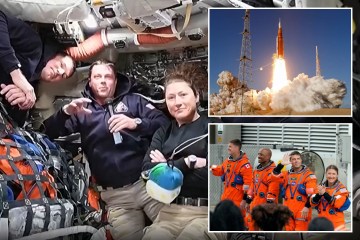
After launching from the NASA Kennedy Space Centre on April 1, the 32-story rocket – the mightiest ever built – stuck close to home for the first 25 hours of its 10-day test flight.
On board are NASA astronauts Wiseman, Victor Glover and Christina Koch, alongside Canadian Space Agency astronaut Jeremy Hansen.
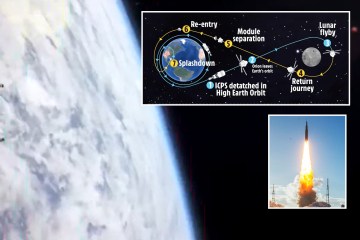
NASA said the capsule, named Orion, will perform multiple maneuvers to then place the crew on a lunar free-return trajectory.
This means the Earth’s gravity will naturally pull it back home after flying around the Moon.
This is also when the astronauts will remove their spacesuits and don plain clothes for the rest of the mission, aside from when they re-enter Earth’s atmosphere and are recovered from the ocean.
Watch The Sun’s livestream of the Artemis II mission here
The crew won’t pause for a stopover or orbit the Moon like Apollo 8’s first lunar visitors did so famously on Christmas Eve 1968.
But the four astronauts stand to become the most distant humans ever when their capsule zooms past the Moon.
They will then continue another 4,000 miles beyond, before making a U-turn and tearing straight home to a splashdown in the Pacific.
But the high-stakes mission has not been without tense moments.
Engineers ran into issues on launch day, facing two technical scares and a one-hour delay before liftoff.
A faulty loo also meant crew could not boldly go for six hours after a blinking light alert put the £17.4million toilet out of action.
Canadian Hansen, 50, revealed the “tense” moment in the crew’s first live interview from space.
He said: “We did get a warning message for ‘cabin leak suspected’”.
Cabin leaks can be deadly – they could lead to the structure of the spacecraft being compromised, risking exposing the crew to space’s powerful vacuum.
Fortunately, the crew investigated and found the alert was a mistake, and onboard cabin pressure remained at normal levels.
During a post-launch press conference, the space agency said the crew were “safe, they’re secure and in great spirits”.
The last time Nasa sent a crew into space was the Apollo 17 mission in 1972.
The US is now targeting a return to the lunar surface by 2028, before China does in 2030.
“We have a beautiful moonrise, we’re headed right at it,” said Commander Reid Wiseman.