Rattled investors have tried to pull more than $5billion out of funds at a US ‘shadow bank’ as fears over the private credit market grow.
Wall Street firm Blue Owl Capital was forced to say that it would stall investors taking money out of two of its flagship funds yesterday, after being hit by a wave of withdrawal requests.
Investors tried to remove $5.4billion from the private credit investment manager’s funds in the first quarter of the year, forcing it to block some redemptions to try to stabilise the portfolios.
The move comes amid increasing concerns over the murky private credit market, where investors make loans to companies, bypassing the traditional banking industry.
Bank of England boss Andrew Bailey has repeatedly highlighted the risks in the private credit market and highlighted the risks again on Wednesday.
In an interview with Reuters, he said that he did not see a rerun of the 2008 financial crisis but warned against dismissing recent private credit failures as isolated incidents. The Bank of England also identified private credit as a key concern in a Financial Policy Committee report this week.
The opaque and thinly-regulated market has been dubbed shadow banking and often involves complicated interlinked deals, leverage – using debt to boost returns – private equity firms and lending to riskier businesses.
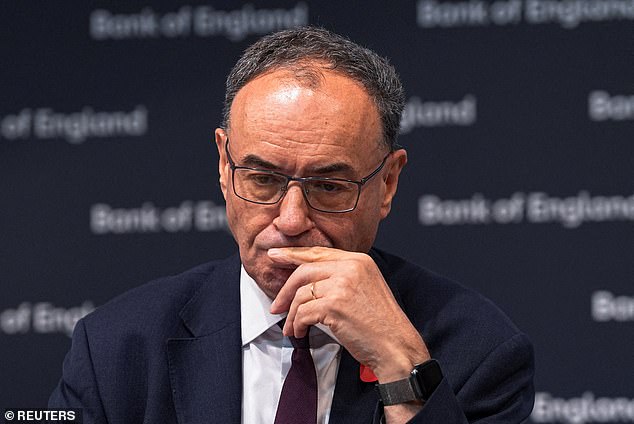
Bank of England governor Andrew Bailey has warned over the potential risks in private credit
Blue Owl, which specialises in lending to high growth tech firms, revealed yesterday that its Blue Owl Technology Income Corp fund had seen redemption requests reach 41 per cent of the fund’s $3billion value between January and the end of March.
Meanwhile, the Blue Owl Credit Income Corp fund suffered redemption requests worth 22 per cent of its $20billion value.
Blue Owl said it had limited withdrawals to 5 per cent at the funds, enacting a cap that many private credit funds have. Other major players including giants KKR, BlackRock and Morgan Stanley have similar limits on some funds.
Blue Owl has been forced to try to halt the flood of money being pulled out of its funds, which could trigger a fire sale of assets. Blue Owl’s share price fell 7 per cent yesterday and has collapsed 44 per cent this year, as fears mount over private credit.
Investors have been attracted to higher risk private credit funds by the potentially higher gains on offer, with greater interest rates paid than on traditional loans and corporate bonds.
Most of the money has come from professional investors and hedge funds but individual investors have been able to access the market via specialist funds.
Sam Stovall, chief investment strategist of CFRA Research in New York, told Reuters that private investors should steer clear.
He said: ‘Don’t try this at home. Private credit does not have the kind of liquidity that public markets would have and it’s very difficult to get the money out as quickly as you might want it.’
Investors have been spooked by fears that the private credit market could implode. Some have even warned of problems reminiscent of the 2008 financial crisis, although that was compounded by siting at the heart of the mainstream banking industry.
The private credit market has rapidly grown and is estimated to be worth between $2trillion and $3trillion. But it has suffered a surge in redemption requests this year, due to investor concerns over valuations, liquidity and borrower health.
This follows the private credit-linked collapse of British mortgage lender Market Financial Solutions and US-based motoring parts firm First Brands and sub-prime lender Tricolor. The recent slump in software firms’ share prices and valuations off the back of concerns that they will become AI losers, has exacerbated concerns.
Bank of England warns on private credit
The Bank of England’s Financial Policy Committee warned of risks to private credit this week, as it reflected on the volatility and market slump triggered by the Iran war.
Its report said: ‘Prior to the start of the conflict, vulnerabilities in risky credit markets, including private credit, had already showed signs of worsening, and there had been some sharp moves in some technology-focused sectors’ equity prices in reaction to AI-related developments.’
It added: ‘Developments in the Middle East could interact with several vulnerabilities in the financial system previously identified by the FPC in sovereign debt markets, risky asset prices and risky credit markets, notably in private credit.
‘Redemption requests have been elevated in several international retail funds, and some have limited redemptions, underlining both the liquidity mismatch and valuation concerns. In addition, higher interest rates associated with the supply shock could increase debt-servicing pressures for leveraged borrowers, and lower growth could decrease asset quality, increasing pressure on private credit funds.
‘In private credit markets, although most private credit funds are closed ended, there were elevated redemption requests across several international retail funds primarily distributed through wealth management channels.
‘Redemptions were driven by asset quality and liquidity concerns. Some firms limited the redemptions whereas others allowed and facilitated elevated redemptions. This highlighted persistent risks around valuation opacity and liquidity mismatches in these funds and further weakened investor sentiment.
‘While retail participation in private credit remained relatively small in aggregate, stress originating in these retail funds could spill over to other parts of private credit and private equity markets, as well as other correlated asset classes.
‘For example, there could be an unwillingness to refinance existing loans or provide additional lending to businesses. Firms should continue to factor the potential for such dynamics into their liquidity risk management.’
DIY INVESTING PLATFORMS

AJ Bell
AJ Bell
Easy investing and ready-made portfolios

Hargreaves Lansdown
Hargreaves Lansdown
Free fund dealing and investment ideas

interactive investor
interactive investor
Flat-fee investing from £4.99 per month

Freetrade
Freetrade
Investing Isa now free on basic plan

Trading 212
Trading 212
Free share dealing and no account fee
Affiliate links: If you take out a product This is Money may earn a commission. These deals are chosen by our editorial team, as we think they are worth highlighting. This does not affect our editorial independence.