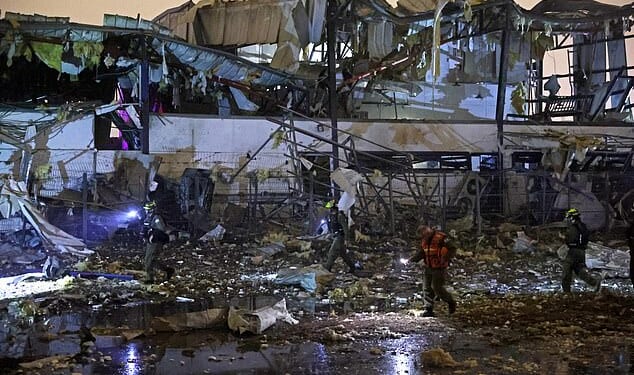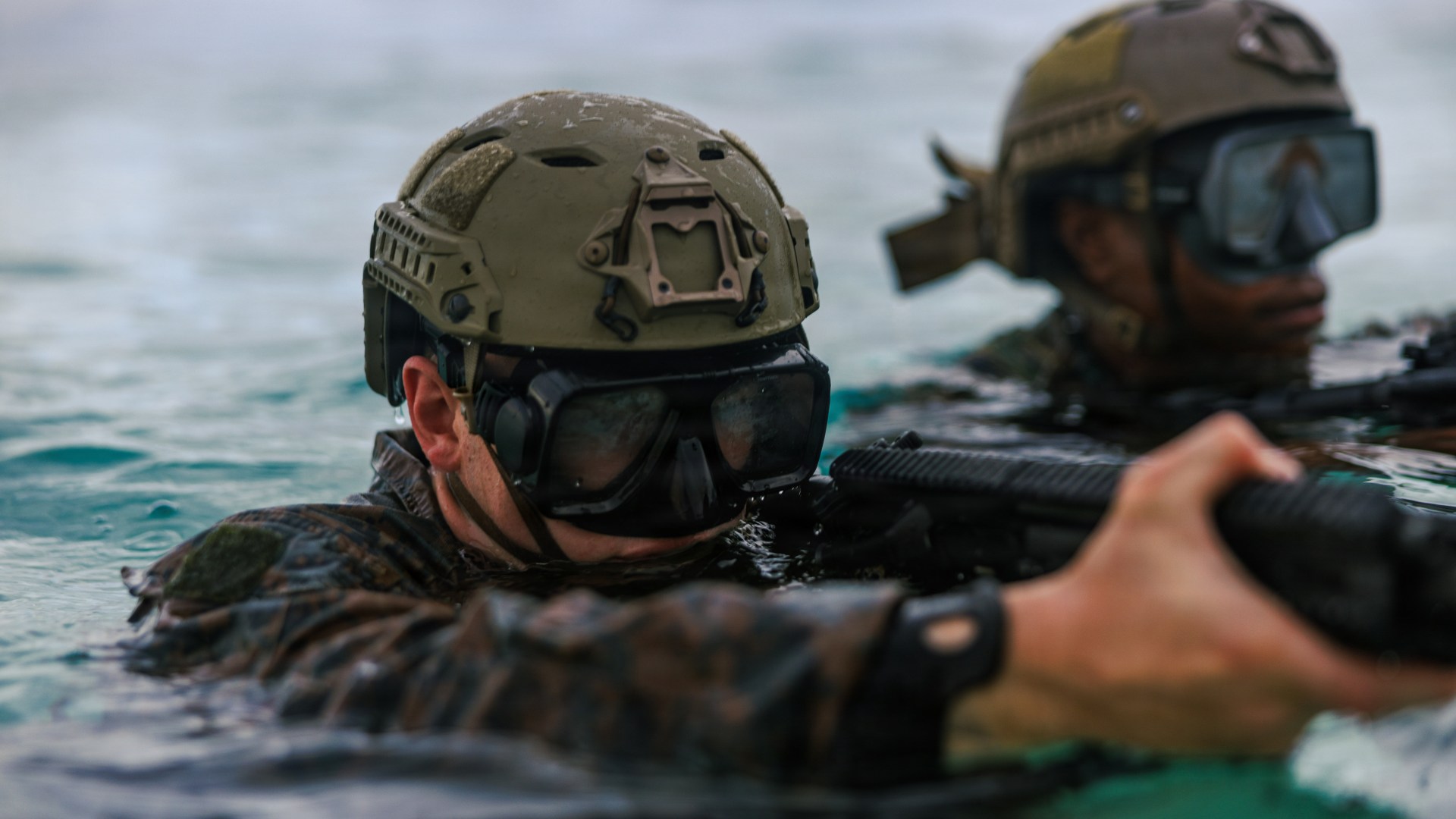
WARSHIPS the size of football fields equipped with hospitals and drone lasers have been deployed as Donald Trump gears up to seize Iran’s key islands.
Thousands of marines have been arriving in the war-torn region as the US president mulls whether to unleash a ground invasion.
The Sun told how plans had been drawn up for Trump’s 31st Marine Expeditionary Unit to storm vital island fortresses to unlock the Strait of Hormuz.
But now the Pentagon has given its clearest sign yet of invasion intentions after ordering prefabricated bunkers for island occupations, sources say.
Trump has had his crosshairs firmly set on Iran‘s main oil terminal on Kharg Island – where 95 per cent of its oil is shipped.
He last week hinted he could be on the precipice of unleashing his crack squad of marines, saying: “I am considering taking Kharg.”
Other small islands with outsized importance under Tehran’s control also have a red ring around them – as seizing them would break the regime’s stranglehold over the Strait of Hormuz.
Guarded by ruthless IRGC agents armed to the teeth, insiders have warned wrestling these islands from Iran’s grip could be an extremely bloody battle.
IRGC island garrisons, gunboats and naval drones are so far being decimated by bunker-busting air bombardments as well as low-flying Apache helicopters and A-10 Thunderbolt jets.
But marines – trained to seize and fortify small islands – could encounter intense barrages of Iranian missiles and killer drones launched from virtually anywhere on Iran’s mainland.
Iran’s parliament speaker, ex-IRGC officer Bagher Ghalibaf, has threatened to “rain down fire” on any invading US forces.
US Army War College professor Evan Ellis told The Sun: “Marines could become a drone magnet.”
Additional Marine Expeditionary Units (MEU) with logistical support vessels are now on the way from bases in California to bolster any capture efforts – putting muscle on Trump’s threat to capture Kharg.
The 11th Amphibious Ready Group with the landing dock support vessels and 2,500 Marines is more than halfway across the Pacific, making a brief stop in Hawaii this week
It’s joining the 31st MEU, with the same number of troops already on station around the Hormuz on USS Tripoli.
Reinforcements are due to arrive in the Middle East theatre soon – including a converted container ship equipped with anonboardn hospital of more than 100 beds.
Large numbers of wounded are expected in what could be a “dangerous” mission to gain control of the world’s main oil shipping lands being choked by the IRGC.
US Secretary of War Pete Hegseth compared the situation to a “terrorist hostage siege on a global scale”.
The vessel’s lower decks have been turned into a well deck for dozens of large LCAC hovercrafts.
These would be used to ferry reinforcements, artillery, armoured vehicles and large quantities of supplies to marine units initially inserted by helicopter and rotary wing aircraft.
Retired US Special Forces Colonel Ron MacCammon told The Sun: “Sustaining forces on the islands would be a complex task.
“They would require air defence and engineering equipment.”
The massive air cushions could blow off floating mines dropped in the waters around the islands.
Navy destroyers and logistical ships have also been mounted with newly developed laser cannons, able to fire beams capable of frying entire drone swarms.
The position of US warships and marine units could be revealed by Russian spy satellites believed to be tracking American military movements in the Gulf region.
Russian satellite intelligence may have enabled the targeted strikes on key US air defence radars and an AWAC plane destroyed by a Shahed drone in Saudi Arabia‘s Prince Sultan air base last Saturday.
Meanwhile, the Pentagon this week placed orders for prefabricated bunkers that could be used to fortify island positions, insiders say.
Reopening the waterway has become Trump’s top priority since the IRGC started laying mines and firing missiles at oil tankers to block the 19-mile Strait.
But the president this week warned he is prepared to walk away from Iran and leave other nations to police the waterway.
He threatened the US “won’t be there to help you anymore” – and said he could end the war with or without a deal.
It could, however, be that Trump is buying time to prepare for a ground invasion after more than a month of diminishing Iran’s capabilities to fight off any daring raid.
Experts have also pointed to the fact oil markets across Wall Street and Europe will now be closed for a three-day weekend.
Gulf assaults could also be coordinated with internal uprisings by a growing underground movement inside Iran called Immortal Guard.
They are being assisted by undercover Israeli Mossad agents, who have been operating on the ground – arming regime opponents with grenade carrying drones.
Spiralling Iranian commanders have called in reinforcements, however, in a last-ditch bid to repel enemies.
Fanatical Shia militias from neighbouring Iraq have been crossing into Iran in recent days to support their overstretched IRGC masters being ripped apart.
IRGC commander-in-chief Ahmad Vahidi – wanted by Interpol for directing truck bombings against the Israeli embassy and of a Jewish synagogue in Argentina in the 1990s – has so far escaped the assassin drones.
As long-time head of the Qods force which manages IRGC proxy groups throughout the Middle East, Vahidi has mobilised Hezbollah militias in Iraq.
Bloodthirsty fanatics have been ordered to attack US bases and the IRGC is bringing thousands of terrorists in armed convoys to put down rebellions in Iran.
US intelligence analysts are also concerned that as the IRGC runs low on missiles and drones, the group may use its terrorist network to target Americans.
It comes as Trump said the US “hasn’t even started destroying what’s left in Iran” as he reiterated vows to increase ghe ferocity of attacks on its infrastructure.
The president has stepped up his rhetoric in recent days as negotiations conducted via intermediaries with new leaders in Iran show limited signs of progress.
Last night, Trump said the US military “hasn’t even started destroying what’s left in Iran. Bridges next, then Electric Power Plants.”
He added that Iran’s leadership “knows what has to be done, and has to be done, FAST!”
Trump earlier posted footage of the US bombing a newly constructed bridge between Tehran and nearby Karaj. The B1 bridge was scheduled to open to traffic this year.
How invasion of islands would unfold
by Katie Davis and Martin Arostegui
PLANS have been drawn up for Donald Trump’s marines to storm Iran’s vital island fortresses to unlock the Strait of Hormuz, insiders told The Sun.
Despite being no more than flecks on the map, these tiny Tehran-controlled territories have outsized importance – pulling the strings on critical oil trade.
Furious Trump last month deployed Apache helicopters and low-flying jets to blitz Iranian ships near the waterway.
But now a crack squad of US marines trained to seize and fortify small islands could be gearing up to take the Iranian bases dominating entrances to the key waterway.
B-2 strategic bombers pounded IRGC missile bunkers on the barren islands of Larak, Kish, Qeshm and Abu Musa and launch sites dug into mainland coastal cliffs, dropping 5,000lb GBU-72 deep penetrator bombs.
In operations that usually precede ground assaults, low-flying Apache helicopters and A-10 Warthogs strafed IRGC fortifications, firing Hellfire missiles and forward-mounted 30mm chain cannons to eliminate any resistance.
CENTCOM commander admiral Brad Cooper said: “The United States aims to end Iran’s ability to project power and disrupt shipping in the straits of Hormuz.”
Following any capture, a stay-on force may be required to set up fire bases – temporary military facilities.
They would be equipped with missiles, sophisticated radar and drones to protect the strategic waterway and provide staging areas for ground raids on IRGC naval bases, intelligence sources told The Sun.
An ex-Marine officer and career intelligence official, speaking on the condition of anonymity, told The Sun: “They will take the Hormuz island missile and drone sites.
“Plans are drawn up for that.”
V-22 Osprey rotor-wing aircraft that take off and land like helicopters but fly like planes would initially airlift Marines from the amphibious landing ship USS Tripoli to island points.
The Tripoli was recently converted into a pocket aircraft carrier for airborne operations that can be launched from up to 200m offshore.
This reduces the mothership’s exposure to anti-ship missiles and danger to landing craft from sea mines.
Space on the Tripoli that once held hovercraft – such as giant inflatable landing boats – has been turned into a hangar for aircraft maintenance and extra storage for parts, ammunition and supplies.
Covered by missile-firing Viper attack helicopters off the Tripoli, CH-53 Sea Stallion helicopters armed with .50 chain guns would insert advance teams of Force Recon units to conduct in-depth reconnaissance and set up sniper positions to cover the main force.
The advance teams would call in air strikes by F-35 Stealth aircraft flying off Tripoli to flatten pockets of resistance that may have survived the heavy B-2 bombings before the main force lands.
With their beachheads secure, the marines would install air defence and radar systems to closely track air and sea traffic, and fuel weapon resupply posts for continuous helicopter re-provisioning and support.
Carefully camouflaged HIMARS batteries firing lethally accurate long-range ATACAMs would be erected to neutralise IRGC threats within a 300-mile radius.
And covert marine firebases could also operate from the coasts of Oman facing Iran across the narrow Hormuz straits.