It’s rare that a book for review directly challenges one of my convictions, but the subtitle to Kathleen Stock’s latest threw down the gauntlet before I read one page.
The Case Against Assisted Dying is a crisply argued polemic by a philosopher and writer who is one of our foremost public intellectuals. My admiration for her work is considerable.
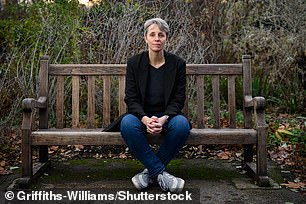
Kathleen Stock
At the same time (full disclosure), I support the pressure group, Dignity In Dying, and recently signed its petition to stop the House of Lords blocking the Assisted Dying Bill, previously supported by the Commons. MP Kim Leadbeater’s Private Members’ Bill proposes giving terminally ill, mentally competent adults the option to control the manner and timing of their death.
Polls show that 75 per cent of the public want such a change. Stock is courageous to argue against the majority and most of the liberal establishment, too. Her intent is to change minds.
She takes her title from the famous poem by Dylan Thomas, Do Not Go Gentle Into That Good Night – urging his sick father to cling to life as long as possible and ‘rage against the dying of the light’.
She is very careful to emphasise that she is not against the wish for an assisted death – ‘in some rare situations where physical suffering is genuinely intense enough and cannot be remedied any other way’.
The subject of her argument is what she calls ‘organised death… formal structures dedicated to helping consenting people to die with the aid of clinicians’.
So, in principle, a terminally ill individual in unbearable pain might choose suicide as an end to suffering and may even obtain the clandestine assistance of a loved one to do so.

We have responsibilities to each other
Stock makes no moral judgment about that situation which, after all, has always been the case, law or no law.
Having made that vital distinction clear (indeed, she repeats it throughout the book), Stock introduces us to two ‘characters’ who will argue the case for assisted death: the Freedom Lover and the Merciful Helper. This is invaluable in helping to disentangle often-confused motives.
‘Freedom’ is a seductive notion, even if a moment’s thought will clarify one or more restrictions on personal liberty.
The libertarian (like me), who supports Dignity In Dying, will cite their mantra that a terminally ill person should be ‘free to choose’ the time to end a painful life.
Stock points out the obvious qualification that if you witness somebody trying to commit suicide (say by jumping off a bridge), the passer-by or a policeman is quite justified in trying to talk that person out of the deed.
As a society, we are surely hard-wired to think that to stop a suicide is an act of compassion. So how does that square with Labour MP Rachel Hopkins declaring that the exact motives for somebody wanting to end their life are ‘none of your business’?
As a hitherto supporter of assisted dying, that troubles me, for I find myself in agreement with Stock’s belief that we are social beings.
We have responsibilities to each other as parts of a whole – as in John Donne’s famous sermon, beginning: ‘No man is an island.’ The idea that ‘any man’s death diminishes me, because I am involved in mankind’ is central to Stock’s thought in this brilliant, densely argued book.
The effect of a suicide goes far beyond individual choice and action; its effects reverberate through the dead person’s family and friends, neighbours and colleagues, like the ripples from a stone thrown in a pond.
In considering the issues of freedom, individual responsibility and collective responsibility, Stock argues like a philosopher, with cool forensic clarity and skill.
Yet beneath the surface of her lucid prose lies a fervent belief in the shared sanctity of life. We are not (as she expresses it in a vivid phrase) ‘a gated community of one’.
The Merciful Helper is a more sympathetic persona than the Freedom Lover.
Who would not wish to show as much compassion to a human being near the end of life and in terrible pain, as we extend to our cherished pets at the end?
Here ‘the buzzwords are not freedom and autonomy but mercy, compassion, sympathy and pity’. So far, so simple – for most people at least.
But not for this philosopher. Stock unpicks what Shakespeare’s Portia calls ‘the quality of mercy’ in such fine detail that by the end this reluctant reader’s previous certainties were unsettled.
How can we be sure of motivation? A knowledge of human nature suggests that what seems like mercy could tip us into ‘moral darkness’.
One example of this quality of un-mercy among the respected intelligentsia shocked me.
In 2008, the distinguished moral philosopher Baroness Warnock, a member of the great and the good, and a committed advocate of euthanasia, caused controversy with an opinion that people with dementia should be allowed to choose death if they felt ‘a burden to their family or the state’.
She said: ‘I think that’s the way the future will go, putting it rather brutally, you’d be licensing people to put others down.’
Before reading Stock, I was unconvinced of all the cautious arguments against ‘slippage’.
Assisted dying is legal in several countries, including Belgium, the Netherlands, Spain, Canada, New Zealand and parts of Australia – where the slide from ending terrible pain to obeying a (say) depressed person’s wish to die has already happened.
Stock’s deeply disturbing examples and arguments are too numerous to discuss properly here; enough to say that anybody concerned with the issue (for and against) needs to read this book.
I gladly admit she has all but changed my mind.