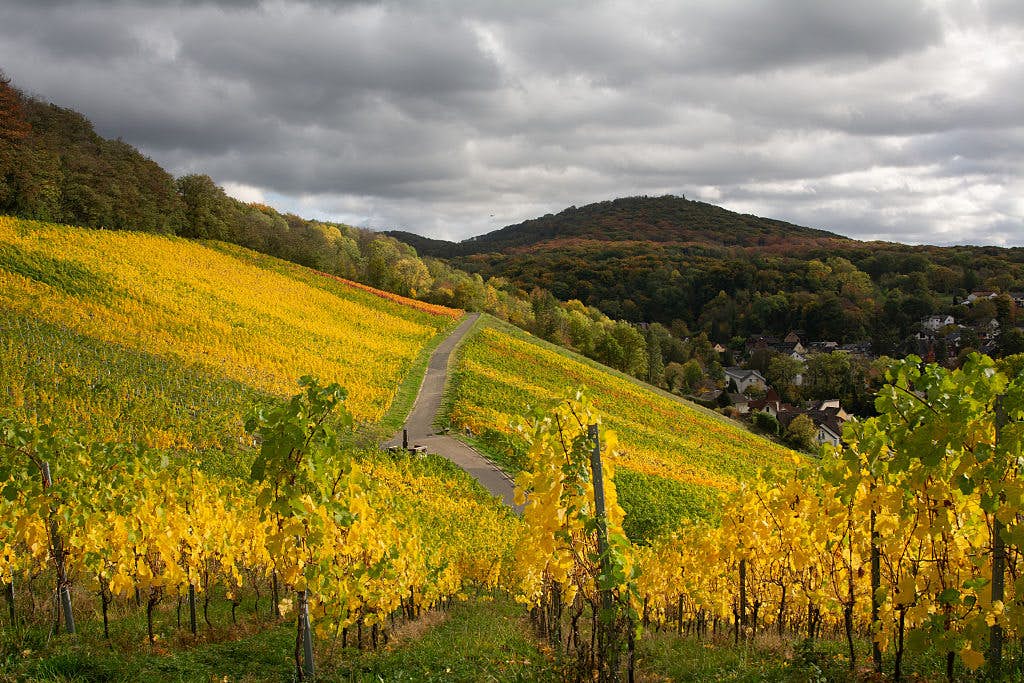

The Matuschka-Greiffenclau family had been making wine at Schloss Vollrads since 1211. Such was its reputation that the estate was known as the “Lafite of Germany”. But by the 1980s it was in severe financial trouble. In 1997, on the verge of bankruptcy, the owner Count Erwein Matuschka-Greiffenclau went into the vineyards and shot himself. His friend Robert Temple wrote: “In his own eyes he had brought to an end a tradition whose longevity was without rival in the whole of human history.”
The Count’s death was the story of the decline of German wine in a tragic microcosm. In the ninteenth century, Germany was acknowledged to make the finest wine in Europe and commanded prices to match. The 1909 Berry Bros & Rudd price list has an 1893 wine from Schloss Johannisberg for 200 shillings a dozen, the same price as Chateau Lafite and substantially more than Cheval Blanc which was a snip at 78 shillings.
The love affair between British and German wine is an ancient one. There’s evidence that wine was shipped from the Rhine to London in Roman times. Samuel Pepys was always nipping out to the Rhenish wine houses of Restoration London. While red wine meant claret or burgundy, white wine meant what was known as hock, Rhine riesling named after the town of Hochheim am Main. When settlers planted vines in Australia and South Africa the most prestigious wasn’t the Chardonnay of Burgundy it was Riesling, sometimes known in the Cape as Johannisberg Riesling after the great Schloss.
This continued well into the twentieth century despite all things German not having the cultural cache that they had previously had for some reason. Looking at old books from the 1960s and ‘70s, wine was pretty much France, Germany, port and sherry, and that was it. As late as 1988, Andrew Barr’s Wine Snobbery, a critique of the trade, assumed that readers would know their Bernkasteler Doktor from their Bernkasteler Bratenhofchen. They’re both vineyards in Mosel.
The space given to Germany’s wine by journalists, however, masked that the decline had already set in. The prices attainable for the best wines, which required a huge amount of money to make, had declined precipitously when Bordeaux, Burgundy, Tuscany and Napa were soaring in value. Erwein Matuschka-Greiffenclau poured a huge amount of time and energy into persuading customers that dry Riesling was the perfect food wine. He got the column inches but sales continued to decline, something that is analogous with sherry today.
Iris Ellmann, who founded the Wine Barn in 2000, thinks the problem was the growth of brands who she will not deign to even name. You know the ones. Previously a country of prestige wines, Germany became a byword for cheapness. The wine law of 1971 allowed producers to put the names of famous vineyards like Piesporter on wines from the surrounding area. It was as if Chambertin could suddenly be found on the bottom shelf at Sainsburys’. Rather than about place, ripeness was all important, so wines were rated by sugar levels of the grapes like kabinett, spätlese and auslese. This encouraged growers to plant grapes other than Riesling which accumulated sweetness more easily.
But also the rest of the world caught up with and then surpassed Germany whose wines were looking increasingly old-fashioned at a time of New Zealand Sauvignon and Aussie Chardonnay. Germany didn’t have the advantage of being a popular holiday destination like France, Spain and Italy. When it came to food and wine, Germany was out.
Ellman thinks that the worst is over now because unlike wine snobs like me who shudder at the thought of Blue Nun (there, I’ve said it) the younger generations have no preconceptions about German wine. Germany is just one other country along with Austria or Portugal. But also the sort of wine produced in Germany has changed from the fruity off-dry wines of the past. The country is probably the number one source for Pinot Noir you can afford, known in splendidly Germanic fashion as Spätburgunder. Baden in the south has become a Pinot hotspot but even in the Pflaz, Riesling central, growers like Friedrich Becker are making delightful reds at surprisingly reasonable prices.
Don’t overlook the traditional wines though. A bottle of Schloss Johannisberg Gelblack Feinherb Riesling 2022 will set you back about £30. Not bad for one of the greatest wines in the world. Its old rival Lafite will cost you a minimum of £500 from the same vintage. Another aristocratic name Von Kesselstatt’s excellent 2021 Alte Reben (old vines) dry Riesling is around £20.
Ellmann thinks that Germany’s nomenclature is a lot less confusing than it once was, but I have my doubts. Take that Schloss Johannisberg, for example. Feinherb means it’s off-dry but how is your average English-speaking customer supposed to know that? The old term, halbtrocken, makes much more sense.
The country now has two systems, one based on ripeness and one on vineyards as in the rest of Europe. This can throw up some, erm, challenges. “Grosse Lage” is the top tier of vineyards as defined by the Verband Deutscher Prädikatsweingüter. The equivalent of “Grand Cru” in France. But “Grosselage” is a term that refers to “a collection of secondary vineyards without identity. Not on any account to be confused with Grosse Lage” says the latest edition of Hugh Johnson’s Pocket Wine Guide. Never change, Germany.