This article is taken from the April 2026 issue of The Critic. To get the full magazine why not subscribe? Get five issues for just £5.
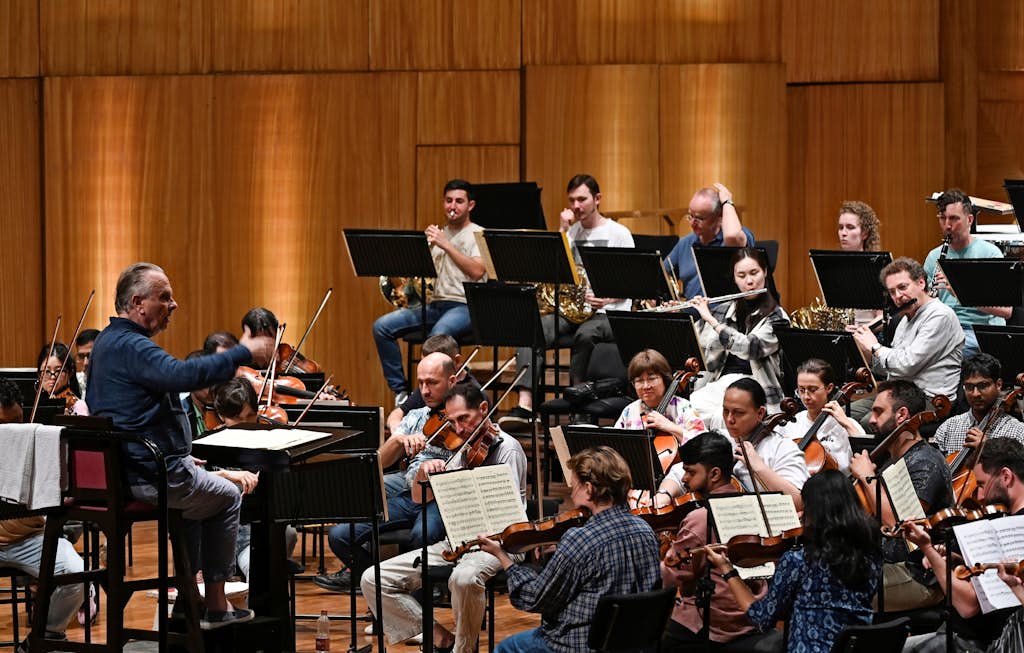
Listening to Sibelius in the hundred-degree heat of Mumbai set me thinking about the limits of symphonic penetration. Not just on an audience unfamiliar with the Western canon but on a century that has yet to yield a symphony that speaks to our times. It is, by my reckoning, 35 years since a new symphony last captured a mass audience. I am starting to wonder if the engine of orchestral music has not finally run out of fuel.
Jean Sibelius described his symphonies as “clear, cold water”. Others, he said, “manufactured cocktails of every hue and description”. Gustav Mahler, a cocktail man, responded that the symphony must contain everything. Each man appealed to a distinct public, one austere, the other exploratory. Great symphonists knew the nature of their listeners. So what went wrong?
Joseph Haydn originally invented the symphony as light entertainment for landed gentry, perfect for the awkward social interval between dinner and dance. Beethoven came along and blew away triviality, offering “gigantic” statements. “Music is a higher revelation than all wisdom and philosophy,” he proclaimed.
From Beethoven on, a new symphony was anticipated with the expectation of revelation. This was, too, the dawn of the literary novel when Goethe asserted Elective Affinities, Balzac conceived La comédie humaine and Dickens exposed underworlds in Oliver Twist. Yet whilst the novel became our guide to the unknown — my craving for India was formed by Kipling, Forster, Narayan, Rushdie, Jhabvala, Vikram Seth — the symphonies that shaped our awareness are few and far between.
Count them. On two hands.
Haydn’s Farewell Symphony (1772) gave musicians agency, allowing them to leave when they liked. Beethoven conceived the Eroica (1803) as an ode to Napoleon, only to reconfigure it as an essay on the transience of power. He gave his ninth symphony on a Friday night when the aristocracy were out of town so as to engender a dream of equality.
Half a century then passed before Johannes Brahms reaffirmed the symphony’s centrality, harking back in 1876 to Beethoven’s ninth and ahead to industrial dehumanisation and operatic megalomania. The apotheosis of Brahms’s first symphony, its big tune, delivers more doubt than glory, more truth than Richard Wagner’s contemporaneous Ring.
The symphony reached its summit in the 1890s when Tchaikovsky’s Pathétique showed us how to die, Mahler’s Resurrection suggested what came after and Antonín Dvořák, in the first and only symphonic masterpiece ever conceived on American soil, probed ethnographic divisions in the New World, prevalent to the present day.
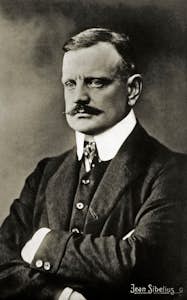
Sibelius, in his second symphony (1901–2), invented a nation. Whilst his tone poem Finlandia awoke Finns from subservience to Russia and Sweden, the second symphony made a case for independence based on language and culture. If Finland could produce a symphony of such magniloquence, the world must recognise it as a nation that dwelled alone.
During and after the First World War, the symphony failed to address the catastrophe in ways that novels — by Remarque, Hemingway, Solzhenitsyn — succeeded in doing.
The Second World War overturned that failure to the point that orchestras in Britain and America fought for the first right to perform a symphony by Dmitri Shostakovich, written under siege in Leningrad. The seventh symphony held oracular status in predicting victory (in London, the fifth symphony of Ralph Vaughan Williams served a similar purpose).
Once peace returned, the symphony declined. Whilst Shostakovich kept going to number 15, others followed Schoenberg into abstruse asceticism or Bernstein into musical theatre. It was no longer incumbent on composers to toe a symphonic line.
The novel, meanwhile, was renewed by one generation after the next — Grass, Malraux, Steinbeck, Greene, Updike, Philip Roth and on to Houellebecq, Amis, Mantel, Ferrante, Franzen, Rowling.
Only at the century’s end did the symphony show signs of life with John Corigliano’s patchwork score for AIDS victims and Henryk Gorecki’s million-selling Symphony of Sorrowful Songs, a reminiscence of Nazi tyranny that felt inexpressibly millennial.
And nothing since. There has been no coherent symphony on 9/11, nothing on the psychosocial effects of Covid, nothing on virtual reality and the assaults on truth.
When Philip Glass recently withdrew his 15th symphony from Washington’s Kennedy Center, in protest at its takeover by Donald Trump, the gesture served chiefly to remind us how long it had been since the noun “symphony” last appeared in a newspaper headline.
Glass, at 89, may yet deliver an epitaph on the state of America, but it is hard to resist the conclusion that the symphony is now, formally and finally, played out as a public forum. Or is it?
Listening to Sibelius’s second performed by the Symphony Orchestra of India in an air-conditioned auditorium in Mumbai, I tried to borrow the ears of those around me who were hearing this symphony — perhaps any symphony — for the first time.
The D-major first movement opened up like a waterlily at dawn; the next phase veered from melody to morose rage. A third episode felt like a furious race against time, only to be resolved by a finale of such Beethovenian hope and glory that it brought the audience leaping to its feet in a way I have not witnessed in a London concert hall for a very long time.
India does not take a symphony for granted. The country’s only symphony orchestra has two short seasons. Scarcity breeds appreciation and an opportunity for self-immersion. The symphony may be almost dead in Western waters. It is only just rising in the east.