This article is taken from the March 2026 issue of The Critic. To get the full magazine why not subscribe? Get five issues for just £25.
In February 2022, feminists converged on the steps of the Congress of Mexico City to protest against proposed legislation that would recognise and regulate surrogacy. During the debate — which concluded with a decision to treat surrogacy as a medically regulated practice — women dressed in outfits inspired by Margaret Atwood’s The Handmaid’s Tale. They held banners proclaiming, “We are not incubators, we are women” and “No to surrogate wombs”.
“It was a disaster,” says feminist lawyer, Patricia Olamendi Torres, a long-time campaigner against the surrogacy trade. “We knew that regulation means complete normalisation and acceptance, and that if we didn’t fight really hard to stop this, Mexico would be the new centre of surrogacy, which is exactly what has happened.”
Welcome to Big Fertility. Reproductive pimping is rife globally, and Mexico has become the new epicentre of the commercial surrogacy trade.
The law, Olamendi Torres tells me when we meet in Mexico City, is a mess. Abolitionists are calling for a complete ban on all forms of outsourcing pregnancy, whether altruistic or commercial. “They are the same,” she says. “Once you accept that some women will have babies for others, it is a slippery slope, and no woman in Mexico would do this as a favour; they do it because they are desperate, poor, often abused into it by their husbands.” Gay male couples are strongly encouraged to travel to Mexico to buy a baby. Increasingly, single men are doing so too — and Mexican law firmly favours their rights over those of poor Mexican women.
In 2021, the Mexican Supreme Court ruled that surrogacy arrangements could not be discriminated against on the grounds of sexual orientation, misusing a warped form of equalities and anti-discrimination law. Prior to this, surrogacy services were only available to married Mexican couples. In a perverse, Orwellian twist of logic, it has now been ruled discriminatory to deny rich, Western gay men the right to rent a womb and purchase a baby.
“There is no right to have a baby,” says Olamendi Torres, “but women being used for pregnancy — and the children born of surrogacy — should be the ones to have rights.”
❀
Mexico City is home to the UK-based surrogacy brokerage My Surrogacy Journey (MSJ), the first British agency to set up an overseas office. They host a podcast about how to pursue surrogacy in Mexico and a website promoting their business. MSJ was set up to provide a rapid commercial surrogacy service. Foreign, Commonwealth & Development Office agents have met with MSJ at the British Embassy in Mexico City on at least three occasions — presumably to help smooth the way for people wanting to take babies from Mexico to Britain.
All babies bond with their mothers in utero, regardless of whether the egg used was hers
Commercial surrogacy is banned in the UK, but a loophole in the law means MSJ and other agencies are able to set up shop in Mexico serving UK-based customers. This gets round the ban, enabling babies to be taken from their birth mothers and brought to the UK via arrangements that would not be permitted domestically. Ads on their Instagram account aim to recruit Mexican surrogate mothers. MSJ offers around £11,800 to surrogates, with additional payments for procedures, whilst their website details how surrogates can be omitted from official birth certificates.
Lexi Ellingsworth, of Stop Surrogacy Now UK, has been following the Mexico baby trade for some time. She says, “No person who claims to be progressively minded should be endorsing this despicable, exploitative trade.” The risk of severe pregnancy complications, including sepsis, preeclampsia and postpartum haemorrhage, is three times higher for surrogate pregnancies, due to immunological issues. All babies bond with their mothers in utero, regardless of whether the egg used was hers. Separation at birth is cruel and unethical.
In Mexico, altruistic surrogacy has been legal in Tabasco state since 1997. It has since been regulated in Sinaloa and Jalisco, but surrogacy brokers operate in an ambiguous legal landscape that means the cost of buying a baby in Mexico is a fraction of what it would cost in the USA.
In 2015, India excluded gay couples, and anyone not having at least one parent of Indian heritage, from using surrogacy services. As India vacated the prime spot, Mexico moved straight in. One reason for this is that Mexico allows pre-birth agreements. This means that the surrogate mother signs away her rights to the child prior to birth, removing any option for her to change her mind. This makes it easier for the paying “parents” to legally bring the baby to the UK.
“It is required that you sign a contract promising not to love the baby,” says Anna, a surrogate mother who lives just outside Mexico City. “I was trained by the agency to think of myself as an incubator and absolutely not a mother.”
Anna had escaped an abusive husband and moved in with extended family. She tells me that surrogacy brokers “would come around the colonia [a working-class housing complex] asking if women wanted to make money … They saw I had a child, and probably heard I had left my marriage. They offered me enough money to buy my own place if I would have a baby for a couple [that were] desperate but infertile.”
Far from making enough money to buy a house, Anna was put through hell. “I was doing this only for the money,” she tells me. “I have no idea who the baby was for, I could only hope they were good people.”
Paid the equivalent of £10,000, Anna became pregnant with twins, but the commissioning parents only wanted one baby. “They told me I had to have a procedure to check that all was well with the baby, when I was four months,” she says. What actually happened was that they aborted one of the foetuses, only informing her of this afterwards. “I felt violated, sick, distressed,” she tells me. “At that moment, I knew that what I was doing was terrible.”
❀
Esquire writer Raven Smith defended his decision to pursue surrogacy in Mexico by explaining that he didn’t like the UK’s “return to sender” clause that allows the mother to change her mind. He also writes of masturbating into a cup on Harley Street. “I was technically meeting her for the first time in that little cup.” And there you have it: to him, his sperm was the baby. No egg, and no mother.
Cloaked in the rainbow flag, gay men have assumed a right to have their own child
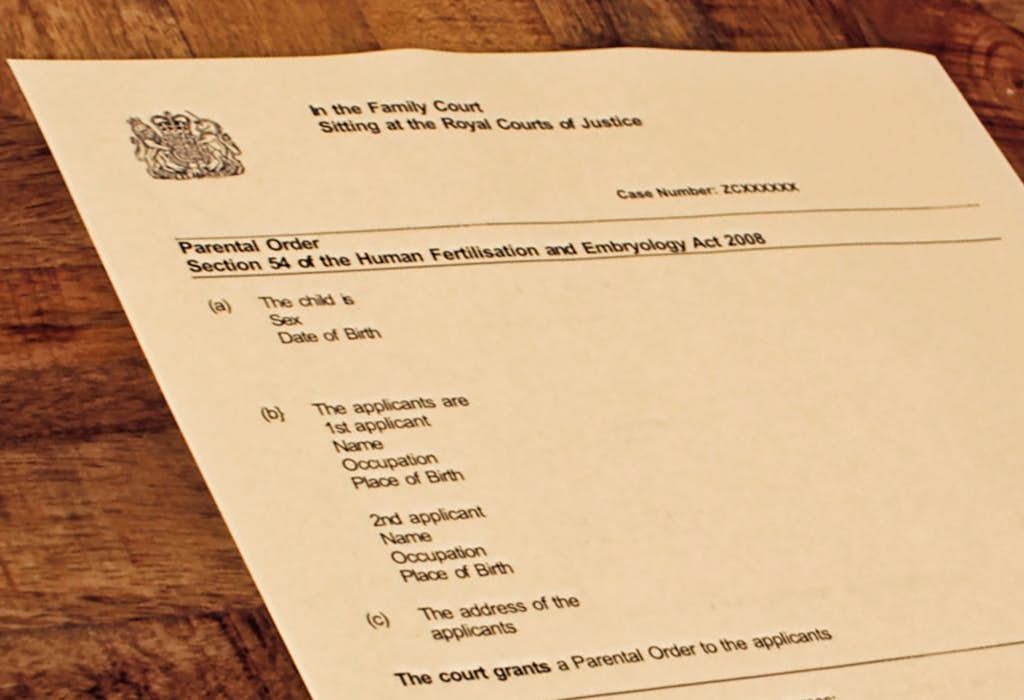
The establishment of a UK surrogacy agency in Mexico City has meant more babies being brought from there to Britain. Women are bribed (with what is, to them, a large sum of money) into relinquishing their child to foreigners, who then secure their parental rights in the family courts here.
In our courts, parental orders for surrogate-born children born overseas, including Mexico, outnumber cases of domestic births to British surrogate mothers. Meanwhile, MSJ is embarking on a PR drive to boost the standing of surrogacy. Last year, the company addressed the Royal College of Midwives conference in Liverpool and appeared on an RCM webinar.
The Mexican Supreme Court ruled in 2017 that same-sex couples have the right to adopt, but relatively few have done so. Cloaked in the rainbow flag, gay men have assumed a right to have their own child, and to order one to be removed at birth from its mother. The couple behind MSJ have been awarded a place on the Diversity Power List, 2025/6, for “making the journey to parenthood safer, more inclusive and accessible”.
Meanwhile, children born of surrogacy suffer legal ambiguity and are often stateless. They are denied the fundamental right of being with their birth mother — or even, in the case of single men and gay couples, any substitute female.
❀
The solution? Criminalise those involved, but decriminalise the women and babies who are its victims.
Class the women used as surrogates as victims of exploitation and recognise them as the legal mother. Stop any transfer of parental rights. Prohibit commercial advertising of Big Fertility. Criminalise all forms of brokering. Investigate the sale and trafficking of children, and educate the public about the fact that surrogacy is not a harmless infertility-busting fix.
“Many of the women have been in prostitution or … [have] at least been sexually abused in childhood. And so all of this contributes clearly to finding women easily and coercing them and for them not being able to tell their stories,” says one anti-surrogacy campaigner, who can’t be named for fear of being targeted by organised criminal gangs.
I ask Olamendi Torres if she is frightened of retributions from the networks that run womb-trafficking operations. “I am too well known for that,” she says. “It gives me some protection, being so public.” She is furious that surrogacy agencies claim that the practice is legal in Mexico, which is not strictly true. What is true is that it is poorly regulated and ripe for exploitation. “The profiteers exploit the poverty in which millions of women find themselves. They have promoted Mexico as a cheap market where you can buy a baby,” she says.
One former surrogate mother, who lives in Mexico City, told me she was required to live under the supervision of a “house mother” in accommodation designed to facilitate 24-hour monitoring. There, the women were told what they could eat, and what was prohibited: riding a bicycle, having sex with their husband, smoking or drinking, and taking any prescription medication that wasn’t approved.
As a result of the complications that are more common with surrogate pregnancies and births, many women are saddled with debt because some commissioning parents have left the country without having paid the medical bills.
Another surrogate mother I spoke to online told me that the commissioning parents withheld a payment for the second trimester because she had complained of feeling unwell and having severe morning sickness. “They thought I might lose the baby,” she told me, “and they didn’t want to waste any more money if they weren’t going to get a baby at the end of it.”
The involvement of organised crime is irrefutable. Although pro-surrogacy advocates claim that this is because of a lack of clear federal regulation, it is in fact the money involved and the normalisation of surrogacy, plus the wide availability of surrogacy accommodation that attracts organised crime to it. The only solution is an outright ban.
❀
During my visit to Mexico City, I visited the plush offices of My Surrogacy Journey in the hope I could ask some face-to-face questions of the staff, but was told by security guards I would need an appointment. Despite sending two emails requesting an interview, as well as a right of reply (regarding the allegations I make in this article about exploitation), I have not received either an acknowledgement or reply.
Olamendi Torres is busy planning a big conference against the surrogacy trade in Mexico City, which will be addressed by Reem Alsalem, UN Rapporteur on Violence against Women and Girls. “We need people to understand that this is a terrible violation of the mother, and the baby,” she says. “It’s nothing more than slavery,” Torres added.