Donald Trump last night gave one of his strongest signals yet that his war may be coming to an end as he vowed to ‘leave’ Iran within two or three weeks.
But as he prepares to address the nation tonight ‘to provide an important update on Iran,’ could the US President be buying time for a surprise invasion on Good Friday?
Ever since the start of the conflict, Trump has sent out a flurry of contradictory messages: from declaring the war is won, to giving the regime ten more days to make a deal, to threatening to ‘completely obliterate’ Iran’s energy infrastructure the Strait of Hormuz was not ‘immediately’ reopened for business.
Nato nations have been taunted as ‘cowards’ and nothing more than a ‘paper tiger’ alliance which the US ‘needs nothing from’, while at other points they are called upon to ‘go to the strait’ and reopen it themselves.
While the US has said talks with Iran were ongoing and expressed optimism, Iranian Foreign Minister Abbas Araqchi said on Tuesday he had received direct messages from US special envoy Steve Witkoff but those did not constitute ‘negotiations’.
Amid mounting hopes for a deal, the US President might deliver an announcement tonight bringing the war to a close, but there is also the possibility he is touting peace as cover for an Easter invasion.
An invasion on Good Friday would coincide with the closure of Wall Street and major European markets for a three-day weekend.
Trump might time the operation for when markets are closed, especially if the military has only short, sharp missions in mind before they reopen.
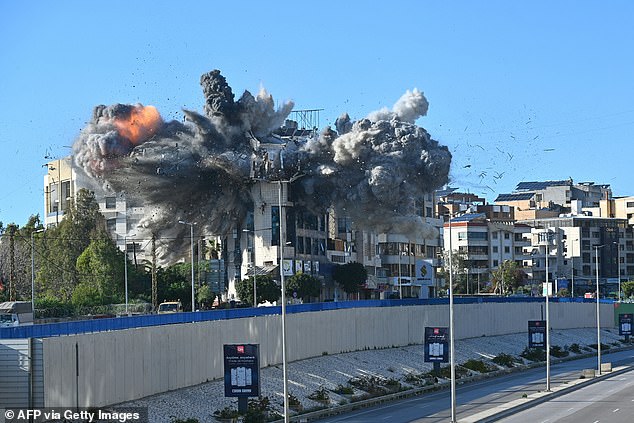
A ball of fire rises from the site of an Israeli strike that targeted a building adjacent to the highway that leads to Beirut’s international airport on March 31
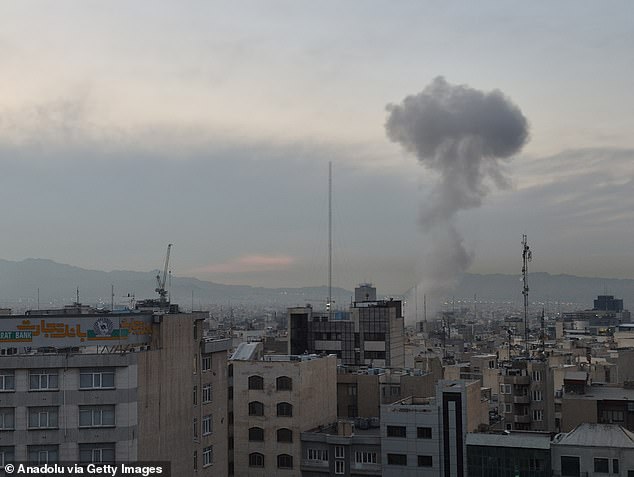
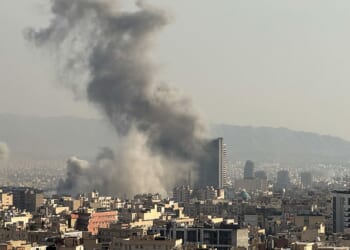
Smoke rises after explosions struck the northeastern, western, and central areas amid Israeli attacks in Tehran, Iran on April 1
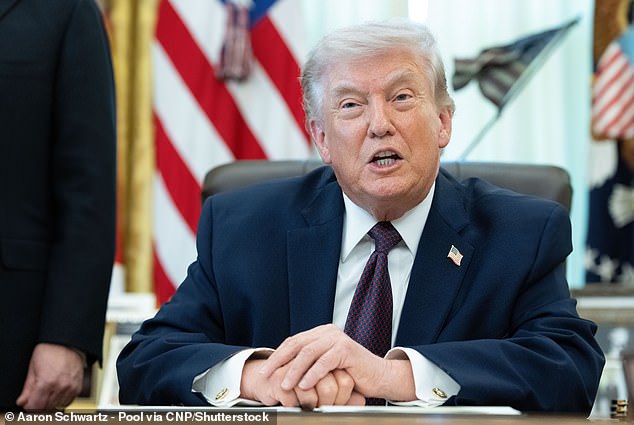
Ever since the start of the conflict, US President Donald Trump has sent out a flurry of contradictory messages about peace and escalation
The USS Tripoli arrived in the Middle East on Friday, composed of around 5,000 sailors and Marines distributed across several warships.
They will soon be joined by the San Diego-based USS Boxer amphibious assault ship, and two other vessels comprising the 11th Marine Expeditionary Unit.
Also heading to the region are thousands of paratroopers from the 82nd Airborne, who will apparently be accompanied by hundreds of Special Forces.
Becca Wasser, a Bloomberg economics analyst who carried out war games analysis for the Department of Defence from 2015 to 2025, told the Times: ‘The troop deployments are real, they are in motion and once they start there’s almost a strange inevitability to them based on how President Trump has used them in the past.’
She added that Trump preferred to keep all his options open for as long as possible and that his threats to bomb Tehran’s infrastructure were attempts to pressure the Islamic Republic into an agreement – at the same time as making preparations for a ground invasion.
‘We’ve seen this in the Caribbean, and we’ve already seen this in the Middle East. I’ve researched … all of the strikes that Trump greenlit since taking office in his second term, and there is this pattern,’ she said.
‘Once forces are there, even with Taco [Trump always chickens out], there is still action that gets taken.’
The US President has allowed the build up of troops in the region even as he boasts about progress on the peace front, like last week when he announced Tehran handed Washington a ‘significant prize’ worth a ‘tremendous amount of money’ related to the Strait of Hormuz.
‘They did something yesterday that was amazing. Actually, they gave us a present, and the present arrived today, and it was a very big present, worth a tremendous amount of money,’ he told reporters in the Oval Office last Tuesday.
‘I’m not going to tell you what that present is, but it was a very significant prize, and they gave it to us…So that meant one thing to me, we’re dealing with the right people,’ he added.
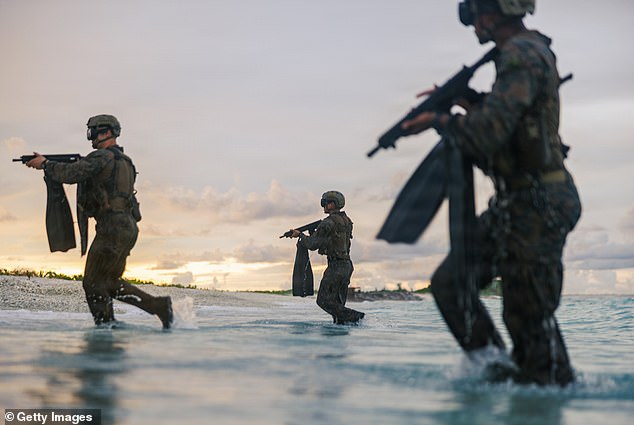
United States Marines conduct a simulated reconnaissance and surveillance mission at a naval support facility on March 24 in Diego Garcia, British Indian Ocean Territories
Oil prices fell on Wednesday, down more than three per cent to just above $100 per barrel following Trump’s remarks in the Oval Office last night that the country will be leaving Iran ‘very soon’ and military action could end in two or three weeks.
However, Brent crude prices remain 39 per cent higher compared to 28 February, when the crisis began and Tehran effectively closed the Strait of Hormuz, the vital waterway through which around a fifth of the world’s daily oil and liquefied natural gas (LNG) supply passes.
Throughout the war, Trump has continually felt urgency to convince markets that a conclusion to hostilities was just around the corner, especially at times of stress when it looked like a sell-off could be gathering pace.
But amid the build up of American troops in the region, an escalation could be just around the corner.
Keir Starmer signalled a fresh push to unwind Brexit today as Trump ramped up his abuse of Britain.
The President said the UK ‘doesn’t even have a navy’ as he accused Starmer of only caring about building ‘windmills‘.
He also dismissed Nato as a ‘paper tiger’ again and said America leaving the military alliance was now ‘beyond reconsideration’.
But at a Downing Street press conference, Sir Keir swiped that Iran is ‘not our war’ and insisted he was giving ‘calm leadership’.
The PM also declared that he is mounting a new drive to get closer to the EU, with ‘closer economic cooperation, closer security cooperation’.
He said a summit would be held soon on a ‘more ambitious’ relationship as Transatlantic ties fray.