From streaky mishaps to a spotty chin and the dreaded orange hands, fake tan is one of those beauty staples that comes with lots of red flags. Even the most experienced tanners (I’d class myself in this category) have a handful of disastrous stories that prove it’s not for the faint-hearted.
Yet there is nothing I can stand less than the idea of getting my pasty pins out as the weather perks up. So is there a way we can get ourselves perfectly bronzed, while ensuring we avoid Cheeto-orange legs?
To clear things up, I asked Melanie Brownlow, founder of best-selling tanning brand St. Moriz, to answer the most Googled fake tan queries. From whether fake tan expires, to the one group who should think twice before using it, here are the 16 essentials – and expert tips – you need to know.
Can fake tan expire?
This is one I admittedly had no idea about, but it turns out using an old bottle could be why your glow looks a bit off.
‘All beauty products have a shelf life, and self tanning products are no exception,’ Brownlow explains. ‘The main indications that the product is close to expiry are discolouration and a change in smell.’
She adds that most formulas don’t last forever once opened, which is particularly important if you haven’t reached for the bottle since last summer. ‘As a general rule, self tanning products have a shelf life of six months following the period of opening. As for an unopened product, it should last up to three years if stored correctly, out of direct sunlight and away from the bathroom, where temperatures rise and fall.’
Can fake tan cause skin cancer?
If you’ve ever worried about what you’re slathering on your skin while tanning, Brownlow has reassuring news.
‘Dermatologically tested self tanners, like a St. Moriz tanning mousse, don’t cause skin cancer,’ Brownlow says. ‘The key ingredient which creates a bronze colour is DHA (Dihydroxyacetone), which reacts with the top layer of your skin to change colour.’
However, she stresses the importance of buying wisely. ‘The UK has strict rules to ensure they aren’t harmful to human health, so always buy your self tan from a reputable UK retailer.’
Can fake tan damage your skin?
For most people, fake tan is a safer option than sunbathing – but it’s not entirely risk-free. ‘Self tan is a safe alternative to sun tanning and tanning beds, as it doesn’t emit harmful UV,’ Brownlow explains. ‘However certain individuals may have irritations or mild reactions to certain self tan products.’
Her golden rule? ‘I always recommend doing a spot test one to two days before you plan on using the product.’
Can fake tan cause eczema or reactions?
If you have sensitive skin, this is where you need to be more cautious. ‘For individuals with sensitive or eczema prone skin, self tan products may trigger an eczema flare-up,’ Brownlow says.
She also notes that breakouts and rashes are possible. ‘Some individuals may still suffer from spots and rashes in reaction to the product.’
Her advice is simple: ‘Perform a spot test by applying a small amount of the product on your inner elbow one to two days before you plan to use it… and consult your doctor if you’re still experiencing reactions.’ In our book, that’s good advice for any new products you introduce into your routine.
Can fake tan dry out your skin?
If your skin feels tight post-tan, that’s not just your brain overthinking. ‘Due to the DHA in the product, self tan can cause your skin to dry out,’ Brownlow explains.
To counteract it, she recommends choosing smarter, ingredient-led formulas. ‘One way to minimise any dryness is by choosing products with ingredients that support long-lasting hydration, like vitamin B5 and hyaluronic acid.’
What’s more, as any experienced tanner will know, you need to keep up with a daily moisturising routine after you’ve tanned to keep up that ‘bronzed, plump and hydrated glow.’
Can fake tan stain nails and sheets?
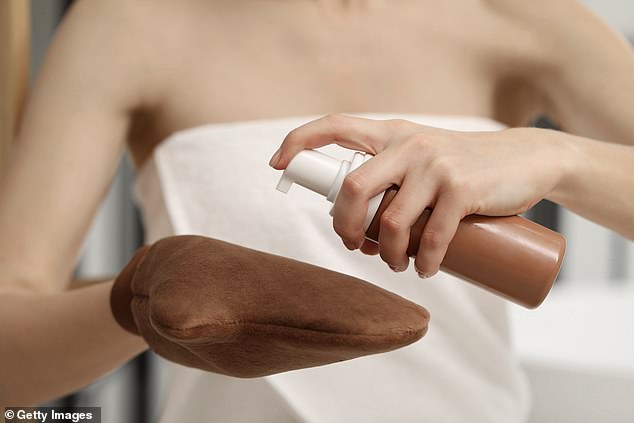
Unfortunately (and unsurprisingly) yes – but there are ways to avoid it. ‘Just like tanning your skin, DHA can stain your acrylic nails,’ Brownlow says. ‘I would always use a tanning mitt to apply your self tan.’
As for bedding? ’If you’re letting your self tan develop overnight and want to protect your white sheets, I would recommend wearing long, baggy clothes and applying a self tan setting spray,’ Brownlow says. ‘This product will lock in the transfer-free colour and speed up the drying process to protect your white sheets. If the colour guide does end up transferring onto your sheets, it should come out with a standard machine wash with detergent.’
When should you wash fake tan off?
Timing your wash off is everything when it comes to avoiding streaks. ‘Always follow the directions on the product label, as wash-off time can vary from as little as one hour up to eight hours,’ Brownlow explains.
She also warns against common mistakes. ‘Avoid hot water, long showers and products like soaps and scrubs as they can make your fresh tan go streaky and patchy.’
Which fake tan looks the most natural?
If you’re after a believable glow, the formula you choose really matters. ‘Gradual self tans and colour correcting mousses will produce the most natural-looking tan,’ Brownlow says.
Brownlow explains that ‘gradual tans have a lower concentration of DHA, and can be used daily to build up a shade of tan you’re comfortable with.’
It’s the same for those with pale skin who don’t want a dramatic transformation. ‘Self tans that produce natural results, like gradual tans and colour correcting mousses, are the best for pale skin,’ Brownlow explains.
She also suggests tailoring it to your undertone. ‘Opt for medium to light gradual tans and experiment with the development time to find the timeframe that works best for your skin.’
Which fake tan is best for sensitive skin?
For easily irritated skin, gentler formulas are a non-negotiable. ‘If you have sensitive skin, it’s best to opt for self tan that has been dermatologically tested and has skin loving ingredients such as hyaluronic acid, vitamin e, aloe vera and more,’ Brownlow says.
Which fake tan is best for your face?
Facial skin needs a different approach, as it’s more sensitive and prone to drying out than other areas of your body.
‘For a hydrating, streak-free glow, choose products specifically designed for the face,’ Brownlow advises. ‘Self tan face lotions are formulated with gentle skincare actives for the more delicate facial skin.’
Will fake tan survive pools, hot tubs or saunas?
If you’re heading on holiday, it’s bad news: you need to expect some fading.
‘Self tan will gradually come off in a pool and hot tub,’ Brownlow explains. ‘Your self tan will come off faster in a hot tub because the water is warmer, while the chlorine in pools can cause your tan to look patchy.’
One of the quickest ways to ruin your tan? Spending time in a sauna. ‘It’ll speed up the fading process, as the high heat and humidity will cause the DHA to break down quicker,’ Brownlow says. ‘This will often result in a patchy and uneven tan, so I would recommend avoiding saunas when you have self tan on.
Can you reapply fake tan straight away?
Of course we all want to keep our glow, but ‘it’s not recommended to apply a new layer of tan when your previous self tan is still on,’ Brownlow warns. ‘Doing so can lead to self tan build-up and a patchy and streaky tan.’
‘Before reapplying, exfoliate and shave (if you want) at least 24 hours before applying self tan again.’
Can fake tan make your face break out?
If you’re acne-prone, proceed with caution. ‘For those with sensitive skin that’s prone to breakouts, certain self tan products may cause a reaction,’ Brownlow says.
She suggests alternatives: ‘I would recommend using bronzing drops, created without the self-tanning ingredient, for a tan-free glow.’
Is fake tan safe in pregnancy?
For most, yes – but patch testing is key. ‘Most self tanning products are safe to use during pregnancy, as the DHA only affects the skin’s surface and is not absorbed into the bloodstream,’ Brownlow explains.
However, always check the bottle and ask your doctor if you want reassurance. Brownlow would also recommend doing a patch test, ‘as your skin may be more sensitive due to changes in hormones’.
Who should avoid fake tan altogether?
While fake tan is generally safe, it’s not for everyone. Brownlow makes it clear that those with reactive skin need to be cautious. ‘Certain individuals may have irritations or mild reactions to certain self tan products,’ she says, adding that people with eczema-prone or highly sensitive skin may experience flare-ups.
In short, if your skin is easily triggered, patch testing isn’t optional – it’s essential.
How to fake tan your hands?
The eternal question for fake tanners – and one that Brownlow has a complete routine for. ‘Start by micro-exfoliating your hands with a bit of shower gel and apply a small amount of oil free moisturiser, prioritising areas that are prone to dryness, like your knuckles and palms.’
‘Apply a thin layer of Vaseline to your palms for protection before applying a small amount of tan to your hands with a spare makeup brush. If you don’t have one you can spare, carefully apply the leftover tan from your mitt.’