Two months after Lin Russell and her six-year-old daughter Megan were bludgeoned to death on a summer’s afternoon in July 1996, police searching a hedgerow near the crime scene made a chilling discovery.
It was a wooden-handled hammer, like that found in many household toolboxes. And although it was never conclusively linked to the attack, which was carried out in broad daylight, it was consistent with the catastrophic blows to the head which killed Lin and her youngest child, and left her older daughter Josie, then nine, bloodied and unconscious.
Tied to a tree and blindfolded, Josie heard her mother’s dying screams before she too was set about by the killer but, despite her terrible injuries, she somehow survived what one detective described as ‘the most horrific murder [scene] I have had the misfortune to come across in my 23 years as a police officer.’
A year later, a BBC Crimewatch reconstruction led to 38-year-old Michael Stone, a violent heroin addict, being locked up for the murders.
He is still behind bars today but has long protested his innocence and, as the Mail reported exclusively last month, his case is being reviewed by the Criminal Cases Review Commission (CCRC), which will decide if it should be referred to the Court of Appeal.
If Stone’s name is cleared, it would be one of the longest-running miscarriages of justice in British criminal history — second only to the 38 years wrongfully served by Peter Sullivan, the so-called ‘Beast of Birkenhead’, who was released last year after new DNA findings cleared him of killing 21-year-old florist Diane Sindall in a frenzied sexual attack on Merseyside in 1986.
Like Sullivan, Stone has never stopped protesting his innocence, even turning down the possibility of parole in 2022 because accepting it would require him to admit guilt.
Also like Sullivan, he hopes that advanced analysis techniques available today might uncover new clues in the physical evidence gathered from the crime scene.
Today we examine those clues in more detail — starting with questions about the weapon used in the crazed assault on Lin Russell and her daughters.
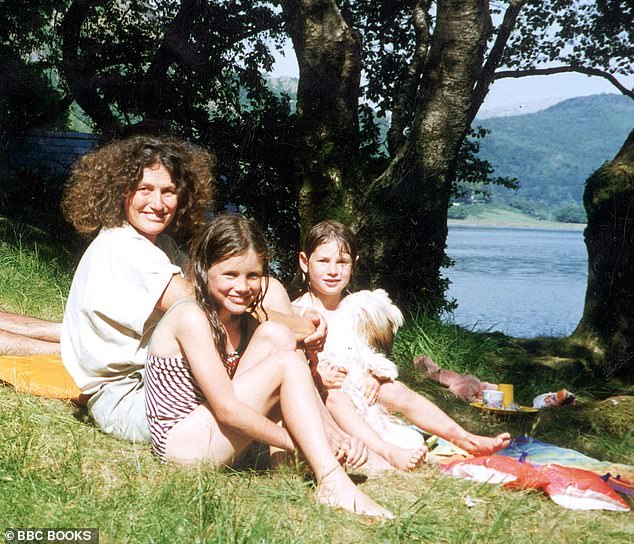
Lin, Josie and Megan Russell were attacked with a hammer in a country lane not far from their home in Chillenden, Kent, 1996 (pictured, on a family holiday in Wales in 1995)
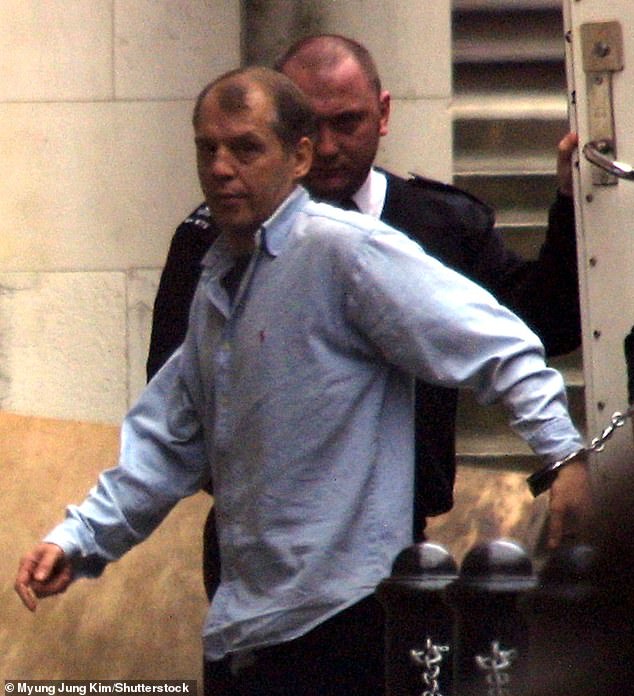
Michael Stone (pictured, outside court in 2001) has been in prison for nearly 30 years but has always professed his innocence over the murders of Lin and Megan Russell
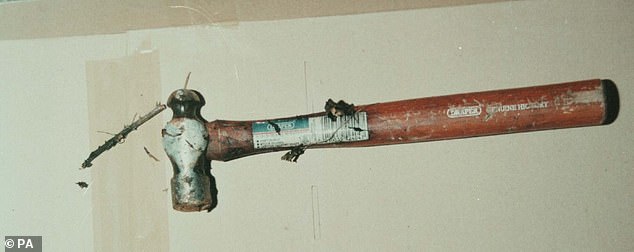
A hammer found in a hedgerow bordering a field near the murder scene of Lin and Megan Russell in Chillenden, Kent
WHERE IS THE MURDER WEAPON?
It took place near the village of Chillenden, about eight miles northwest of Dover and in one of the most scenic parts of rural Kent. Walking the girls home from school before their Brownies meeting later that afternoon, 45-year-old geologist Lin took them along Cherry Garden Lane, a quiet bridlepath that they often used as a shortcut.
At 7.30pm, Lin’s husband Shaun, a 45-year-old university lecturer, returned to their cottage after work and was puzzled to find nobody there. Lin and the girls should have been back from Brownies by then and by 9pm he was so worried that he called the police.
Within a few hours, they had found the tragic trio lying in a clearing off Cherry Garden Lane. With them was their beloved family pet, a white terrier named Lucy, who was also clubbed to death.
I’m Tom Rawstorne, and nearly 30 years ago a 12-year-old murderer, with a gold crucifix hanging round her neck, gave me a moment I’ll never forget.

Sharon Carr is to this day Britain’s youngest-ever female murderer, having killed an 18-year-old hairdresser in an unprovoked act of gruesome violence. I watched her up close in court for three weeks and it is something I’l never forget. I’ve written about it in The Crime Desk newsletter – sign up to read it for free.
When officers first arrived at the bloody scene, there appeared to be no signs of life and Shaun was told that his wife and both daughters were dead. But then a policeman noticed Josie moving and the battle to save her life began.
By the autumn, she was making a miraculous recovery and could communicate with the police, recalling how the murderer took a hammer from the back of his car before approaching them and demanding money.
Josie’s account was consistent with the pathologist’s report which said that the catastrophic blows to the victims’ heads had been inflicted by an object with a circular face of approximately 3cm in diameter. But was this the only weapon used?
Stone’s lengthy submission to the CCRC includes an 18-page dossier by Angela Gallop, the UK’s leading cold-case forensic expert. She has helped solve high-profile cases ranging from the racially-motivated murder of south London teenager Stephen Lawrence to the killing of young mother Rachel Nickell on Wimbledon Common, in front of her two-year-old son.
Together with Dr Philip Avenell, an expert in DNA profiling, Gallop went back to the original evidence, including photographs which helped them reconstruct the crime scene, and made a startling observation.
‘A number of sticks from the trees nearby were lying on the ground on and around the bodies, and some of these were heavily bloodstained.
‘One stick in particular, which had been lying with others on top of Lin’s lower right leg, had spots and splashes of blood radiating away from heavier staining on it, suggesting its use as a weapon during the attack.’
Describing how this and other branches had been used to ‘strike a wet, blood-stained surface with force,’ the report recommends that they should be tested for traces of DNA, especially in the areas where the murderer was likely to have gripped them.
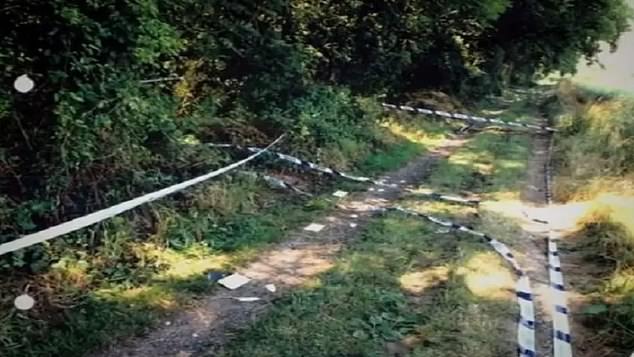
Pictured: The scene of the murders of Lin and Megan Russel in a country lane in Chillenden, Kent
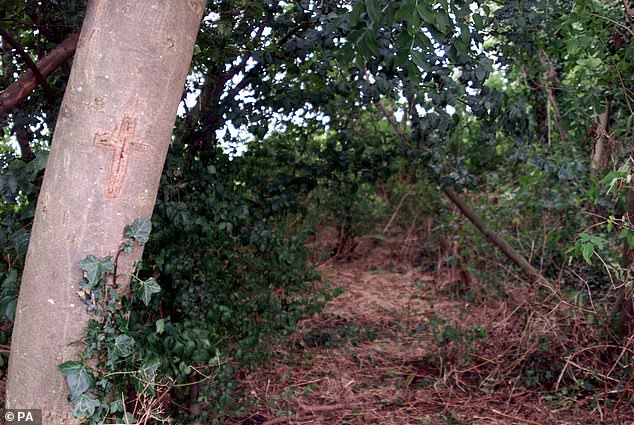
Pictured: A cross carved into a tree near the scene of the murder of the Russell family, in Chillenden in Kent
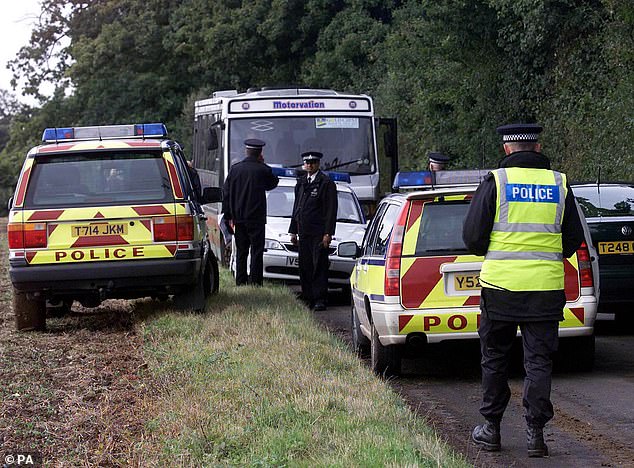
Pictured: Police at the scene of Lin and Megan Russell’s murder in Chillenden, Kent, 1996
This is potentially a vital step in freeing Stone whose 63-year-old sister Barbara, a mental health nurse and longtime campaigner for his release, was ‘stunned’ to hear of the emphasis which Angela Gallop placed on the sticks surrounding the bodies.
‘One of the most surprising aspects of the report for me and my brother is the frequent references to other items that were covered in blood, and which could have been used as a weapon,’ she told the Daily Mail.
‘That is the first time either of us have ever heard of this as being a possibility.’
She believes that detectives were determined to prove her brother’s guilt from the moment they discovered the offence for which he had previously been put away.
They were alerted to this by his psychiatrist Dr Philip Sugarman who watched that Crimewatch reconstruction, timed to coincide with the first anniversary of the then still unsolved murders.
He was struck by an e-fit, based on the recollections of a witness who saw an angry-looking man driving away from the area. Josie had agreed that this looked like the man who set about them and, according to Dr Sugarman, it resembled Stone, then 37 and living in Gillingham, about 50 miles from Chillenden.
His long criminal record featured mainly shoplifting and burglary, but in 1981 he had become involved in an altercation with another man, during which he had picked up a nearby hammer and attacked him with it.
Stone quickly became the police’s prime suspect but the problem was that they couldn’t find, and neither have they ever found, any forensic materials linking him to the murders — not on the hedgerow hammer, or anything else found at or near the crime scene.
He was eventually sent for trial in 1998 only because of the testimony of three fellow inmates who claimed that he had confessed to the crime while on remand in the segregation unit at Canterbury prison.
Two of those jailhouse confessions were later discredited — thanks in part to an investigation by the Daily Mail. But, although Stone’s conviction was overturned in 2001, a retrial later that year saw him found guilty once again, based on the word of Damien Daley, the remaining prisoner who had testified against him.
Mark McDonald has since given the CCRC evidence that Daley, a drug-addicted gangster, concocted Stone’s ‘confession’ in return for being moved from the strictly regulated segregation unit so that he could access Class A drugs smuggled into the rest of the prison.
Now serving life after murdering a fellow drug dealer in 2014, he is expected to be visited by investigators from the CCRC, which will also be considering claims that the police were highly selective in assessing evidence.
‘I always felt the police and prosecution linked my brother’s previous use of a hammer, 15 years earlier, and then really pushed the value of this to support their theory,’ says Barbara Stone.
Stone’s barrister Mark McDonald, who is also representing former neonatal nurse and convicted baby murderer Lucy Letby as her case is reviewed by the CCRC, agrees.
‘The chaos at the scene made it difficult for them to find a motive and, as a consequence, they may have grasped too soon at one theory without looking at others,’ he says.
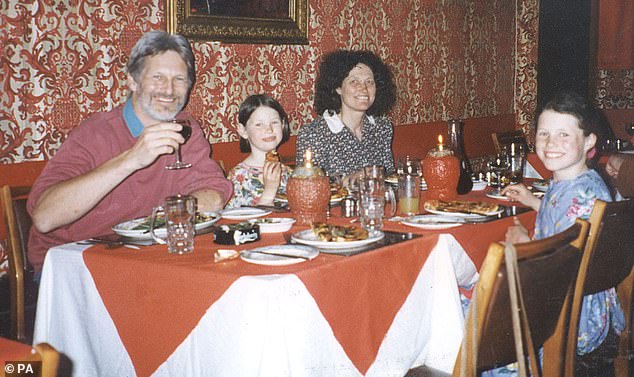
Pictured: Lin Russell with her husband Shaun and their two children Megan (left) and Josie at an Italian restaurant in 1996
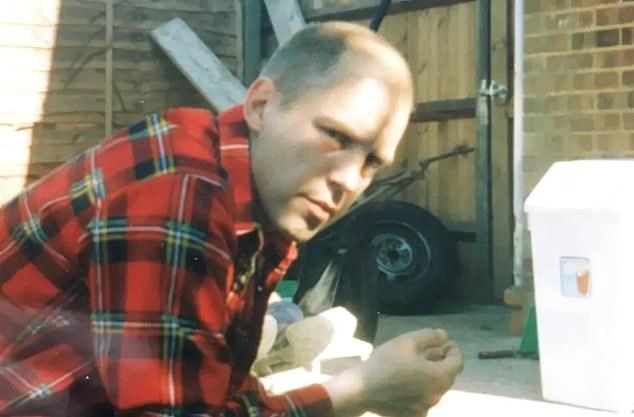
Michael Stone (pictured) was known as a drug addict and a hardened criminal at the time of his arrest
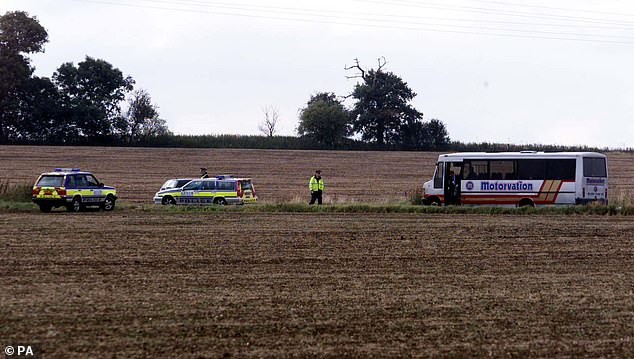
Pictured: Police at the scene of the murders of Lin and Megan Russell in the rural village of Chillenden, Kent
WHY WASN’T THERE DNA TESTING?
Among the shortcomings revealed by Angela Gallop’s report is that fingernail scrapings taken from Lin Russell’s left hand were never tested for DNA from her assailant — an omission described as ‘astonishing’ by Stone’s solicitor Paul Bacon.
‘That, to me, is something you would have thought was almost routine,’ he says.
Bacon is also hopeful that DNA might be obtained from the re-testing of a bootlace found along the edge of Cherry Garden Lane, 45 yards from the entrance to the murder scene. It was extensively stained with Megan’s blood, suggesting that it had been used to strangle her.
The lace, which was about 40 inches long, had three knots in it. The prosecution suggested that these were of the kind tied by heroin users in fashioning makeshift tourniquets. But Stone’s defence team believe that this was an interpretation seized upon to connect him to the killings.
Paul Bacon points out that, although extensive testing at the time found traces of male DNA on the lace, none of it was Stone’s, which would be highly surprising if he really had used it as a tourniquet.
‘The lace would presumably be the best possible place to get DNA evidence because if you’re tying something tight around your arm to find a vein, then what part of your anatomy would you use to pull it? The mouth.’
Since it is likely to have been extensively handled by the perpetrator, Stone’s team have previously pushed for further analysis of the lace but, in 2010, Kent Police said it was missing from its storage envelope.
Ten years later, it suddenly reappeared and they are calling for it to be tested again, with a highly sensitive technique known as ‘DNA-17’. Used by laboratories since 2014, this can identify criminals from DNA samples which are very small, old or otherwise degraded.
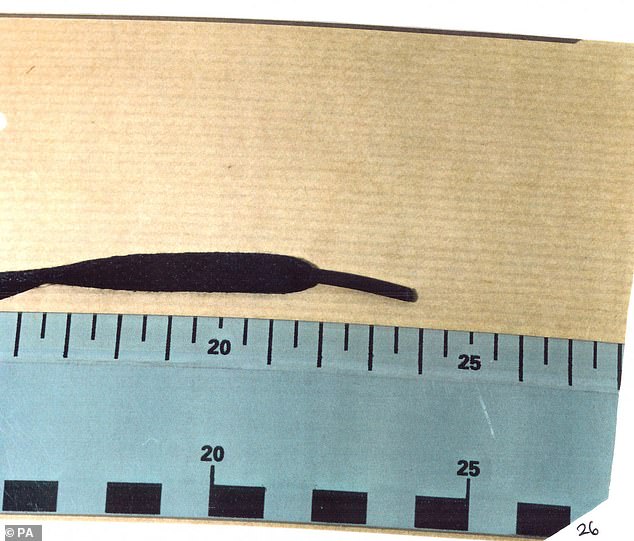
In 2020 a shoelace stained with the victims’ blood re-appeared in police storage after being missing for 14 years
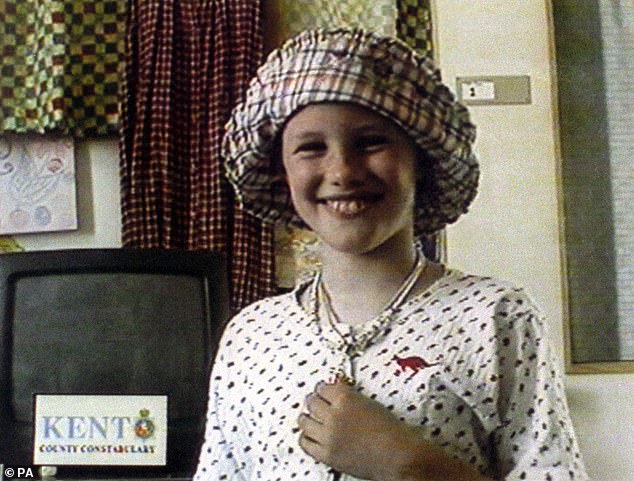
Josie Russell miraculously survived the bloodbath and often wore a hat as she recovered from her head injuries (pictured, Josie in hospital four weeks after the hammer attack in 1996)

Serial killer Bellfield (pictured) confessed to the Chillenden Murders via a statement to his solicitor Paul Bacon in 2022
WHERE’S THE MISSING LUNCHBOX?
Technological advances might also provide more information about the bloody fingerprint found on a green lunchbox belonging to Josie who remembered the attacker searching their bags for cash.
There was not enough detail in that print to make a positive identification but, significantly, there was sufficient to show that it could not have belonged to Michael Stone.
Since it had a partial ‘loop pattern’ similar to that on Lin’s right middle finger, it was assumed, but not proven, to have come from her. An analysis today could offer a more definitive answer but, like the lace, the lunchbox was subsequently mislaid and is still missing.
Given that the lace eventually reappeared, Stone’s defence team are hoping that the CCRC might pressure Kent Police into finding the lunchbox in the same way. And if the print is not Lin’s, perhaps it can identify a known criminal whose prints are already in the police database.
A prime suspect is serial killer Levi Bellfield, a fellow inmate of Stone’s at HMP Frankland in Durham. He is currently serving a whole life sentence for strangling 13-year-old schoolgirl Milly Dowler, who went missing from Walton-on-Thames, Surrey, in 2002.
He was also convicted of three attacks in south-west London, running down and attempting to kill 18-year-old schoolgirl Kate Sheedy, and murdering students Marsha McDonnell, 19 and Amelie Delagrange, 22, by battering them over the head with a blunt implement.
In 2023, Bellfield made a statement in which he confessed to the Chillenden Murders. But, as Guy Adams reported for The Crime Desk last month, he is a narcissistic psychopath who could be making the whole thing up to attract attention.
A fresh look at the Chillenden evidence is the only way to know for sure, but we may be waiting some time. Although they were given Angela Gallop’s report last September, the Mail understands that the CCRC have yet to begin any such investigations or to interview Damien Daley.
Given the peculiarly heinous nature of the Chillenden Murders, this is disturbing, to say the least.
After all, if neither Michael Stone nor Levi Bellfield are guilty, then the maniac who carried out that senseless outrage on a defenceless mother and her children 30 years ago may still be out there, waiting to strike again.