One of the earliest principles we learn about food is that fruit and vegetables are healthy, while chocolate cake and crisps are not. However, I’ll never forget a relative once telling me that ‘carrots are fattening’, or a friend going on a diet where she only ate apples for a week because ‘they are the best fruit for weight loss’. God bless the Noughties.
Clearly, there is some confusion around the health benefits (and impact on your waistline) of various fruits and vegetables, which leads some of them, such as banana and mango, to be demonised, while others are seen as saintly (all those £4 tubs of berries).
To get to the truth of the matter, we spoke to Sasha Watkins, registered dietitian and Head of Health at Mindful Chef, for her expert guidance on the healthiest fruit and vegetables.
First, the reassuring truth, Watkins says ‘all fruit and vegetables are good for you.’
‘Most of us aren’t eating nearly enough of them, and only around 29% of UK adults meet the recommended five-a-day, so if you’re reaching for more produce, you’re already doing something right,’ says Watkins. ‘That said, if weight loss is your goal, some choices will work harder for you than others.’ Here’s her advice…
What to prioritise
The best fruit and veg for weight loss are those high in fibre and nutrients relative to their calorie content. Fibre is the real hero here. It slows digestion, supports gut health and helps you feel fuller for longer. Nine in 10 of us in the UK don’t eat enough of it.
Leafy greens like spinach, kale and rocket are low in calories but rich in magnesium and folate, both of which contribute to normal energy metabolism. Broccoli is a particularly good all-rounder. It’s a source of fibre, high in vitamin C, and contains sulforaphane, a naturally occurring plant compound that researchers are increasingly interested in. Berries such as strawberries, raspberries and blueberries offer fibre and polyphenols, plant compounds that are associated with a range of health benefits.
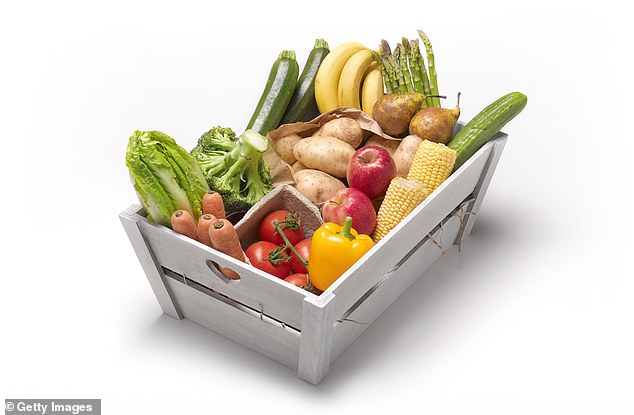
All fruit and vegetables are good for you – it’s a matter of finding ways to serve them that makes them enjoyable to eat (stock image)
Colour matters too. Different pigments reflect different phytonutrients, so eating the rainbow, red peppers alongside green ones, purple cabbage as well as white, gives your gut a far more diverse range of compounds to work with.
How you eat matters as much as what you eat
Whole fruit and vegetables have a physical structure, known as the food matrix, made up of cell walls, fibre, water and the nutrients bound within them, which your body has to work to break down. This matters for two reasons. First, chewing slows the eating process and gives your body time to register fullness. Second, and perhaps more importantly, that intact structure slows the release of natural sugars into the bloodstream, meaning you get a steadier, more gradual energy release.
Blending significantly disrupts that matrix. A smoothie made from the same fruit you’d eat whole delivers sugars more rapidly, moving it closer in effect to fruit juice than whole fruit, with less satiety as a result. The fibre is technically still present, but without the cellular structure holding it together, it behaves very differently in the body. Whenever possible, eat your fruit and veg whole.
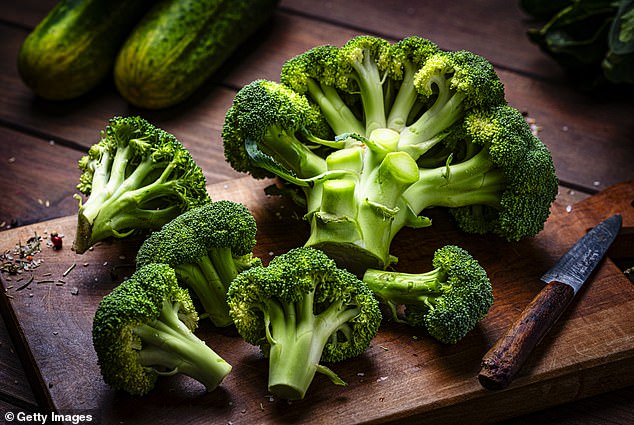
Broccoli is a particularly good all-rounder, says Watkins
Texture and flavour make all the difference
One of the biggest barriers to eating more fruit and vegetables is finding them genuinely enjoyable, and that comes down to texture and flavour. Roast broccoli with a little extra virgin olive oil until the edges are charred and crispy, and it becomes something completely different to steamed. Raw carrots in the afternoon offer a satisfying crunch that feels more like a proper snack than a compromise.
Peas steamed and tossed with fresh mint and a drizzle of olive oil are a world away from the soggy version many of us grew up with. Kimchi transforms cabbage into something deeply savoury and complex, and as a fermented food it naturally contains beneficial live bacteria. Cucumber dipped in homemade hummus or tzatziki is far more satisfying than cucumber alone. The goal isn’t to eat more virtuous food. It’s to find preparations that make you actually want to eat this way. That’s what makes it stick.
Eat the skins
One of the simplest and most overlooked ways to get more fibre from your fruit and vegetables is to stop peeling them. The skin of most fruit and vegetables is where fibre is most concentrated, and most of us discard it without a second thought.
A baked potato eaten skin-on contains roughly twice the fibre of one that’s been peeled. Sweet potato skin is similarly valuable, adding fibre and a range of antioxidants, so baking or roasting whole and eating the skin is always worth it. Kiwi skin is perhaps the most surprising: research suggests eating kiwi with the skin on provides around 50% more fibre than eating the flesh alone, and it also contains additional folate and vitamin E. The texture takes a little getting used to, but you can wash it under a tap to defuzz it.
It’s also worth thinking about peel more broadly. Orange and lemon zest is rich in pectin, a soluble fibre found in the cell walls of fruit. Finely grated into dressings, yoghurt, porridge or baked goods, it adds flavour and a quiet but meaningful nutritional boost. Just make sure to use unwaxed, organic citrus if you’re eating the peel.
What to be more mindful of
No fruit or vegetable is off-limits, but some offer less nutritional value for the space they take up on your plate.
Iceberg lettuce and watery vegetables like cucumber and celery are mostly water, filling temporarily but low in fibre and nutrients, and won’t stave off hunger for long. They work better as accompaniments than the main event.
Dried fruit and fruit juice are where many people are caught out. Dried mango, raisins and dates are concentrated in natural sugars and easy to overeat. Raisins are roughly four times more calorie-dense than fresh grapes by weight, which is worth bearing in mind. Fruit juice, meanwhile, strips out the fibre and delivers natural sugars rapidly into the bloodstream, leaving you hungry again sooner than whole fruit would.
The bottom line
Don’t stress about eating the ‘wrong’ fruit or veg. Focus on variety, eat them as whole as possible, pair them with protein or healthy fats where you can, and enjoy them in ways that actually taste good to you. That’s the version of healthy eating that sticks.