Guides taking tourists up and down Mount Everest have allegedly been secretly lacing climbers’ food to trigger costly helicopter rescues as part of a pervasive £15million insurance scam, according to a new investigation.
Though the world’s tallest mountain has become more accessible since Sir Edmund Hilary and Tenzing Norgay first climbed to its summit in 1953, it is by no means an easy climb.
Poor weather, patchy communications and short windows of opportunity mean that each climbing season is very short.
It also means that in the event that something goes wrong, rescue choppers are often ordered well before insurance companies can verify and authorise them.
This has allegedly led to a cottage industry that sees shifty pilots, guides and doctors charging insurance companies for services not rendered.
According to the Kathmandu Post, the fake rescue racket works by getting a climber to stage a medical emergency. A helicopter is then called and taken to a nearby hospital. An insurance claim is then filed that bears little resemblance to what actually happened.
Nepal Police’s Central Investigation Bureau (CIB) identified two ways this scam is manufactured.
The first involved tourists who don’t want to walk all the way back down. Treks can take up to two weeks on foot, so guides tell climbers to fake a medical emergency so that a helicopter comes.
But the second method is far more troubling, and involves tricking climbers into thinking they’re having a medical emergency.
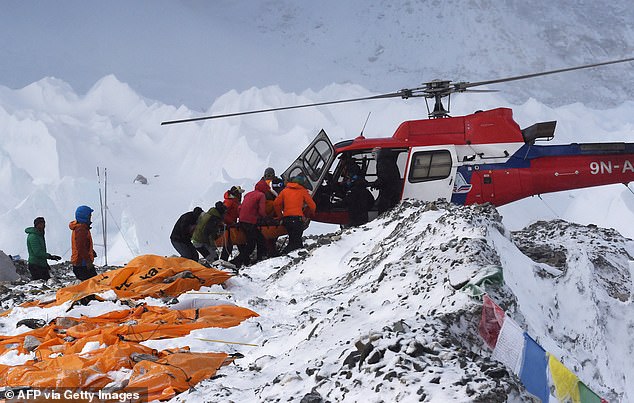
An injured person is loaded onto a rescue helicopter at Everest Base Camp on April 26, 2015
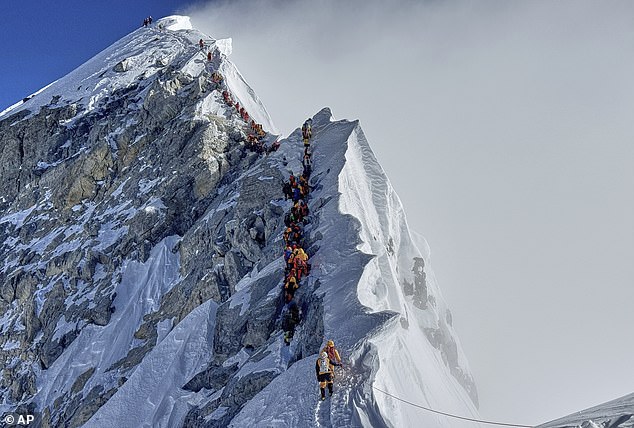
Mountaineers form a queue as they approach the summit of Mount Everest in Nepal, May 18, 2025
Above 3,000m, altitude sickness is common. Symptoms include headaches, tingling in the body’s extremities, and a drop in blood oxygen saturation.
In most cases, this can be resolved with rest, hydration or a gradual descent.
But Nepal’s CIB says that guides and hotel staff are told to terrify tourists into thinking an evacuation to a hospital is the only thing that will save them.
If this doesn’t work, investigators found that guides will try and induce symptoms by giving tourists suffering mild altitude sickness tablets and excessive water.
In at least one case, baking powder was mixed into tourists’ food to make them physically unwell.
Rescuers will try and do this to multiple people to maximise the amount of money they get.
Though single helicopters carry several passengers at a time, invoices are charged as if each needed their own chopper.
A £3,000 charter could easily become £9,000. To aid this, manifests and load sheets are faked. And in hospitals, medical officers prepare reports using the digital signatures of doctors who were never involved in cases, often without their knowledge.
In some instances, fake admissions records were created for tourists who were drinking beer in the hospital’s cafeteria when they were supposedly receiving treatment.
Between 2022 and 2025, there were over 300 confirmed fake cases, leading to £15million being lost to fraud.
Worse still is that the problem was identified back in 2019 by local media, leading to a government investigation that then resulted in policy reforms.
But the CIB found that not only did the fraud not stop, the problem grew.
Manoj Kumar KC, the head of the CIB, told the Kathmandu Post: ‘The scam continued due to lax punitive action. When there is no action against crime, it flourishes. The insurance scam too flourished as a result.’
The government has now taken action to try and stop this problem, with the CIB charging 32 people earlier this month in relation to the systemic scam.
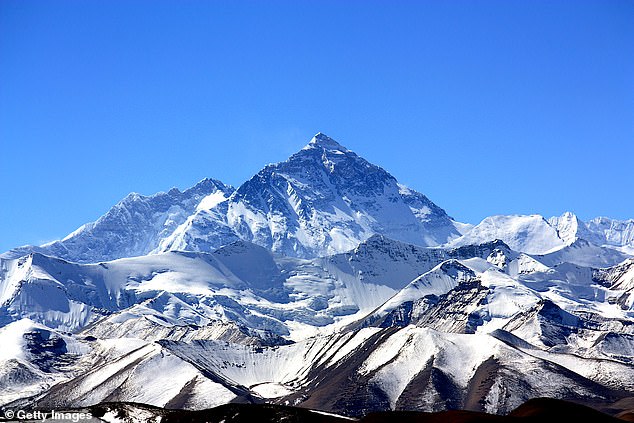
Guides taking tourists up and down Mount Everest have allegedly been secretly lacing climbers’ food to trigger costly helicopter rescues as part of a pervasive £15million insurance scam
So far nine people have been arrested, with all the others believed to have absconded.
Among those charged are operators and staff from three helicopter companies, as well as doctors and administrators from three different hospitals.
As for whether the scam will continue, this will depend on the new government that was sworn in this week, and whether it will invest in enforcing the reforms brought about nearly 10 years ago.