The British Medical Association has dared Sir Keir Starmer to follow through on his threat to ditch thousands of training places if the union refuses to agree a pay deal.
Dr Jack Fletcher, chairman of the BMA’s resident doctors’ committee, said it is the government’s ‘prerogative’ to withdraw the jobs but warned patients will suffer as a result.
The prime minister has accused resident doctors of ‘recklessly’ walking away from an offer that would have seen some earn more than £100,000 a year.
The medics will walkout for six days from April 7 to April 13 – just after the East bank holiday weekend – in pursuit of a 26 per cent pay rise.
Last week the RDC rejected an offer worth up to 7.1 per cent for this year without even putting it to members for a vote.
The proposed deal would have taken their total pay rise over the past three years to 35 per cent.
The ‘hypocritical’ union has said that inflation caused by the Iran war means they need a bigger rise despite offering its own staff an uplift of just 2.75 per cent.
Sir Keir yesterday gave the BMA 48 hours to call off the strikes before the Government withdraws an offer to create at least 4,000 new specialty training posts in the NHS, for which resident doctors can apply after their first two years of training.
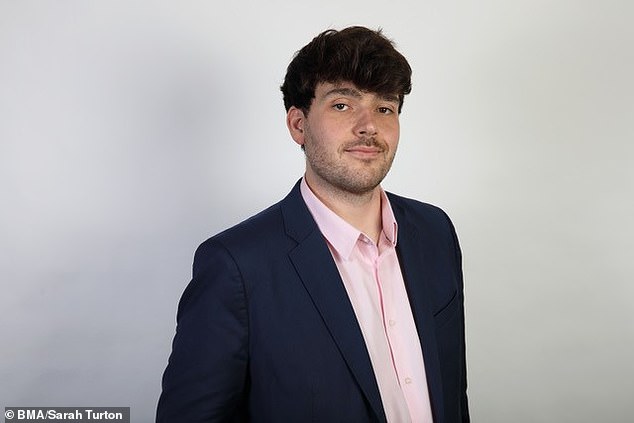
Dr Jack Fletcher, chairman of the BMA’s resident doctors’ committee, said it is the government’s ‘prerogative’ to withdraw the jobs but warned patients will suffer as a result.
Speaking on BBC Radio 4’s Today programme this morning, Dr Fletcher said: ‘Making threats about withholding jobs from doctors and essentially stopping doctors from caring for patients, I don’t think is a realistic way or a credible way of ending this dispute.
‘It will end in a negotiating room.
‘If the PM and the health secretary would like to withdraw those thousand jobs then that is their prerogative.
‘What we are saying is we think it is bad for patients, we think it is bad for doctors.
‘This comes at a time when you pick up the phone this morning – and many listeners will pick up the phone – and hear hold music as they are trying to access GP appointments.
‘There are patients right now being treated in corridors in A&E and yet we are turning tens of thousands of resident doctors away from training places in the NHS.
‘Meanwhile the PM and the health secretary are threatening to cut those jobs further, which we don’t think is a way to try and get to a settlement here.’
Health secretary Wes Streeting said the pay offer meant that ‘for the most experienced resident doctors, basic pay would have increased to £77,348 and average earnings would have exceeded £100,000’.
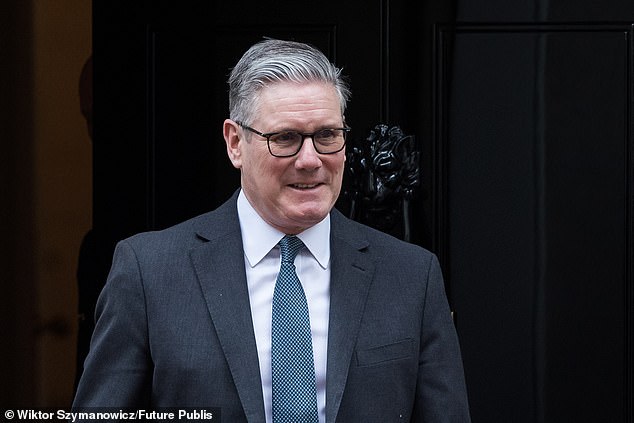
Sir Keir Starmer said it would be ‘reckless’ for resident doctors to walk away from the offer.
First-year doctors fresh out of medical school would earn on average £52,000 a year, £12,000 more than three years ago.
This is more than many NHS staff in other roles will earn at the peak of their career.
NHS England boss Sir Jim Mackey today confirmed that the offer to expand training places will ‘come off the table’ without reaching an agreement.
He told LBC Radio: ‘I would rather we just reached agreement, I think that’s the ideal position – there’s still a chance, my preference would be colleagues get in the room, sort it out.
‘But the reality is that those extra training places cost money. If we’re going to be spending money on managing industrial action, pay for their colleagues, extra cover shifts, that money will disappear.’
Writing in The Times today, Sir Keir said the offer was made after ‘months of collaboration with the BMA’ and their refusal to now accept will leave patients ‘paying the price’.
He added: ‘That is why walking away from this deal is the wrong decision. It is reckless.
‘And doing so without even giving resident doctors the chance to vote on it makes it worse.
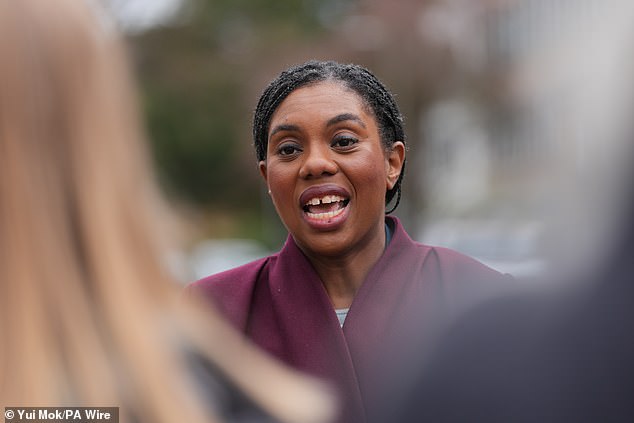
Tory leader Kemi Badenoch said the government should not be using training places as a ‘bargaining chip’.
‘Because the truth is this: no one benefits from rejecting this deal.
‘Resident doctors will be worse off.
‘Instead of improved pay, progression and support, they will receive the standard pay award this year, with none of the reforms that would have strengthened their working lives.
‘The NHS will be worse off. Each strike costs the NHS £250 million in paying for cover.
‘And patients will be worse off. Of course, we will do everything we can to protect care. But it would be wrong to pretend there is no impact.’
Tory leader Kemi Badenoch said of Sir Keir: ‘I don’t think he should be using training places as a bargaining chip. I don’t really understand why he’s doing that.
‘I’d like to hear an explanation, because those training places, my understanding is that they are for patients, they are to increase patient support, patient safety, patient welfare.’
Dr Fletcher accused ministers of ‘shifting the goalposts’ with their latest offer.
He added: ‘The Government made very late changes to the pay offer, reducing the pay investment and stretching it over a longer period in a way that had not been previously talked about.
‘Creating posts and improving patient care should not be dependent on calling off a strike.
‘I’m very happy to sit down with the Government at any point to try and negotiate a settlement, but I don’t think that’s done by writing in newspapers and issuing threats unilaterally.’
It comes after Mike Prentice, national director for emergency planning at NHS England, said that the timing of the action will lead to ‘significant strain’.
In a letter to health leaders, he wrote: ‘We expect this round to be challenging as there is a shorter notice period, bank holidays within the notice period and the action itself falling during the Easter holidays.
‘This will represent a significant strain on staffing resources to provide safe cover.’
The walk out, which is due to start at 7am on April 7 and run until 6.59am on April 13, will be the 15th round of strikes by resident doctors in England since 2023.
Elsewhere the BMA has also announced that senior doctors in England are to be balloted over the prospect of industrial action.
The union said that simultaneous ballots of consultants and specialist, associate specialist, and specialty (SAS) doctors will run from May 11 until July 6 as both sets of medics escalate their disputes with the Government.
If members back the move, the government risks having all doctors working in secondary care in England taking industrial action during the same period.