Almost a decade ago, Stephanie Davies, coroner’s officer for Cheshire Police, was presented with files on the deaths of Howard and Bea Ainsworth, and Donald and Auriel Ward.
After conducting research into the statistics around murder-suicides, Ms Davies proposed that a serial killer could be responsible and had been operating in leafy Cheshire since 1996.
But detectives did not agree and repeatedly rejected the idea of a serial killer, noting the deaths in 1996 and 1999 as two separate murder-suicides.
Ms Davies’ theory would later see her suspended from her job after her 179-page report calling for further investigation into the deaths was leaked, with stories about the suspected murders appearing in the national press.
Now, a new ITV documentary called ‘Hunting The Silver Killer’, has reinvestigated the two murder-suicides.
Police said that Mr Ainsworth, 79, murdered his 78-year-old wife with a hammer and a knife, before suffocating himself by placing a bag over his head. A suicide note was found at the scene.
Detectives working the case suggested it could have been an act of euthanasia.
But Christine Hurst, who was coroner’s officer at the time felt there was no dignity in the couple’s deaths – one of the core principles of euthanasia – and saw no evidence of domestic abuse in their marriage.
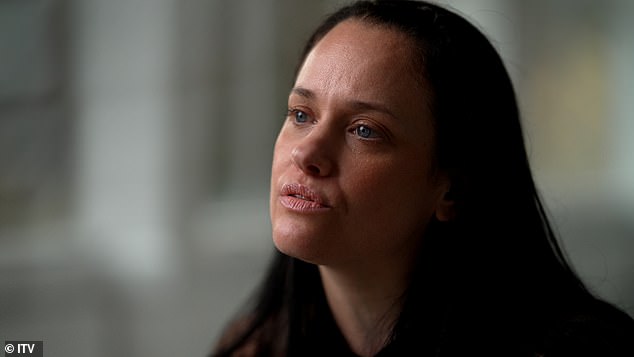
After conducting research into the statistics around murder-suicides, Stephanie Davies proposed that a serial killer could be responsible and had been operating in leafy Cheshire since 1996
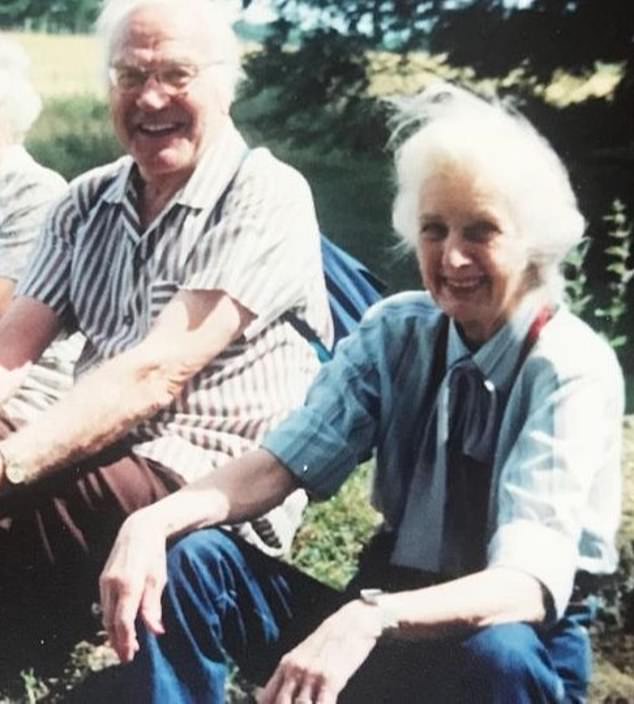
Howard and Bea Ainsworth were found dead in their Wilmslow home in Cheshire in 1996. Police concluded that it was the result of a murder-suicide
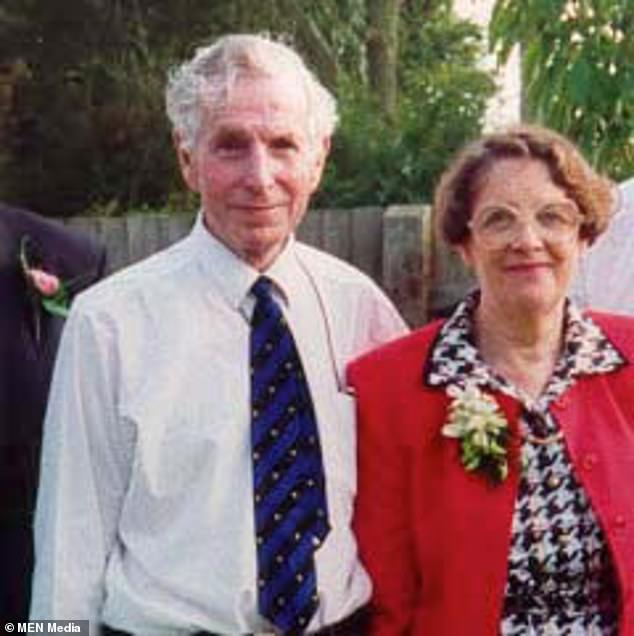
In 1999, Donald and Auriel Ward were found dead in their Wilmslow home, on a street near to the Ainsworths’ house
I’m Tom Rawstorne, and nearly 30 years ago a 12-year-old murderer, with a gold crucifix hanging round her neck, gave me a moment I’ll never forget.

Sharon Carr is to this day Britain’s youngest-ever female murderer, having killed an 18-year-old hairdresser in an unprovoked act of gruesome violence. I watched her up close in court for three weeks and it is something I’l never forget. I’ve written about it in The Crime Desk newsletter – sign up to read it for free.
Police also found a bottle of chlormethiazole tablets, a short-lasting sedative and sleeping pill, despite neither husband or wife having a prescription for the drug.
Ms Hurst also raised her concerns about the lack of blood on Mr Ainsworth’s pyjamas after having murdered his wife with a hammer and knife, according to police officers.
She told the programme: ‘There was a lot of blood around her (Mrs Ainsworth) and I thought I can’t remember seeing any blood of any note on Mr Ainsworth. So I thought this doesn’t seem right.
‘I contacted the Scenes of Crime Officer, and I asked him if there had been any blood stained clothing anywhere and he said no.
‘And I said “Did you look in the bins, did you look in the kitchen, did you look outside?” And he said we looked all of those places and he remarked to me that, “Yes, it was a strange one really because the senior officer had asked them to clean the walls and clean down the room because it was too distressing for the family to see”.
‘And then I said “Did you fingerprint the hammers?” No. “Did you fingerprint the knife?” No.
‘So I was in a bit of a dilemma really I didn’t know really what I should do about this and I raised my concerns to the police, I got the impression they had taken on board what I was saying but nothing else happened.’
Years later, Ms Hurst showed the images of the crime scene to her colleague Ms Davies, who immediately shared the same concerns.
‘I saw this couple lying on the marital bed and I saw a couple of photos and I said to Christine “This man did not kill his wife,”,’ Ms Davies said.
‘The blood spatter looked wrong, somebody else has killed both of them and I think I said that within five minutes of looking at these photographs.’
To investigate if both women could have been onto something, Dr Angela Gallop, a forensic scientist and Dr Dick Shepherd, a pathologist, conducted an experiment.
The aim of their experiment was to see if the blood patterns in the crime scene were what would have been expected had Mr Ainsworth hit his wife with a hammer.
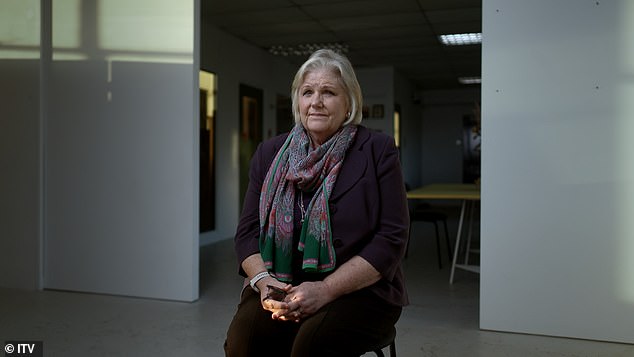
Christine Hurst raised her concerns about the lack of blood on Mr Ainsworth’s pyjamas after having murdered his wife with a hammer and knife, according to police officers
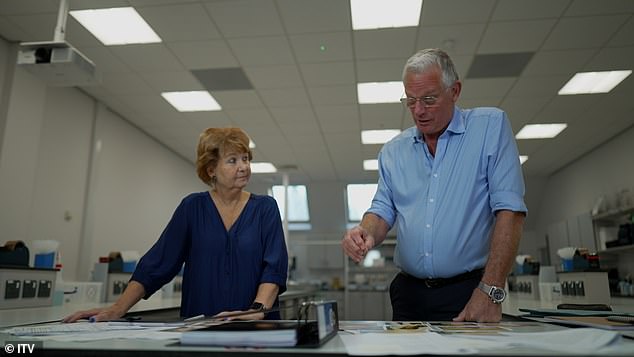
To investigate if both women could have been onto something, Dr Angela Gallop, a forensic scientist and Dr Dick Shepherd, a pathologist, conducted an experiment
Prior to the experiment Dr Gallop said: ‘You don’t have a pattern of blood spots and directional splashes on his (Mr Ainsworth’s) right hand extending up onto the sleeve of his pyjamas and that is absolutely what you would expect.’
To conduct the experiment, they attached a blood-soaked sponge to a ball and placed it on a pillow on top of a bed before whacking it.
Analysing their results, Dr Gallop said: ‘Our experiment has shown that you get exactly the pattern that we’d been predicting.
‘You do get a pattern of blood spotting and splashing up the arm of the attacker but that’s not what you’re seeing on Mr Ainsworth’s hand and arms and across the front of his pyjamas.
‘And that maintains the concerns I have about blood patterns in this particular case.’
In 1999, Donald and Auriel Ward were found dead in their Wilmslow home, on a street near to the Ainsworths’ house.
Police concluded that it was a murder-suicide, with officers suggesting that Mr Ward stabbed, beat and suffocated his wife and then cut his own throat, and stabbed his groin, wrists and heart.
Mrs Ward was also found with a pillow partially covering her face, and some evidence of hammer marks on her head. But the tool was not found at the scene.
Once again, Ms Hurst suggested that the case could have been a murder – Mr Ward was known to be a doting husband and the couple had several plans for the future.
But it was written off as a murder-suicide with investigators telling Ms Hurst: ‘Leave it alone, Miss Marple. It’s all in hand.’
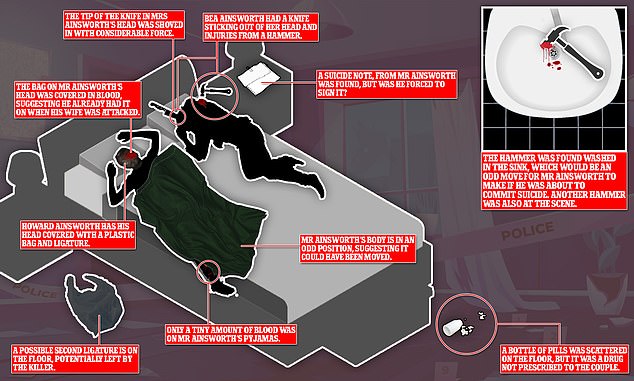
Detectives concluded Howard had killed Bea before taking his own life with the crucial piece of evidence being a ‘suicide note’ left on a yellow pad on the sideboard next to where the bodies were found
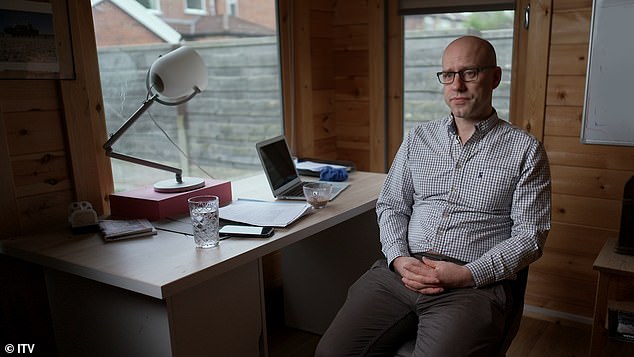
The Sunday Times journalist, David Collins, told officers that Ms Davies was not the source of the leaked documents
However, while reinvestigating the case, Dr Gallop and Dr Shepherd raised alarms over the blood trail found from the upstairs bedroom leading to the kitchen.
Replicating the trail, Dr Gallop said: ‘Drips of blood are much more likely to have come from an actively bleeding injury than dripping off the end of something.
‘And so that made the original scientists think, and makes me think that actually the blood staining got there because Mr Ward himself came down the stairs with some quite nasty injuries to his hand.’
Despite being overlooked, Ms Hurst kept the files in a box of cases that caused her concern, and when Ms Davies took over the role in 2017, she decided to reinvestigate them.
Ms Davies said: ‘For the Ward case I expected to agree with the police because I knew they had done a really detailed investigation but that all changed when I then looked at the photographs.
‘It was eerily familiar seeing the married couple on the marital bed, male on the left, female on the right, a pillow partially covering her face and I do wonder if the Wards were a replication of the Ainsworths.’
She put together a 179-page report calling for the two cases to be reopened.
But in 2020, her home was raided by detectives from her force. They suspected that she had leaked the details of the two cases to The Sunday Times, which had published a story on her report’s findings. It called the proposed murdered the ‘Silver Killer’.
She said the raid made her feel ‘psychologically raped’.
In the leaked report she called on the National Crime Agency and Interpol to review other murder-suicides in the UK and Europe.
Ms Davies also suggested in the report that the potential suspect was a younger man who could overpower his victims, and had given it to officers two times in the hopes that they would investigate the deaths further.
The Sunday Times journalist, David Collins, told officers that Ms Davies was not the source of the leaked documents.
But she was investigated for misconduct in a public office, and the Crown Prosecution Service declined to prosecute.
She was dismissed by Cheshire Police after being found guilty of seven counts of gross misconduct for breaching confidentiality.
And she was put on the College of Policing barred list, so she can never find similar work again.
As well as finding problems with the Ainsworth and Ward cases, Ms Davies found three other cases in 2000, 2008 and 2011, and marked them for further investigation.
All three involved blunt and sharp force trauma. Two were a few miles away from Wilmslow, Cheshire.
Among them, former police officer Violet Higgins, 76, who was found dead – also in her nightie – at home with security guard husband Michael, 59, in Manchester in 2000.
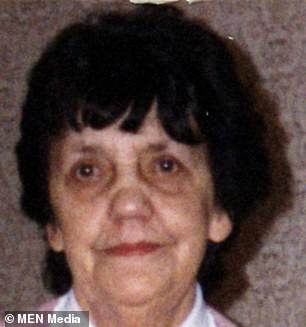
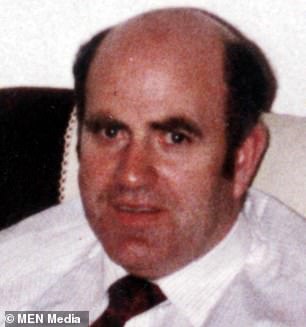
Former police officer Violet Higgins was found dead – also in her nightie – at home in Manchester with security guard husband Michael
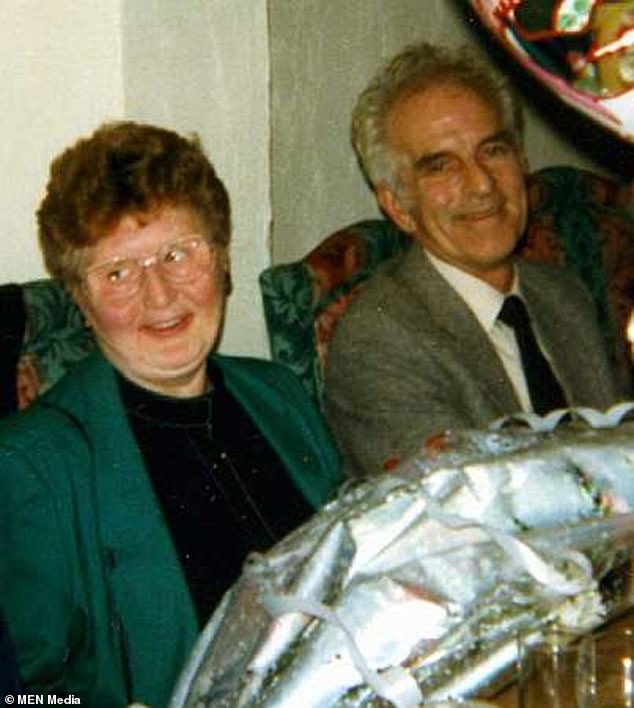
The report also raised questions over the deaths of Eileen and Kenneth Martin on the eve of their 55th wedding anniversary in November 2008
He had supposedly battered her with a rolling pin and stabbed her with scissors. The police quickly dropped the investigation.
The inquest heard evidence Mr Higgins was suffering from Parkinson’s and his wife had threatened to put him in a home, a possible motive.
But the coroner stressed what happened was out of character. ‘It was a very sad end to many years of apparent happy marriage,’ he said.
Mr Higgins’s brother Daniel also told the inquest he did not believe he was capable of such violence.
The report also raised questions over the deaths of Eileen and Kenneth Martin on the eve of their 55th wedding anniversary in November 2008.
Mrs Martin, a former printer, 76, suffered blows to the head – possibly from a hammer – and had cuts to her neck and wrists.
She was found in the garage at home in Davyhulme, Manchester, next to her husband, 77, a retired steel erector, who is said to have cut his own throat and wrists and hanged himself.
It was reported as a mercy killing. Mr Martin had prostate cancer and was struggling to look after his wife, who had dementia.
The night before he died he broke down and told his daughter he could no longer cope.
But Mrs Davies’s report said the injuries Eileen sustained were not consistent with a mercy killing. Kenneth was also frail and had difficulty walking, raising doubts about whether he was physically capable of such an attack.
However, Dennis Tong, who discovered the bodies of Eileen and Kenneth, disputed the serial killer theory and said the family were ‘100 per cent sure’ Kenneth was responsible.
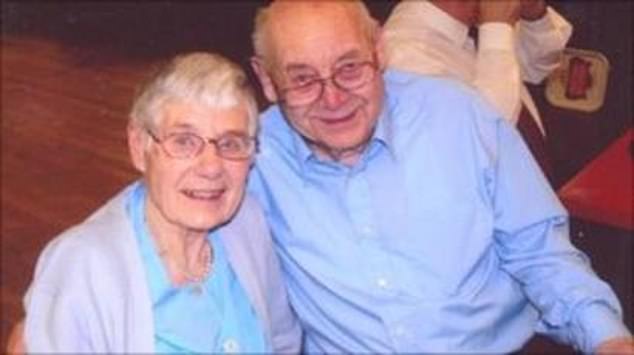
Similarly, some time overnight on February 17, 2011, ex-quarry worker Stanley Wilson, 92, is said to have carried out an attack on his retired teacher wife Peggie, 89, at home in Kendal
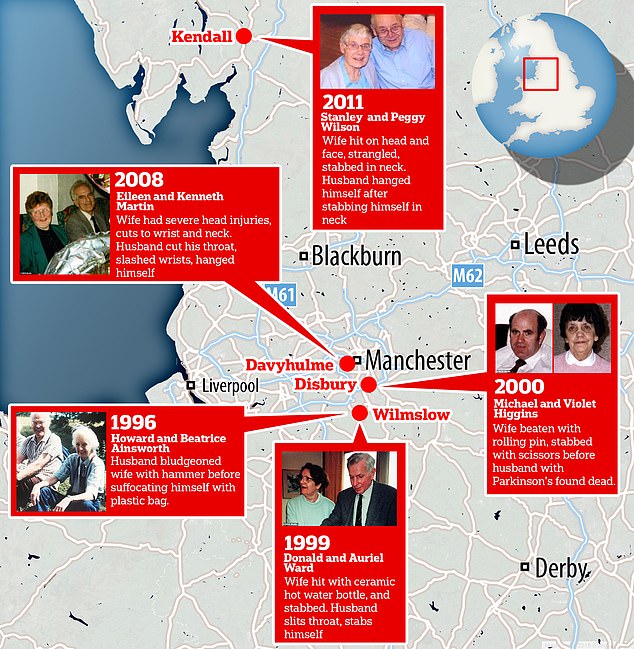
The sensational report by Stephanie Davies had claimed there were striking similarities between the deaths of couples in Cheshire, Manchester and Cumbria between 1996 and 2011
‘He must have done it on the spur of the moment,’ he said. ‘We know Ken was going downhill. He was a proud man and would not take any help from anybody. We suggested putting Eileen in a home and he just refused. I think he just crumbled under the pressure.’
Similarly, some time overnight on February 17, 2011, ex-quarry worker Stanley Wilson, 92, is said to have carried out an attack on his retired teacher wife Peggie, 89, at home in Kendal.
She was hit on the head and face, strangled then stabbed in the neck. Mr Wilson is said to have stabbed himself in the neck.
The inquest heard Mr Wilson had just been released from hospital and was expressing paranoid fears his wife, son and the nursing staff had been trying to poison him.
His son Graham believed there is no doubt he committed the crime.
Chief Constable Mark Roberts QPM, of Cheshire Police said: ‘From the outset we have been clear that there is absolutely no evidence that the Ainsworth and Ward cases were double murders, and that there is no serial killer at large in connection with these historic deaths.
‘Following the spurious claims made by a former member of staff both cases were meticulously investigated by experienced detectives, along with specialist forensic scientists and officers from the National Crime Agency.
‘All of whom concluded that there was absolutely no evidence to support further investigation into these matters.
‘My heart goes out to both the Ainsworth and Ward families who have been deeply impacted by these harmful claims, and both have stated throughout that they were against any documentary and did not wish to have any involvement in the show.
‘Yet despite this, both families feel that they have been harassed by the production company over the past two years, when it should instead have been focussed on conducting due diligence on the credibility of the sources they relied on.’