Police will no longer waste time investigating petty arguments and online squabbles in a victory for freedom of speech.
Campaigners have welcomed the decision to scrap non-crime hate incidents (NCHI), which have been increasingly used in disputes involving offensive language.
Forces said the current system is ‘not fit for purpose’, with new ‘common sense’ rules freeing up officers to investigate more serious crimes, while ensuring reports from the public which may lead to genuine harm ‘get the right response’.
The shake-up will also rule out a repeat of farcical scenes when grandmother Helen Jones was spoken to at her home by police after she criticised Labour politicians online, despite officers admitting she had not committed a crime, following a Mail on Sunday investigation.
Mrs Jones last night told the Daily Mail: ‘I’m very pleased – this (change) makes complete sense.
‘The whole experience was awful for me, I was never charged with anything and the police even told me there was no crime committed, it was just someone being spiteful.’
Announcing the plans today, Home Secretary Shabana Mahmood said: ‘Under these reforms, forces will no longer be policing perfectly legal tweets.
‘Instead, they will be doing what they do best: patrolling our streets, catching criminals, and keeping communities safe.’
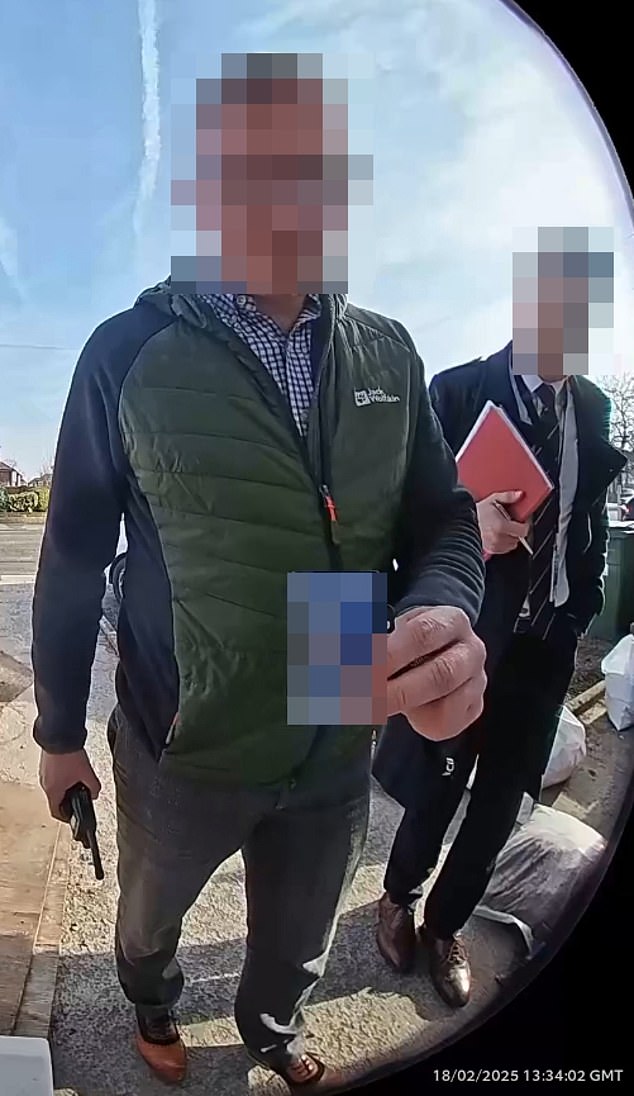
Doorcam footage of the police visiting Helen Jones’s house following a complaint about her social media post
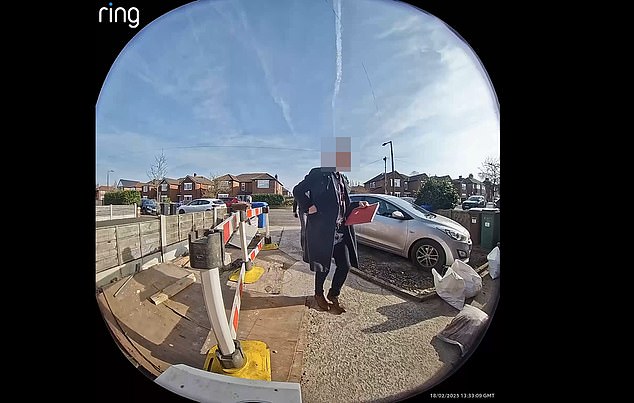
A shocked Mrs Jones rushed home fearing something tragic had happened to a loved one. She told police had received a complaint about her recent social media posts
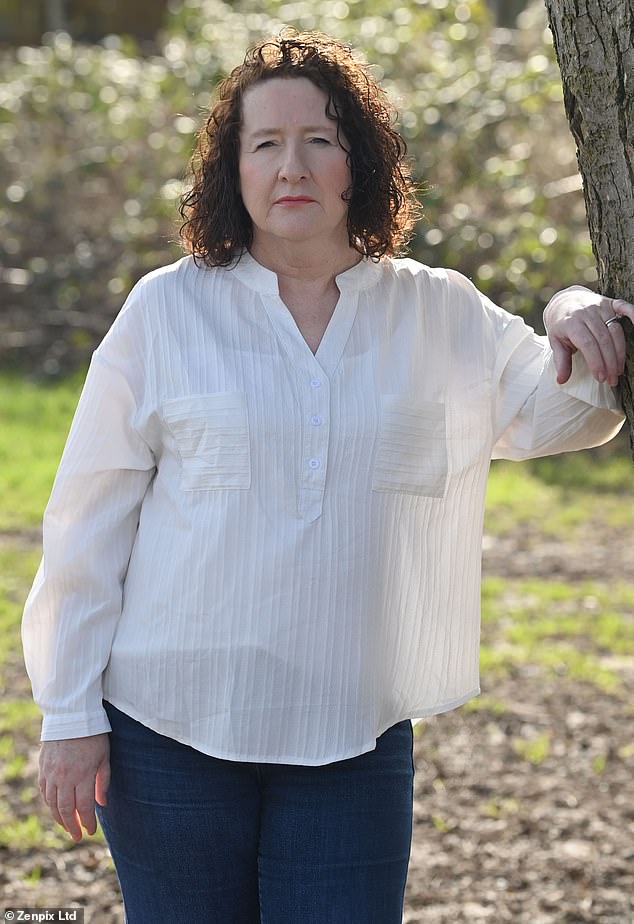
Mrs Jones (pictured) welcomed the decision to abolish non-crime hate incidents
It follows a review into NCHIs by the College of Policing and the National Police Chiefs’ Council, which said a new approach was needed ‘to keep individuals and communities safe while making clear that lawful free speech is not a police matter’.
It has made a series of recommendations, including a ‘triage’ system of experienced officers to filter out non-crimes, and end police involvement in lawful freedom of speech.
Forces will use a tighter definition of what is deemed an ‘incident’, focusing on calls relating to the prevention and detection of crime, protecting life and property, and maintaining public order.
It means fewer officers will be required to attend lesser matters.
And non-crime incidents would no longer be recorded on crime systems, meaning they will not be declared as part of checks in job applications.
Police forces have been ridiculed for getting involved in a series of NCHIs in recent years.
This includes the case of newspaper columnist Allison Pearson, who was visited by police at her home on Remembrance Sunday in 2024 over what the force described as ‘an alleged offence of inciting racial hatred, linked to a post on social media’.
Feminist writer and campaigner Julie Bindel was also visited at home in 2019 after someone identifying as transgender said they were offended by one of her online comments.
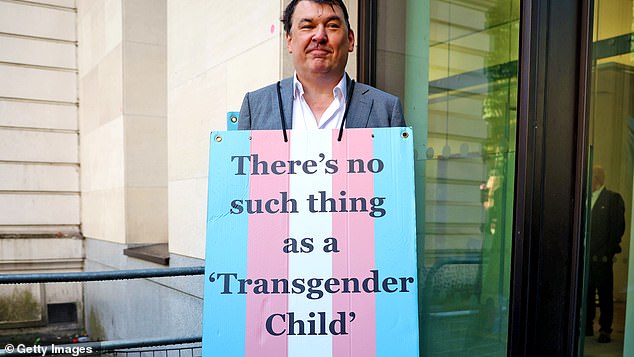
Father Ted creator Graham Linehan was arrested by armed police for his online comments about transgender activists
And Father Ted creator Graham Linehan was arrested by armed police at Heathrow in September last year over online comments about transgender activists. The Met subsequently said it would no longer investigate NCHIs.
The report said in recent years ‘there have been numerous examples where the public have felt the police response to hate or hostility has been disproportionate’.
It added: ‘In today’s polarised and highly connected world, police have increasingly found themselves drawn into policing the online space and social media debates.
‘The boundaries between what is legitimate free speech, even where it is offensive, and what requires police intervention are not always clear or absolute. They depend on context, intent and impact.’
Assistant Chief Constable Tom Harding, director at the College of Police, said: ‘Today we are setting out a fundamentally different way of handling reports so that officers can focus efforts on their core duties of preventing crime and protecting communities, while making clear that lawful free speech is not a police matter.’
He added: ‘We need trust and confidence from our communities, both those that are concerned about freedom of expression and those who are concerned that we won’t deal with hatred robustly.
‘There has to be a policing purpose for us to record anything when someone calls us.’
Lord Young of Acton this month described NCHIs as having had ‘a chilling effect on free speech’ and added: ‘It sounds like we have finally seen the back of NCHIs.’

Columnist Allison Pearson was also visited by police over her Twitter content

Free speech campaigner Lord Young of Acton has long called for NCHIs to be ditched
The current NCHI Code of Practice which informs how forces record and investigate such crimes will be revoked by the Home Office through the Crime and Policing Bill, with the new approach expected to be in force by early next year.
Under the new measures, all reports to police deemed to be motivated by hate or hostility that meet the new incident threshold will be recorded as antisocial behaviour with a ‘prejudice qualifier’ added.
But Shadow Home Secretary Chris Philp said: ‘This is simply a rebrand of non-crime hate incidents with a more restrictive triage process.
‘Reports are still being logged, personal data still recorded, and disclosure rules are unchanged.
‘Officers and staff will still be tied up monitoring incidents that do not meet the criminal threshold, at a cost in time and resources.
‘People want the police focused on catching criminals and keeping streets safe. Conservatives have been consistently clear – the police should get back to basics and non-crime hate incidents should be scrapped to free up police time.’
NCHIs were introduced in 2014 by the College of Policing, and saw a 400% increase in police recorded hate crimes in the decade from 2012, based on analysis of force figures.
Former police officer Harry Miller, who set up the free speech pressure group Fair Cop, said he was ‘delighted NCHIs are going’, and described the policy as ‘one of the most useless in policing history’.
Mr Miller, who was investigated in 2019 after a stranger reported one of his tweets as ‘transphobic’ told the Mail: ‘Police have persisted with them because they have proven to be a useful tool in shutting down political opinion.
‘After a relentless seven-year campaign, Fair Cop is delighted to see the back of them.
‘Unfortunately, the ideological brains behind the scheme continues in the unelected, unaccountable quango that is the College of Policing.’