Keir Starmer last night appealed to oil and banking executives to help Britain deal with a looming 1970s-style energy shock as he warned: ‘The Government can’t do it on its own’.
In a sign of mounting concern in government about the economic fallout from the Iran war, the Prime Minister convened crisis talks in Downing Street with leading business executives.
Today, he will gather ministers and officials for another meeting of the government’s emergency Cobra committee to look at contingency plans for potential shortages of diesel, jet fuel and fertiliser – and options for helping cash-strapped voters deal with the rising cost of living.
Addressing leading figures from multinationals, including Shell, BP, Centrica and HSBC, the PM acknowledged public fears that the economic impact is ‘going to hit them and their families and their households… and I think probably uppermost in their minds at the moment is energy bills, petrol and also food prices.’
Outlining the response needed, he said: ‘The Government can’t do it on its own. You can’t do it on your own. We’re going to have to work together on this.’
The appeal to business leaders represents a marked change of tone from the one adopted at the outbreak of the war, and kept up as recently as last week, when Sir Keir, Rachel Reeves and Ed Miliband accused energy firms of ‘profiteering’.
Despite the PM’s stark warnings, last night it emerged that the Government is reportedly raking in an additional £20million a day through taxes and levies linked to oil and gas price rises.
The Treasury is set to receive a multi-billion pound tax windfall as energy prices soar because of the ongoing conflict in the Middle East.
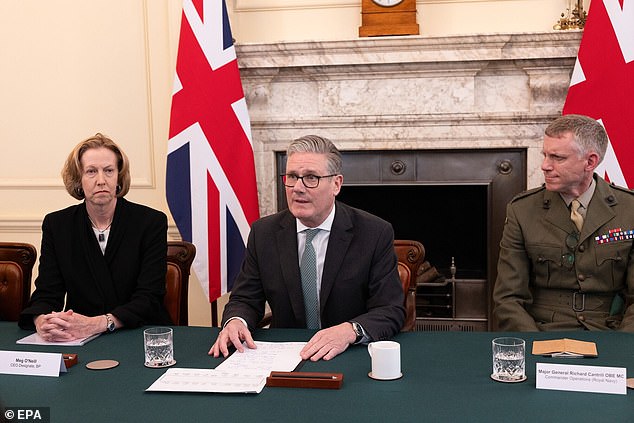
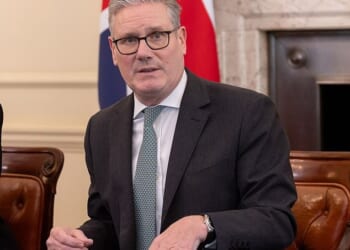
Keir Starmer last night appealed to oil and banking executives to help Britain deal with a looming 1970s-style energy shock. (Pictured with BP CEO appointee Meg O’Neil and Royal Navy Commander Operations, Major General Richard Cantrill)
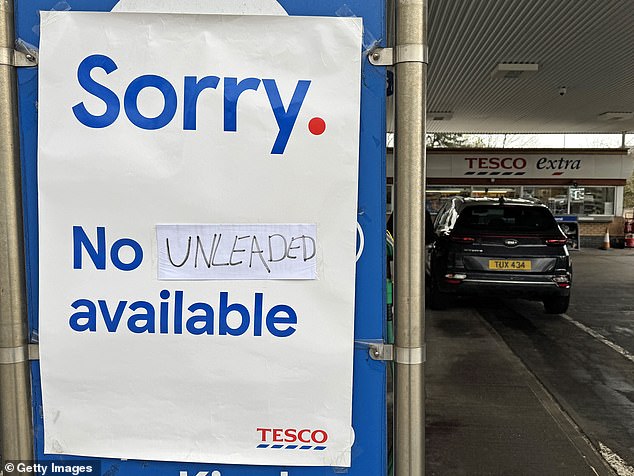
A sign telling motorists there is no unleaded petrol available at some of the fuel pumps is displayed at a Tesco supermarket in Southend
If fuel prices remain at their increased levels for the next 12 months, the Government will receive an extra £8billion from VAT on petrol and taxes on gas and oil firms, according to The Times.
It would earn around £3.5bn a year from the energy profits levy on North Sea oil and an extra £2.4bn from gas sales.
Hundreds of millions would also be raised in taxes from Britain’s power generators, who have been charged excess profit levies since the outbreak of war in Ukraine.
The RAC has also suggested the Government could earn an extra £2bn from VAT on petrol sales.
Ministers yesterday continued to issue reassuring messages to the public to carry on booking flights abroad and driving as normal. But privately they are increasingly alarmed at the likely economic consequences.
One Whitehall source said: ‘It is still early days and there is a balance to be struck between freaking people out and preparing them for some tough decisions ahead, but the longer this goes on the more serious it is looking.’
The International Monetary Fund said the war was ‘reviving the spectre of the 2021-2022 gas crisis’ in Europe, with Italy and the United Kingdom ‘especially exposed by their reliance on gas-fired power’.
Lars Jensen, former director of shipping giant Maersk, which attended yesterday’s No 10 summit, warned the crisis could be worse than the oil shocks of the 1970s.
Asked if the crisis could trigger a repeat of the 1970s oil shock, which led to a global recession, Mr Jensen said: ‘The comparison is easy to make. The problem is it is not quite correct. Because back then the amount of goods – not just oil but also fertiliser, aluminium, all sorts of other products – was a lot less than what we are dependent on today.’
The Treasury is set to rake in billions from higher VAT on fuel and the windfall tax on oil and gas. But an energy shock would wreck Sir Keir’s pledge to bring down the cost of living this year.
Leading banker Sir Howard Davies said the surge in the government’s borrowing costs in the last month would blow a £12billion hole in the public finances if it is maintained for the rest of the year.
Sir Howard, a former deputy governor at the Bank of England, warned that ‘splurging’ money on a big energy bills bailout could panic international investors and send borrowing rates even higher.
On a call with G7 finance ministers yesterday, Ms Reeves warned against ‘protectionism’, amid fears that the UK’s situation could be worsened by countries hoarding their own supplies.
Kemi Badenoch urged the PM to drop his ‘bonkers’ ban on new drilling in the North Sea.
The Tory leader, who visited Aberdeen yesterday, said: ‘He doesn’t need to have any more meetings, the oil and gas sector has said what it is they need.’
In recent days, energy analysts have called on ministers to act to conserve key supplies through measures like lowering motorway speed limits and suspending domestic flights. But Downing Street yesterday played down the need for immediate action, saying the UK remains well supplied.
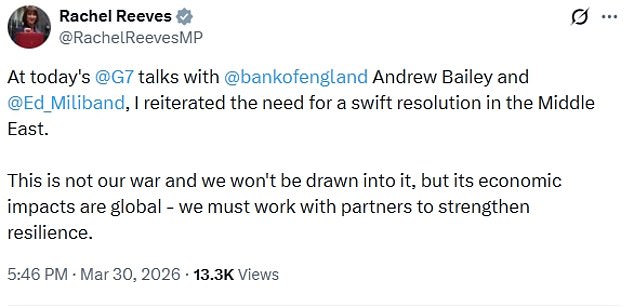
Chancellor Rachel Reeves held discussions with G7 counterparts on Monday
Sir Keir said he was focused on ‘de-escalation’ of the crisis that has led to the blocking of the Strait of Hormuz, which normally carries 20 per cent of the world’s oil. It’s not our war,’ he said.
‘But it is our duty to protect British citizens.’
No 10 said the UK was in talks with 35 countries about trying to de-escalate the crisis and devise a plan to reopen the Strait.
However, there are no current talks with either Iran or Israel, and relations with the US are at their lowest point for years, leaving Sir Keir with little leverage on the main players.