Efforts to rid Orkney of invasive stoats have delivered a dramatic boost to the islands’ native vole population – and one of Britain’s rarest birds of prey.
A new report reveals vole activity in spring 2025 reached its highest level since 2019, when a major project to protect Orkney’s wildlife from non-native predators first began.
The findings also show a surge in breeding attempts by rare hen harriers, which depend on the voles for food, marking their most successful season since the scheme was launched.
Numbers of breeding short-eared owls have also soared compared with six years ago.
Conservationists hailed the results as ‘fantastic’, saying the attempts to eradicate the stoats, which prey on native species, is already transforming the ecosystem.
Stoats, native to mainland Britain but not Orkney, were first spotted on the islands in 2010.
Experts have warned that, left unchecked, they could devastate wildlife populations, particularly the indigenous Orkney vole – which are found nowhere else on Earth.
In some upsetting discoveries, stoats have been found to store up to 100 Orkney volves in their food stores.
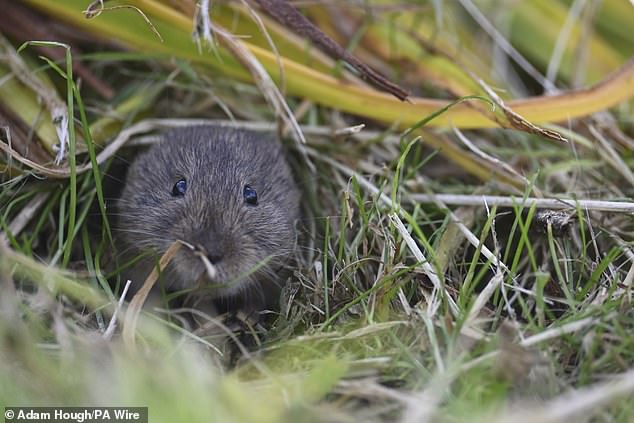
Efforts to rid Orkney of invasive stoats have delivered a dramatic boost to the islands’ native vole population
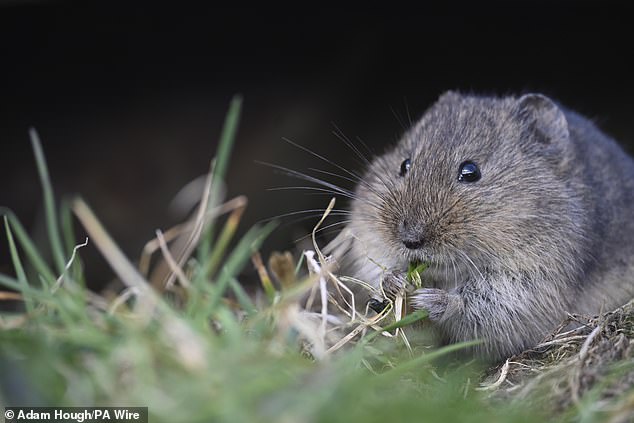
A new report reveals vole activity in spring 2025 reached its highest level since 2019, when a major project to protect Orkney’s wildlife from non-native predators first began
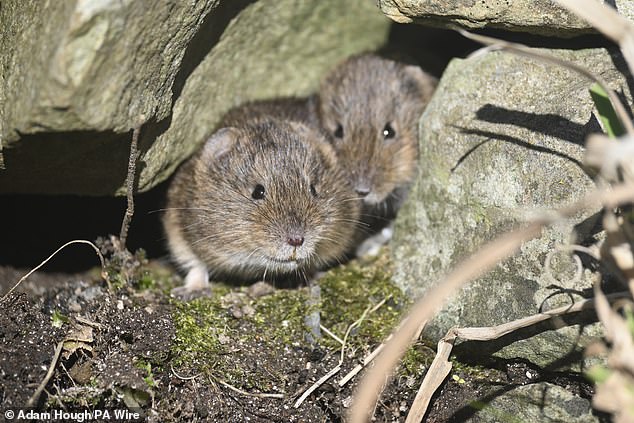
Across 22 sites in Mainland Orkney and the linked South Isles, signs of voles were found in a third of the 1,082 small survey squares surveyed
Since 2019 more than 8,500 stoats have been removed using humane traps in what is believed to be the largest eradication of the species on an inhabited landscape anywhere in the world.
The largest monitoring report found vole activity – tracked through tell-tale signs such as droppings and grass clippings – hit record highs in 2025, since surveys began in 2019.
Across 22 sites in Mainland, Orkney, and the linked South Isles, the islands with stoats, signs of voles were found in a third of the 1,082 small survey squares searched.
Autumn activity levels were also found to be high, underlining the species’ recovery.
Hen harriers, one of the UK’s most threatened birds of prey, have also reaped the benefits.
In 2025 volunteers from the Orkney Raptor Group recorded breeding at 74 sites on islands where stoats live, making it the birds’ best year since 2012.
However relentless wet weather at a crucial stage led to significant chick losses.
Despite this nearly 60 chicks are believed to have successfully fledged from monitored nests, marking a vital contribution to the UK’s total population of around 650 breeding pairs.
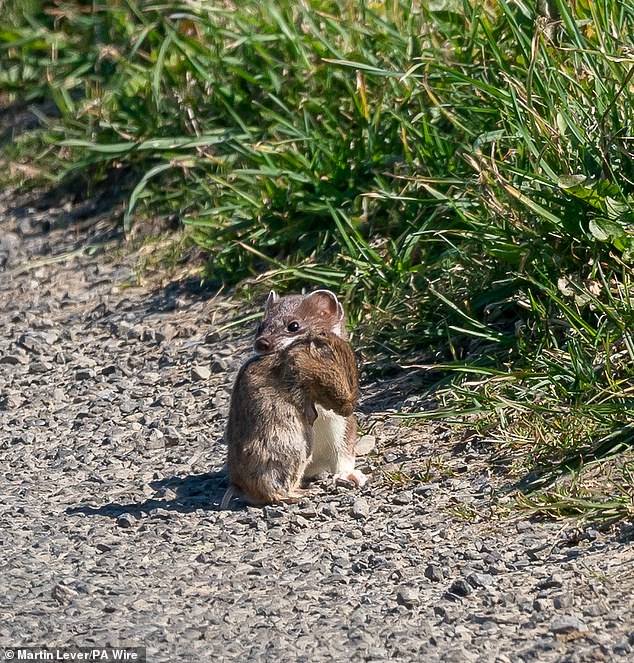
Stoats, native to mainland Britain but not Orkney, were first spotted on the islands in 2010. Experts have warned that, left unchecked, they could devastate wildlife populations, particularly the indigenous Orkney vole
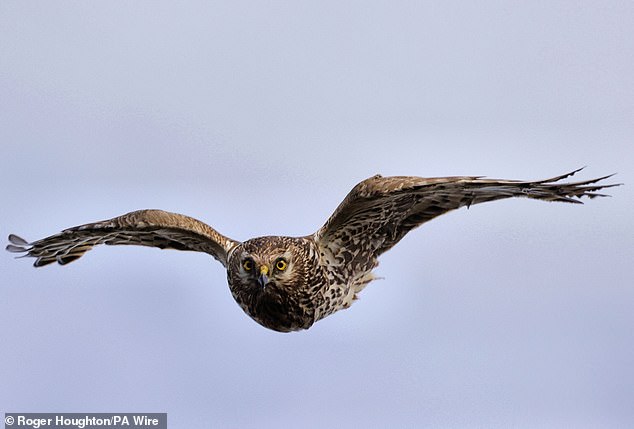
The findings also show a surge in breeding attempts by rare hen harriers, which depend on the voles for food, marking their most successful since the scheme was launched
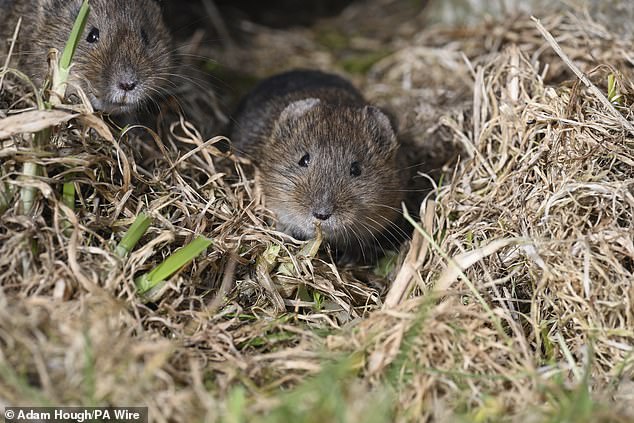
Across 22 sites in Mainland Orkney and the linked South Isles, signs of voles were found in a third of the 1,082 small survey squares surveyed
Short-eared owls, though harder to monitor, were confirmed at 55 sites on islands with stoats during the breeding season, with definite breeding recorded at 16 locations and nests found at a further six.
Experts say the figures show a steady rise in short-eared owl breeding sites since the stoat removal programme began in 2019.
Both hen harriers and short-eared owls rely heavily on Orkney voles to feed themselves and their young, with strong vole numbers closely linked to breeding success within the species.
The stoat eradication effort is being led by the Orkney Native Wildlife Project – a partnership between RSPB Scotland, NatureScot and Orkney Islands Council – and also aims to protect other vulnerable species such as curlews, a ground-nesting bird with a nationally significant population on the islands.
The project uses specially trained detection dogs to track stoats, alongside strict biosecurity measures to prevent the predators from spreading to stoat-free islands.
Matt Marsh, monitoring officer for the project, said: ‘It’s fantastic to see the continued positive impact that removing stoats from Orkney is having on our native wildlife.
‘Hen harriers are one of the most fascinating species we monitor, as well as being one of the rarest birds of prey in the UK, so it’s excellent to see that their numbers are increasing.
He added: ‘Orkney voles are found nowhere else in the world and are the species that is probably most threatened by the arrival of stoats, so to see historically high rates of vole activity is very encouraging.’
Anne McCall, director of RSPB Scotland, said: ‘The Orkney Native Wildlife Project is showing that we can halt and reverse species declines if we take action to address the threats wildlife is facing.
‘Invasive non-native predators are a significant threat to much of the iconic wildlife found on Scotland’s islands.
‘There are many factors that influence survival.
‘However, to give species like the Orkney vole their best chance, removing invasive non-native species like stoats from islands is essential.’
It is the latest success for an island invasive species eradication project around the UK, after conservationists announced they had successfully removed feral ferrets from Rathlin Island off the Northern Irish coast, protecting thousands of breeding seabirds and other rare birds.