There’s a family video of me in Turkey at the age of 17. I look so happy, laughing and lounging on the beach in my bikini. That’s what I remember about that day – how contented I was.
Fast-forward a year and, thanks to school bullying and societal demands, I hated that body. From the age of 14, I had gradually, whisper by whisper, developed a voice in my head that was obsessed with what I ate.
Every mouthful increased my feelings of worthlessness, which in turn fuelled more hunger.
By the time I was 18, I weighed more than 11st (70kg) and, at 5ft 3in, I felt deeply uncomfortable with my size. It was a vicious cycle.
It’s only in my 40s that I’ve been able to overpower this internal voice and focus instead on eating for health, energy and pleasure – and return to a place where I feel happy in my body, as I did on that day at the beach. For 20 years it ruled my thoughts.
I think many women are familiar with that – how obsessive mental chatter, regardless of how hungry we are, can overshadow and even ruin our lives. The apparent silencing of ‘food noise’ has been one of the great draws of weight-loss drugs, after all. GLP-1 medication, we’re told, can kill the lure of the biscuit tin and free us from its temptation.
But food noise isn’t always as simple as a preoccupation with the next sugary snack or carb-heavy meal, says psychotherapist and weight-loss specialist Sarah Wrigglesworth. It comes in many different registers, and fat jabs don’t always quash it.
‘It’s very individual,’ she says, ‘but in my experience there’s the physical hunger voice, which simply signals that you need to eat. Then there’s the voice shaped by diet culture, telling you what you should or shouldn’t have. That a biscuit is “bad”, for example. And finally, there’s emotional eating, where anxiety, sadness or stress drive you towards food.’
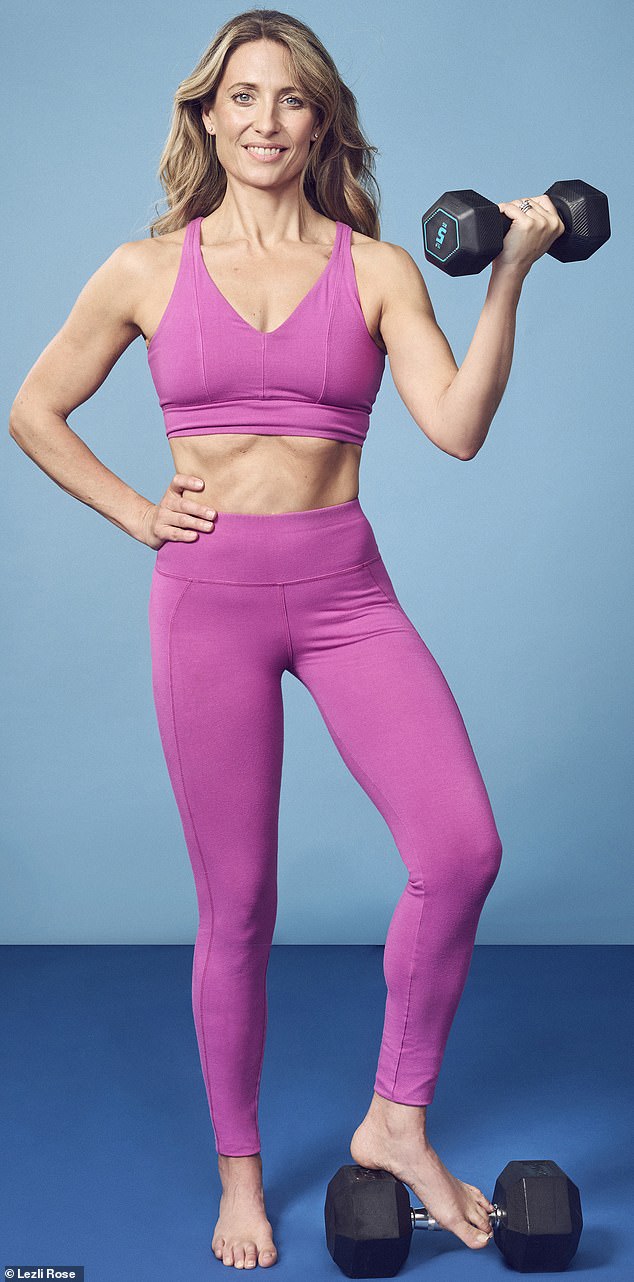
It’s only in my 40s that I’ve been able to overpower this internal voice and focus instead on eating for health, energy and pleasure – and feel happy in my body, says Kate Rowe-Ham
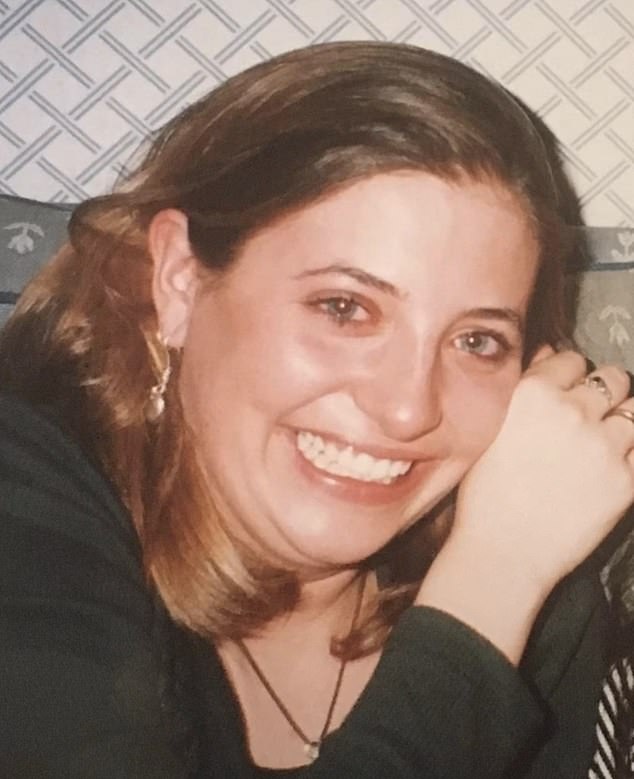
By the time I was 18, I weighed more than 11st (70kg) and, at 5ft 3in, I felt deeply uncomfortable with my size. It was a vicious cycle
Food noise is rarely straightforward, she adds, and these strands often overlap.
For me, the over-riding and constant presence was that of the ‘diet voice’ with its intrusive and desperate need to turn me into the very slim ‘perfect woman’ idolised by our culture. It was that ‘noise’ that drove me into years of disordered eating.
The fact is, it’s exhausting spending your days obsessing about what to eat, when to eat it and whether we’re ‘good’ or ‘bad’ for wanting it.
Food noise can drown ambition, harm relationships and damage health. Even now, as a 50-year-old personal trainer and author of two books about healthy living, I still sometimes hear that insidious whisper of self-loathing in my head.
It all began in my early teens. Women who grew up between the 1970s and 1990s were bombarded with the message that smaller is better. Magazines, adverts, Hollywood, all pushed the premise that women had to be slender to be attractive and successful.
At school, an older girl picked on me for being ‘fat’, and at home my parents were getting closer to the divorce that would knock me for six.
By 16, I was dating a boy who had pictures of the beautiful slender models I longed to look like on his bedroom wall. With the casual thoughtlessness of a teenage boy, he’d tell me how attractive he found them.
Other little barbs stayed with me, too. Sometimes I’d borrow friends’ clothes, and they’d say things like, ‘Careful, you might stretch it.’
Those seemingly trivial moments can crush confidence and even knock a young life off course.
I decided that the one thing I could control was my weight – and yet my food noise was quite overwhelming. I remember being always hungry but never full. I also had, and still have, a very sweet tooth and loved a McDonald’s coke float (remember those!).
After A-levels, I went on a gap year and became even more conscious of my size. Very quickly, I discovered that travelling in hot countries with a backpack of skimpy summer clothes, while also living in a fog of self-loathing, is a great recipe for anorexia.
I decided to eat less because I didn’t feel comfortable in my bikini. I gave up drinking. I’d refuse meat, claiming I was a ‘vegetarian’, but really it was so I could eliminate that whole food group. I felt my willpower grow stronger with each missed meal. If I got through the day on an apple and a peppermint, I would congratulate myself for my steely discipline.
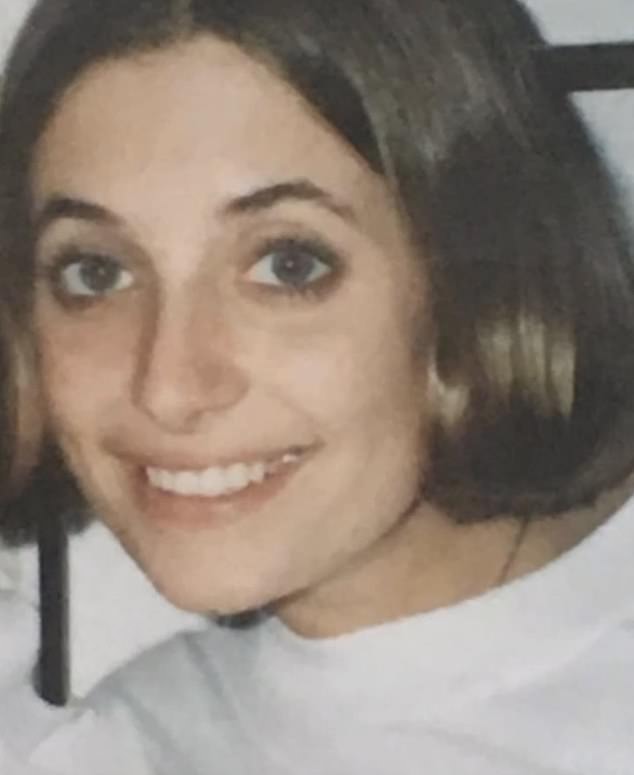
I went on a gap year and discovered that travelling in hot countries with a backpack of skimpy summer clothes, while also living in a fog of self-loathing, is a great recipe for anorexia
Yet this awful self-torment came from exactly the same source as over-eating – it was all about my emotional state, and nothing to do with looking after my body.
I now understand that not everyone struggles with this kind of food noise, nor ends up in the grip of disordered eating. I was diagnosed with ADHD aged 47, and I’m now sure that this contributed to my angst-ridden attitudes towards food.
By the time we’d been travelling for five months and had arrived in Australia, I was getting up early to do 150 sit-ups. I lost a significant amount of weight very rapidly and my periods stopped.
Then, one day, bikini-clad and on a white sandy beach, I bumped into the ex-boyfriend with the models on his wall, who was also on a gap year. I’d lost half my body weight by this point and, in truth, was ill. But he did a double-take and said: ‘Oh my God, you look incredible.’ And I thought great – success!
My friends, however, were incredibly worried about me and took me to a doctor, who said I was severely underweight and needed to go home.
There followed two relentless decades beating myself up about my weight. I yo-yoed up and down and my every thought was about my size.
On my wedding day, aged 29, there were even jokes about it – ‘through thick and thin’ was said during the speeches, with the word ‘literally’ thrown in.
Pregnancy at 29 was, for me, like nature’s rehab, a time when my body had other priorities. But even then, people commented on my weight. I remember going to see my wonderful Italian grandmother who said: ‘You’re so fat!’
‘I’m pregnant,’ I pointed out.
When my oldest was two-and-a-half, we moved to Switzerland, and that’s where, in my 30s, I finally realised the power of exercise.
I still wanted to be thin – that much hadn’t changed – but I liked feeling strong, too. I ate for energy so I could run and do weights.
Then life threw an even greater challenge at me: my third baby was very unwell and we spent much of his early years in and out of hospitals. At the age of five he was diagnosed with something called PCD, a rare genetic lung disease. No food issues were triggered, but I did lose weight from stress.
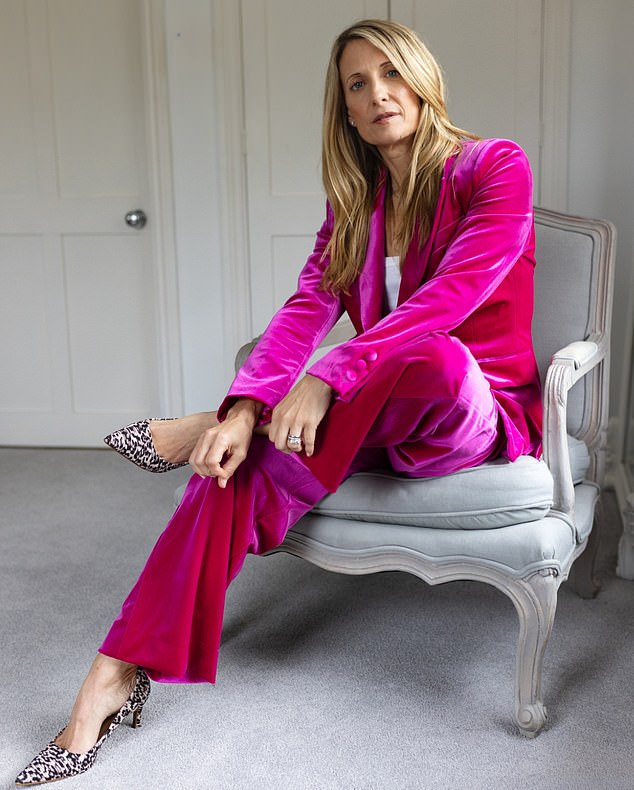
It was at the age of 40 that the penny properly dropped. Rather than permanently bargaining with my body I could decide I wanted to eat to feel good all the time
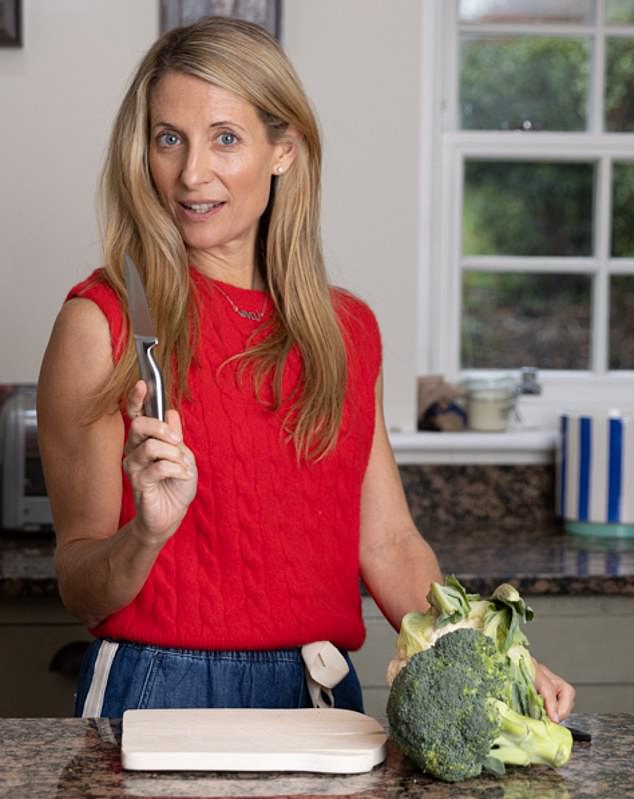
For me, feeling good is about adding rather than taking away or restricting food, eating enough protein and fibre and not seeing carbs or calories as the enemy
It was at the age of 40 that the penny properly dropped. Rather than permanently bargaining with my body – ‘do this exercise to have that biscuit’ – I could decide I wanted to eat to feel good all the time.
The biscuit wasn’t conditional on the weights; I could have one without feeling guilty – but was it really the right thing to be eating to feel as good as I could? Sarah Wrigglesworth believes that managing food noise starts with stabilising blood sugar. ‘When blood sugar drops, cravings are much more likely,’ she says. ‘You might reach for a few biscuits, feel a quick lift, and then crash again – it becomes a cycle.’
The answer is balanced nutrition alongside appropriate exercise. But Sarah also emphasises the importance of addressing the emotional drivers behind eating. ‘Without challenging the underlying thoughts and feelings, the pattern tends to persist.’
For me, feeling good is about adding rather than taking away or restricting food, eating enough protein and fibre and not seeing carbs or calories as the enemy.
Not all calories are created equal; 100 calories of broccoli is very different to 100 calories of Skittles! What I’d advise is to keep a food diary for three to five days, and include everything – coffee, water and whatever you snack on. You’ll find that a lot of those little nibbles throw your sugars off-balance and mean you’ll have a dip and feel hungry without actually needing food.
Try to meet protein targets of around 30g per meal (a palm-sized portion of whatever you’re having – chicken or fish) and also 30g of fibre. Create little wins. If you’re having granola, add chia seeds and Greek yoghurt for fibre and protein. Don’t think about whether food is ‘good’ or ‘bad’.
Then look at exercise. The best way of building muscle is to lift weights. I do this three to four times a week and run three times a week (sometimes both on the same day). I also have one full day of rest. Always try and get 4,000 steps in a day – that’s what the new science says, and 10,000 can often be too big an ask.
I don’t weigh myself at home, but at a recent doctor’s appointment, my weight was 8st 11lb (56kg). More importantly, the other day I was drying my hair and I realised that my biceps are prominent. I am strong.
I’m not happy every day, but I know that we don’t exist on a permanent high and that I no longer constantly beat myself up.
Yes, if I’ve had a really busy day, and it’s 4pm, the floodgates might open and I’ll head for the custard creams. But I don’t have the same urge to polish them all off, and if I have a couple, I now understand it’s not going to have a long-term impact on my body. It’s not about willpower. It’s about breaking a chain of negative thoughts.
If I really want to eat a chocolate bar, I eat a chocolate bar, and I don’t overthink it. But I also try to make healthier swaps where I can. Last night, for example, I was craving Cadbury Mini Eggs. My husband had bought a massive bag of them and put them in a bowl in the kitchen. We have three children, aged 19, 16 and nine, and of course we allow them treats like chocolate.
But instead of a handful of eggs, I decided to make a healthy swap and have a date and a bit of 100 per cent dark chocolate, and that was enough. Back in the day I’d have struggled internally with this and possibly wolfed down half the bowl.
For breakfast, I have worked out that 150g of oven-baked Brussels sprouts, three scrambled eggs and 100g prawns helps balance my blood sugar for the day ahead. I know it sounds like an odd kind of meal, but it means I don’t crave sweet foods and I feel fuller for longer. I could eat this breakfast every day.
We don’t need to complicate things. This is life, not Instagram, and if it works for you, you can eat the same things with little additions here and there. Try it!
Having implemented these lifestyle changes, I started thinking harder about my future health, which is why I wrote my new book, The Longevity Solution.
It’s such a shame that it took until I was 40 to understand that the most important thing wasn’t being thin but being healthy.
This is why I have concerns about fat jabs. For me, yes, they would have quietened the background food noise, which would have felt liberating, I’m sure – but how would I have managed the voices when they came roaring back after stopping the jabs?
I’d worry about slipping back into extreme weight loss, too – about literally disappearing again.
If women use the drug to suppress appetite without addressing their underlying relationship with food, it can leave them unprepared for the return of cravings when they stop the medication.
I have already seen women become extremely anxious about regaining weight after coming off the jabs. Some become so fearful they start severely restricting what they eat, slipping into behaviours that look very much like disordered eating to me.
For women who may have struggled with dieting or body image earlier in life, which is incredibly common in the generation of women now in their 40s and 50s, the injections can sometimes revive old patterns. The result is that the food noise they thought had gone away can come back louder than ever, driven by fear rather than hunger.
I fear we are sinking back to the ‘heroin chic’ of the 1990s, which is when my food noise first started. Looking at the pictures of Demi Moore arriving at the Gucci show at Paris Fashion Week last month, I felt sad. I thought we had moved on from celebrating extreme thinness as a beauty ideal.
For women in midlife, particularly, ultra-thin is a dangerous aspiration due to our diminishing bone density and muscle mass. We need to be strong to age well and be mobile throughout our later years. Extending our health span – how long we live in good health – ought to be the goal.
Today, I know that if I eat well, move my body, see friends and have the odd glass of wine and bar of chocolate, I don’t have those negative voices beating me up in my head. Knowing that sometimes I will still hear food noise but that I am not broken and can rationalise it away – ‘I had a great lunch, am I really hungry?’ – is what’s fixed things for me.
I’d never wish those years of disordered eating and self-abuse on anyone, but it’s the journey I’ve been on. It’s why I am so passionate today about helping women, particularly those in midlife, find peace and build strength.
- The Longevity Solution: 21 Days To Health, Strength & Vitality, by Kate Rowe-Ham, £14.19, amazon.co.uk.
- If you’ve been affected by issues in this article, call Eating Disorders Support on 01494 793223.
- As told to Alice Smellie