As many as 70 Britons have been locked up in the United Arab Emirates for taking photos and videos of drone and missile attacks, The Mail on Sunday can reveal.
Tourists, expats and cabin crew have been detained in overcrowded police cells and prisons – and in some cases denied sleep, food and medicine – as they fall foul of draconian laws that purport to protect ‘national security and stability’.
However, oil-rich city-states such as Dubai have been accused of a heavy-handed clampdown that aims to protect their ‘carefully constructed brand’ as safe and glamorous travel destinations.
Even passively receiving an image is deemed illegal under the severest laws, which can carry a sentence of ten years in prison or fines of up to £200,000.
The shocking number of British nationals arrested comes from two UK-based campaign groups working with Emirati lawyers.
So many people are being held that the legal system is swamped, meaning those arrested face months in detention before being charged, according to human rights group Dubai Watch.
Some of those arrested have been released on bail – but have had their passports confiscated so they cannot leave the Emirates. If they are expats whose work visas expire in the meantime, they will not be able to work and face homelessness, campaigners say.
Dubai Watch is representing eight arrested Britons, but its founder David Haigh says local lawyers tell him that at least 35 Britons have been detained in Dubai, and a similar number in neighbouring Abu Dhabi.
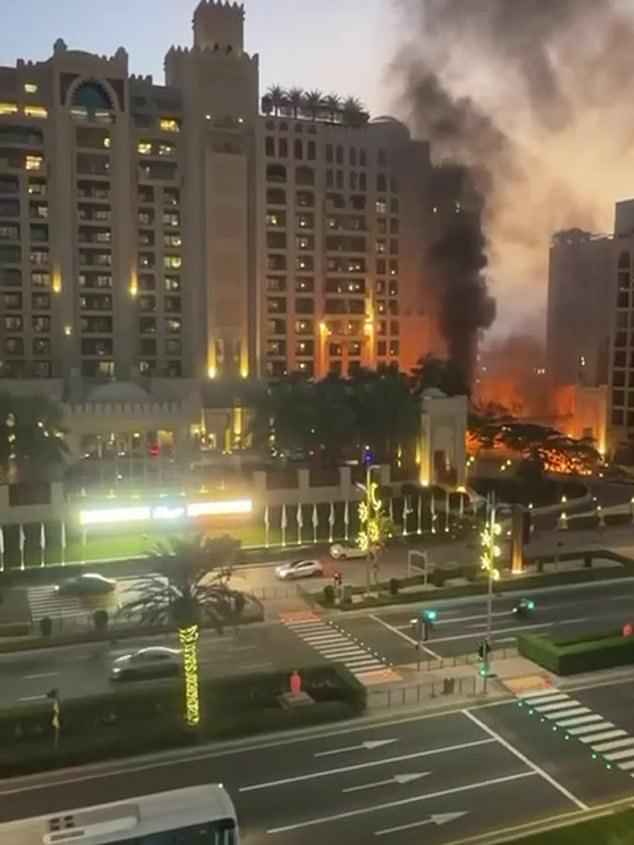
As many as 70 Britons have been locked up in the United Arab Emirates for taking photos and videos of drone and missile attacks, The Mail on Sunday can reveal. Pictured: The Palm Jumeirah Fairmont hotel after it was hit by a Shahed suicide drone on February 28, 2026
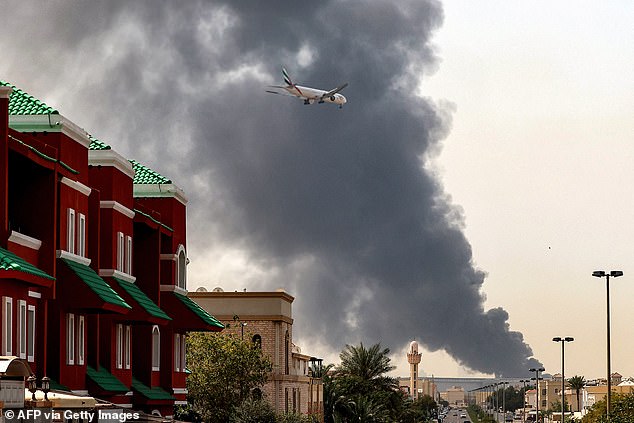
Oil-rich city-states have been accused of a heavy-handed clampdown that aims to protect their ‘carefully constructed brand’. Pictured: An Emirates aircraft prepares for landing as a smoke plume rises from an ongoing fire near Dubai International Airport on March 16
In some cases, they were made to sign statements in Arabic they did not understand, it is claimed.
Access by British consular staff is understood to be ‘restricted or outright denied’.
The Foreign Office is not automatically alerted to all cases, and some of those arrested have been advised not to contact the British Embassy for fear it could prolong their cases.
Officials believe just five British detainees are receiving consular help for taking pictures.
Last night, Radha Stirling of the Detained In Dubai group said: ‘British citizens are being held in overcrowded conditions, denied medication, and pressured to sign confessions without legal representation.
‘This is a serious failure of protection. Immediate and robust diplomatic intervention is required to safeguard their welfare and secure their release.
‘These are not criminals, but ordinary tourists, workers and residents who acted without malicious intent.’
Among the detained Britons is a London-based air steward for the budget airline FlyDubai.
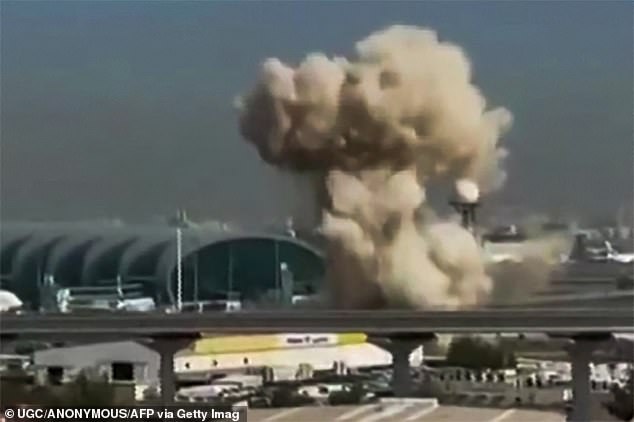
Some of those arrested have been told not to contact the British Embassy for fear it could prolong their cases. Pictured: Smoke at Dubai International Airport after a strike on March 7
It is understood he took a photo of the damage caused when an Iranian drone crashed close to Dubai airport on March 7 and sent it to colleagues, asking if the area was safe. He was arrested soon afterwards after police checked his phone.
A British lawyer living in Dubai as an expat is also among those arrested, while Detained In Dubai is helping the family of a 60-year-old British tourist who was charged with 20 others after footage of Iranian missiles over Dubai was found on their phones.
Despite deleting the footage, he was arrested and now faces two years in jail and up to £40,000 in fines.
He was charged under cyber-crime laws, but some cases are being treated as more serious national security issues.
Emirati laws prohibit anyone from taking or publishing photos that could ‘disturb public security’.
When there is an Iranian strike, those nearby are sent a text message in both Arabic and English saying: ‘Photographing or sharing security or critical sites, or reposting unreliable information, may result in legal action and compromise national security and stability.’
Police also reportedly approach those in the area and demand to see their phones. Anyone caught with photos of attack sites is arrested, while those who receive such photos through apps like WhatsApp are also tracked down and arrested.
Mr Haigh, who was tortured in a Dubai jail, said ‘Dubai is a corporation, a gleaming global brand desperate to keep the facade intact.
‘So, once tourists and expats take photos of a missile intercept, or a drone strike, they become the enemy.
‘They are arrested, vanished, threatened, charged, forced to report friends, and face years in jail.’
Before the war, more than 240,000 Britons lived in Dubai. About half are thought to have returned home since Iran started firing missiles and drones across the Strait of Hormuz.
The Emirati embassy in London said people had been warned about taking or sharing photos from ‘incident sites’, adding: ‘Disseminating such materials or inaccurate information can incite public panic and create a false impression of the UAE’s actual situation.’
The Foreign Office said: ‘We are supporting a number of British nationals in the UAE who have been detained or arrested.
‘We expect full consular access to British nationals. The British Ambassador regularly speaks to the authorities about access.’
‘No one knows you’re here’: Shadowy truth of arrests
Thrown into solitary confinement in a Dubai jail at gunpoint, handcuffed and blindfolded, Tiina Jauhiainen was told chillingly: ‘No one knows you are here. We can do whatever we want to you.’
That, says Tiina, is the reality facing the scores of Britons locked up in Emirate jails.
Held under draconian ‘domestic security’ laws, they are entitled to no consular assistance or even a phone call.
There is no duty for Dubai officials to inform anyone that they have been detained, let alone British embassy staff.
It is why the Foreign Office has no grip on the true total of British citizens being held in Dubai jails – because the numbers are essentially hidden.
Even those bailed, who are released but forbidden from leaving the state, may not seek embassy assistance because – says Dubai Watch and Detained in Dubai – their lawyers advise this can draw out the process.
Tiina, 49, who lives in London but had spent 17 years in the Gulf, spent two weeks in jail in 2018. In her case, the story went around the world.
A friend of Princess Latifa, the daughter of billionaire Dubai ruler Sheikh Mohammed Al Maktoum, Tiina had helped her escape from her despotic father and had sent a video to the Press in which the princess claimed she had been beaten, tortured and imprisoned by officials linked to her family.
They were captured on a yacht in international waters off India’s coast.
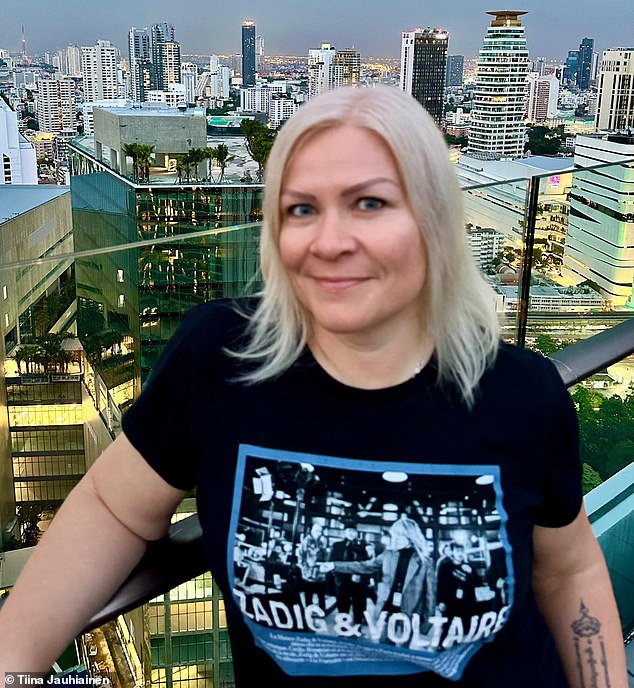
Tiina Jauhiainen was kept in solitary confinement after she sent a video to the press in which Princess Latifa, daughter of billionaire Dubai ruler Sheikh Mohammed Al Maktoum, claimed she had been beaten, tortured and imprisoned by officials linked to her family
Tiina was returned to Dubai, kept in solitary confinement, threatened with the death penalty and interrogated for hours about the video, the escape plan and whether she was part of a larger plot to overthrow Sheikh Mohammed.
She said it was ‘the most terrifying thing that has ever happened to me in my life’.
In a windowless cell with permanent fluorescent light, she had no idea if it was day or night and only a thin blanket for covering, which left her shivering violently.
When she was eventually released without charge, she was forced to sign paperwork agreeing not to criticise the regime or talk about her incarceration.
And she was left with a veiled threat: ‘They said they had been able to find us on a yacht in the middle of the ocean.’
She added: ‘I was then blindfolded and released outside Dubai airport.’
She was later told by security services that spyware had been installed on her phone.
‘My message to anyone is to be careful,’ says Tiina. ‘It would be so easy for the regime to make you disappear.’