This article is taken from the April 2026 issue of The Critic. To get the full magazine why not subscribe? Get five issues for just £5.
Like countless others, my family has inherited a set of campaign medals from the Second World War. My maternal grandfather was a physician, not a warrior, so these medals were awarded for healing the wounded, not gallantry. But he served in the North African and European theatres, rising to the rank of brigadier and sharing the same risks as the men whose lives he saved.
Contemplating these medals, it occurs to me that Grandad never spoke about his wartime experiences, not even the time when (according to my mother) his troopship was torpedoed in the Mediterranean. He must have witnessed terrible things but, again like others, he preferred to draw a veil over what he, as a man of science, may have regarded as his generation’s atavistic reversion into barbarism.
By his silence, however, he deprived his grandchildren of his insight into the mystery of man’s inhumanity to man. The culpable ignorance of our political class about the dangers of predatory war is the consequence of a peace that literally passeth all understanding.
To have played any active part in the Second World War, you must now be a centenarian. My wife’s uncle, who died in February aged 102, flew over Germany in Lancaster bombers as a wireless operator, miraculously surviving dozens of almost suicidal missions. He, too, was reluctant to talk about his war; indeed, he had emigrated as soon as possible to begin a vita nuova in California. When he turned a hundred, he was touched to receive congratulations from both President Biden and the King, who expressed sincere gratitude for his wartime service. Rightly so, for Uncle Ken was indeed a hero.
My other grandfather had served in the Great War, suffered lung damage from poison gas and died of pneumonia during the Second World War. My father, then still a boy boarding at Stonyhurst, the Jesuit college, was not allowed to go home for his funeral. Grief was to be endured in private; any public display of mourning was unmanly. As for military training: opting out was not an option. Even the celebration of Mass apparently acquired a martial flavour.
What struck one about veterans of the world wars was not just their stoicism, but their courage and wisdom in accepting responsibility for protecting others. They abhorred the horrors and waste of war as fiercely as any pacifist. Yet every one had taken up arms for the sake of their families, their freedom and their country. Patriotism for them meant playing their part, getting stuck in, never lingering on the sidelines. It certainly did not mean taking an over-scrupulous attitude to the legality or legitimacy of war. In the face of evil incarnate, you just had to fight.
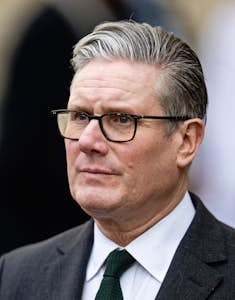
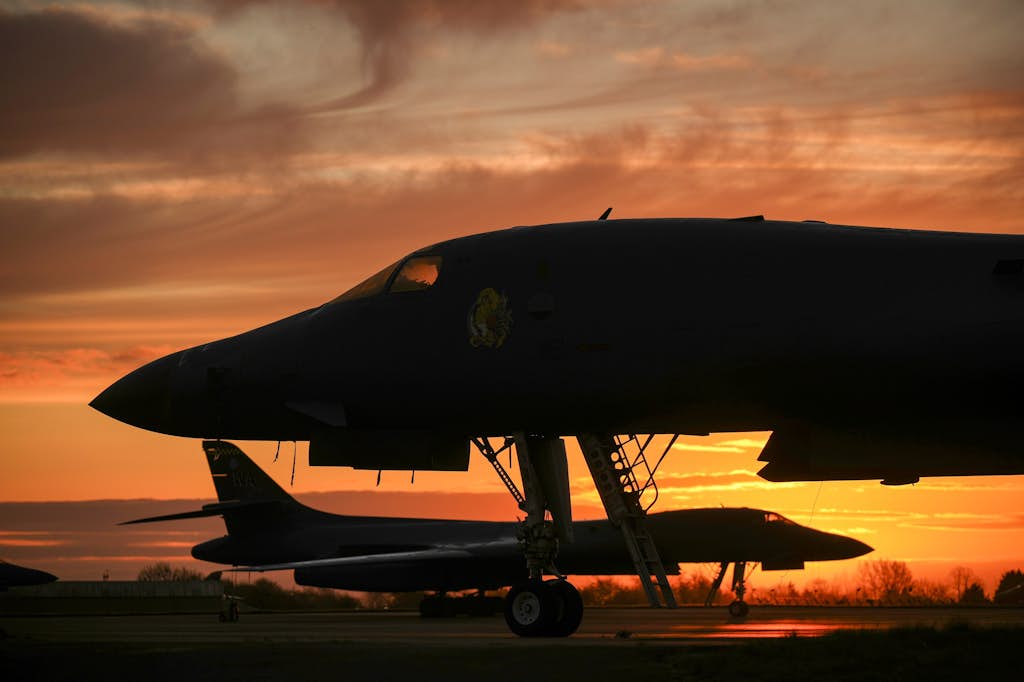
“The United Kingdom played no role in these strikes.” The words with which Sir Keir Starmer responded to the US–Israeli attack on Iran will be his epitaph. When the moment of decision came, the Prime Minister sat on the fence. He initially refused to allow US bombers to use British bases. Inevitably, within 24 hours Starmer had U-turned, but British support for Operation Epic Fury came too little and too late for Trump. For once, the President’s rebuke hit home: “This is not Winston Churchill that we’re dealing with.”
What the Prime Minister did not say but meant was this: “My friend Lord Hermer, the Attorney General, says this war is against international law. After Iraq, Libya and Gaza I am not going to risk alienating Labour voters by joining in an illegal war against a Muslim country. Iran may just have slaughtered tens of thousands of innocent civilians, but our sole concern is to evacuate British citizens from the region. Those in Israel can look after themselves.”
Even if Starmer had been persuaded of the legality of the war, however, there was precious little he could have contributed. When the war began, there wasn’t a single active British warship in the Mediterranean, the Gulf or the Indian Ocean. It took the PM four days to order the only available destroyer to sail to protect Akrotiri, the RAF base in Cyprus.
In 1939, the Royal Navy was the largest in the world, with more than 1,400 vessels, including 15 battleships and battle-cruisers, 7 aircraft carriers, 66 cruisers, 164 destroyers and 66 submarines. About 278 of His Majesty’s Ships were lost, including 5 capital ships, 5 fleet carriers and 3 escort carriers, 28 cruisers and 153 destroyers — along with more than 50,000 men.
Even in 1982, the task force that the British sent to recapture the Falkland Islands comprised 127 vessels, of which 43 were warships. Five ships did not return. On paper, the Royal Navy today has some 63 vessels, but just 15 significant surface warships (aircraft carriers, destroyers and frigates), plus 10 nuclear submarines, of which only half a dozen are seaworthy — not a fleet, barely even a flotilla.
In time of war, our first duty is to give thanks for peace. It is easier to show gratitude for the blessings we have than to express horror at suffering on a scale that is inconceivable to most of us.
But our involuntary failure of imagination imperceptibly shades into a culpable lack of compassion. In our history, we used to distinguish between war ministries (such as those of the Pitts) and peace ministries (such as that of Walpole). Today, Starmer presides over a peace ministry even as the tumult of war rages across our continent.
The four-year duration of Ukraine’s ordeal by hellfire at the hands of Vladimir Putin and his marauders has now exceeded the limits of human endurance. Yet we who have been spared thus far will go to any lengths to avoid reflecting on the heroic scale of Ukrainian sacrifice, let alone contemplating deeper involvement.
We are surrounded by relics of past conflicts: so much so, that it is inexcusable to profess ignorance of, or even indifference to, the most terrible war in Europe for 80 years. Ukraine’s sanguinary history is a standing indictment of what one might call the “Ostrich Tendency” in the West. Stalin’s terror-famine, the Holodomor, in the early 1930s was only the most fiendish episode in the suppression of Ukrainian identity throughout the history of Russia and the Soviet Union.
After the Ukrainian phoenix re-emerged from the ashes of communism, the 1994 Budapest Memorandum provided security guarantees: a nuclear self-denying ordinance in return for independence. Those promises — not only from the United States and Britain, but also Yeltsin’s Russia — proved illusory. From the outset of his presidency, Putin left no doubt about his imperial intentions towards Kyiv; some of us sounded the alarm.
Recently a reader’s letter in the Telegraph drew attention to an article I wrote in 2004 warning of the threat Putin posed to Ukraine and the West. Journalistic jeremiads seldom arouse the somnolent sentinels of civilisation, including this one. Alas, the most recent passage of the Ukrainian via dolorosa is now all too familiar.
War has always been destructive, but in modern times has become so on an apocalyptic scale. We can see its physical devastation every day. The immense psychological damage wrought by war, though, we do not see. Yet the human cost of war outweighs all others. With our help, Ukraine may one day rebuild its ruined cities; but traumatised veterans, brutalised civilians and abducted children can only be rehabilitated over many years, if ever.
Notoriously, war also acts as an accelerant for technological progress. In 1939, battleships were still our most awe-inspiring war machines. You can still see two of their 15-inch guns at the entrance to the Imperial War Museum. Yet by 1945 they were on the path to obsolescence. Six years of warfare had unleashed jet aircraft, ballistic missiles and nuclear weapons.
War is also a stimulus for poets, artists and thinkers. Our present conflicts may lack the epic quality of the Napoleonic era, but who is to say that in our era of undeclared war and uneasy peace, there is not a young Tolstoy alive today? Salman Rushdie has outlived both the Supreme Leaders who sought his blood for writing a novel. In The Satanic Verses their prophet became a fictional character, Mahound, whose inspiration might be diabolical as well as angelic.
The fatwa against Rushdie led to a dawning realisation that the Islamic Revolution was a jihad against Western civilisation — a fight to the death. War is the burning fiery furnace from which only those who defy the Nebuchadnezzars and their idolatry of power emerge unscathed.