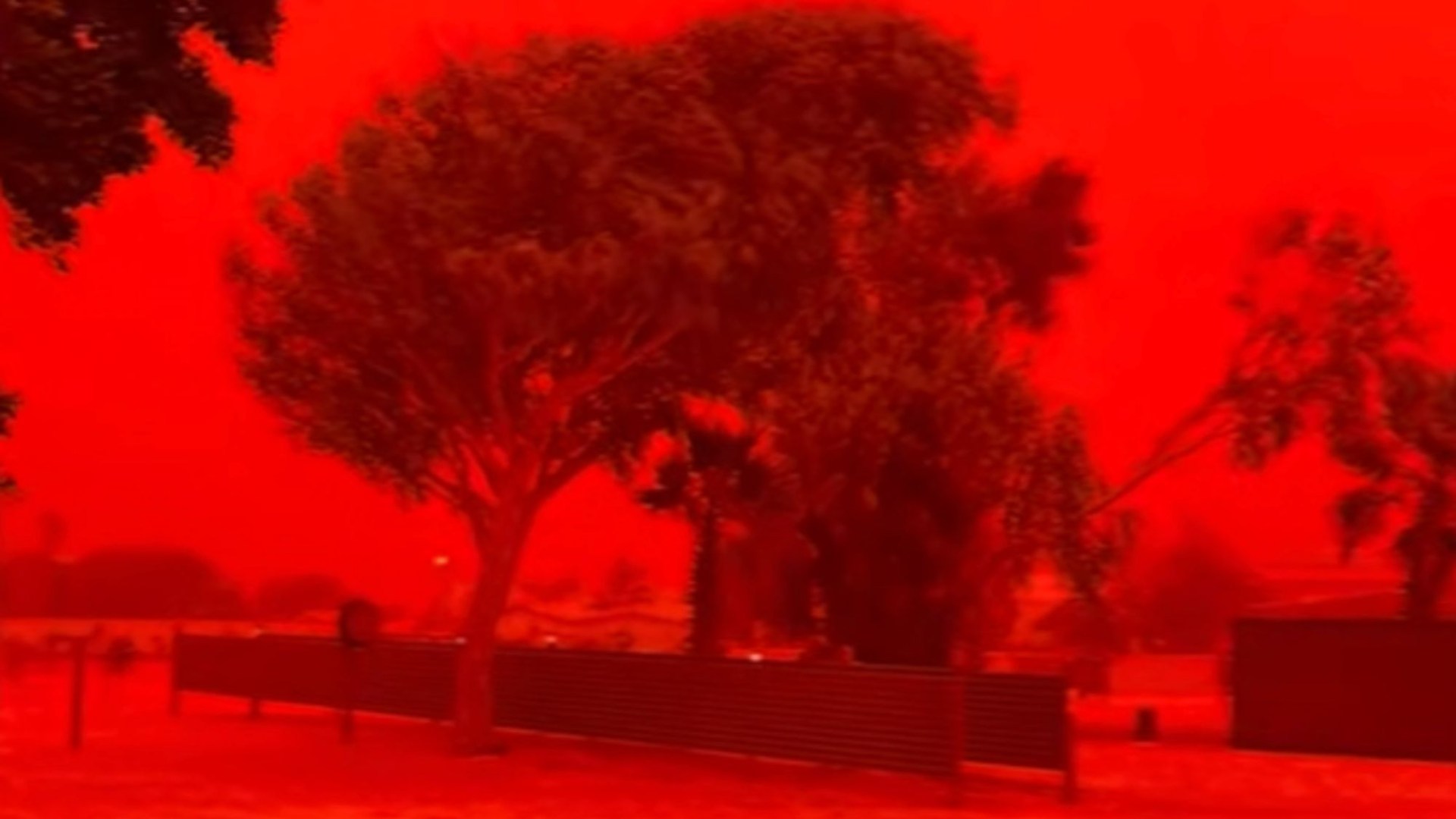
THIS is the moment the sky turns blood red as a powerful cyclone tears through Australia.
Cyclone Narelle is swallowing entire towns in a choking haze and plunging communities into an eerie, apocalyptic darkness.
Shocking footage from Shark Bay on Friday shows daylight erased in minutes as violent winds whip up vast clouds of iron-rich dust, turning the sky a deep crimson and slashing visibility to near zero.
Entire areas were reportedly engulfed as the air turned thick and almost unbreathable, with the sky glowing an unnatural red-orange.
Witnesses described scenes that “don’t look real anymore” as the dust storm rolled through, driven by some of the strongest winds seen in a “long time”.
Australia’s government weather agency said winds exceeded 124 miles per hour.

Queensland Premier David Crisafulli said: “In many cases it will be the strongest wind people have experienced in this part of the state for a long, long time.”
The phenomenon, while dramatic, is understood to be caused by powerful winds lifting iron oxide-rich soil into the atmosphere – a process well documented in Australia’s arid regions.
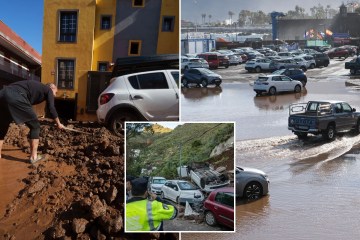
It comes as ex-Tropical Cyclone Narelle continues to barrel inland after battering the state’s northwest as a category three system, bringing destructive wind gusts exceeding 105mph and heavy rainfall.
Emergency services said the tourist town of Exmouth was the worst hit, with widespread damage and critical outages.
Exmouth remains largely without power, water or communications, with crews racing to restore access.
Emergency Services Minister Paul Papalia said: “Towns other than Exmouth – Coral Bay, Shark Bay, Geraldton, Kalbarri and Carnarvon township, all appear to have escaped unscathed in terms of structural damage.”
“It appears as thought the damage, structural damage, has been relatively minor in places like the rest of the Pilbara.
“We will be ensuring there are supports available for people as they come out of this.”
Authorities said there had been damage to buildings, service stations and Learmonth Airport, though no injuries have been reported.
Elsewhere, strong winds have reportedly torn through agricultural regions, with fears banana crops near Carnarvon could be wiped out.
Grower Doriana Mangili told News.com.au: “If the winds are as they are forecast – which at the moment is forecast to be 180-190km/h – then we would unlikely to have any bananas left standing.”
“The trees, they don’t have big root systems, so anything over 100km/h will push bananas over and then you have to sort of start again.
“Unless something miraculous happens … then we will probably have nothing left by (Saturday).”
Major gas operations were also disrupted, with companies halting production after infrastructure was damaged in the cyclone’s path.
Despite the terrifying scenes, experts say the blood-red skies are not unusual in Australia.
A similar incident in 2009 saw dust carried thousands of kilometres, turning skies orange as far as Sydney.
Scientists stress such events are driven by natural wind erosion, though they can be worsened by drought conditions – not signs of any wider catastrophe.
The cyclone has since been downgraded, but authorities warn conditions remain dangerous, with emergency alerts still in place.