The war in Iran is hitting India hard. The rupee slumped to a record low of 94.7875 per dollar Friday as the upheaval in the Middle East disrupted remittances and energy imports. And India’s stock market fell for the fifth consecutive week as oil and gas prices continued to rise.
Meanwhile, archrival Pakistan has emerged as a critical back-channel intermediary in the conflict – a role that highlights India’s absence from diplomatic channels it has long sought to shape.
Prime Minister Narendra Modi, accused by the opposition of undermining India’s diplomatic neutrality, described the overall situation as “worrisome.”
Why We Wrote This
The Iran war is taking a toll on India, simultaneously undercutting its energy security, remittances, and geopolitical influence – making Delhi one of the biggest losers in a war it isn’t even fighting.
Indeed, the war in Iran is becoming both an economic and a strategic nightmare for Delhi. For decades, India balanced ties with Iran, Israel, and Gulf states, positioning itself as a potential interlocutor. This approach allowed New Delhi to stay relevant across rival blocs without being drawn into them, but now the strategy is facing fierce headwinds.
Praveen Donthi, senior India analyst at the International Crisis Group, says the recent fallout exposes the limits of India’s balancing act in west Asia.
“After over a decade of a favorable global environment, India has entered more turbulent waters,” he says, pointing to frictions after last year’s India-Pakistan crisis, disagreements over U.S. mediation, and trade tensions. The war in Iran, he says, has “plunged India into deeper trouble.”

Francis Mascarenhas/Reuters/File
Economic shock
India imports nearly 85% of its crude oil, with much of it passing through the Strait of Hormuz. Even limited disruption raises shipping costs, insurance premiums, and crude prices, feeding inflation and pressuring the rupee.
“More than any other conflict, including its own with Pakistan, this war could have the greatest impact on India’s economy,” says Mr. Donthi. The impacts extend beyond energy. Around 10 million Indians live in Gulf countries, sending home more than $40 billion annually, roughly a third of India’s remittance inflows. Any slowdown in Gulf economies hits household incomes and domestic demand.
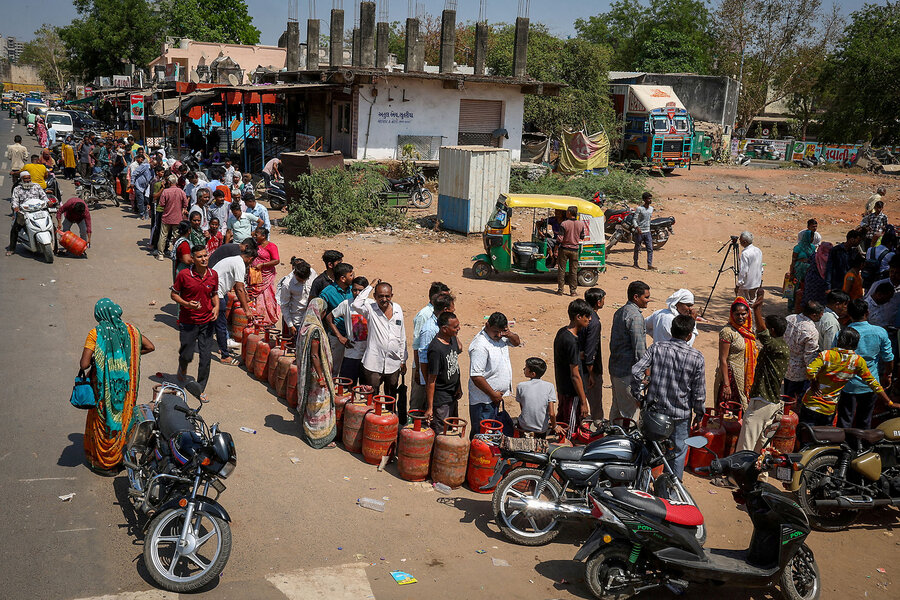
“The war feels very close,” says Waseem Khan, who hails from Uttar Pradesh in India and now works as a construction worker in Dubai, United Arab Emirates. “My job is under threat because of the conflict, and back home my family is dealing with the crisis of cooking gas. If war escalates, it’s going to affect Indians the most, here and back home.”
Together, energy disruption and remittance risks create a dual shock – widening the current budget deficit and slowing growth.
However, the deeper setback is geopolitical.
Nonalignment strategy under strain
In late February, Mr. Modi stood alongside Israeli Prime Minister Benjamin Netanyahu in Tel Aviv, the two leaders greeting each other with an embrace. Over two days, they signed agreements upgrading ties to a “special strategic partnership” spanning defense, technology, agriculture, and innovation.
Less than two days after the visit, Israel and the United States launched the military offensive against Iran. The timing placed India in an immediate bind. For days New Delhi remained publicly silent, an unusual pause for a country that has long projected itself as a balancing power in the region.

“Despite India’s claims of neutrality, the optics of Modi’s visit to Israel at a moment of looming conflict effectively placed it in the Israel camp,” says Mr. Donthi. “The space for diplomatic maneuvering has shrunk considerably.”
It took several days for New Delhi to make limited outreach to Iran, including a condolence visit by a senior official. Since then, engagement has been cautious and largely driven by energy concerns. Public messaging has also been uneven. While India condemned attacks on Israel and some Gulf partners, it has been more restrained in responding to strikes on Iran.
Ceding diplomatic space
The muted reaction has drawn criticism at home, with opposition leaders accusing the government of weakening India’s credibility as a neutral actor.
“The structure [of our foreign policy] has been demolished,” India’s main opposition leader, Rahul Gandhi, told reporters Tuesday. “Prime Minister Modi cannot fix it. He will only do what America and Israel will tell him to do.”
Asim Ali, an independent political researcher and columnist based in Delhi, says the timing of Mr. Modi’s visit to Israel sent a clear signal.
“This is a departure from its role as a balancing power,” he says. “And it has cost India diplomatic capital.”
Countries such as Pakistan are prepared to fill the void.
For New Delhi, Pakistan’s rise as an unexpected mediator is not just a symbolic blow. It undercuts India’s long-standing effort to present itself as the more credible and stable interlocutor in the region.
For years, Mr. Modi has argued that India’s economic weight, political stability, and friendly ties across west Asia and around the world make it the best choice for Vishwaguru, literally meaning “global guide” – a country able to bridge rival blocs and shape outcomes in a multipolar world.
In this crisis, however, India has found itself reacting to events rather than influencing them.