The war in Iran is not only boosting the price of oil and natural gas, but it’s also causing energy-short nations to rethink their energy strategies and focus on homegrown alternatives.
As a stopgap solution, some nations are turning to coal. But the bigger potential winners are green technologies and nuclear power.
Nations are taking different paths:
- Already a nuclear-power heavyweight, France is boosting its nuclear power generation and exports. This month, its reactors are on track to produce the most power of any March over the past seven years, Bloomberg News reports. Its power exports are double last year’s level.
- Germany, which shut down most of its nuclear reactors a decade ago, is ramping up its renewables. This week, its federal Cabinet adopted a climate action program that, among other green initiatives, will boost by 2,000 the number of wind turbines the nation plans to build. The plan “will reduce our dependency on expensive and unreliable oil and gas imports,” Environment Minister Carsten Schneider said.
- Hit by war-related shortages of liquefied natural gas, India is turning to coal to meet an expected surge of summer air-conditioning demand. Even Germany reopened coal plants it had recently shuttered when Russia cut natural gas exports in the wake of the war in Ukraine. That’s a boon to coal exporters, such as coal-powered South Africa. Local mining company Exxaro Resources forecast last week that its coal sales abroad could jump 12% this year.
Why We Wrote This
Fuel shortages are speeding a shift toward green energy and nuclear power across many countries, as the Iran conflict creates new urgency around energy security.
But the long-term winners are expected to be green energy and nuclear power. Nations were already moving in those directions before the U.S.-Israel bombing of Iran began on Feb. 28. Supply disruptions of oil and gas caused by the war, especially Iran’s effective closure of the Strait of Hormuz, are adding new urgency to the issue.
How much urgency that shift in direction takes will depend, in part, on how long the U.S. and Israel’s war with Iran lasts and how much it destroys Gulf oil and natural gas infrastructure.
After Iran this week rejected a 15-point peace plan put forward by the Trump administration, the Pentagon is reportedly considering sending up to 10,000 additional ground troops to the Middle East, according to The Wall Street Journal. More than 2,000 other U.S. troops are already on their way to the region to help reopen the Strait of Hormuz.
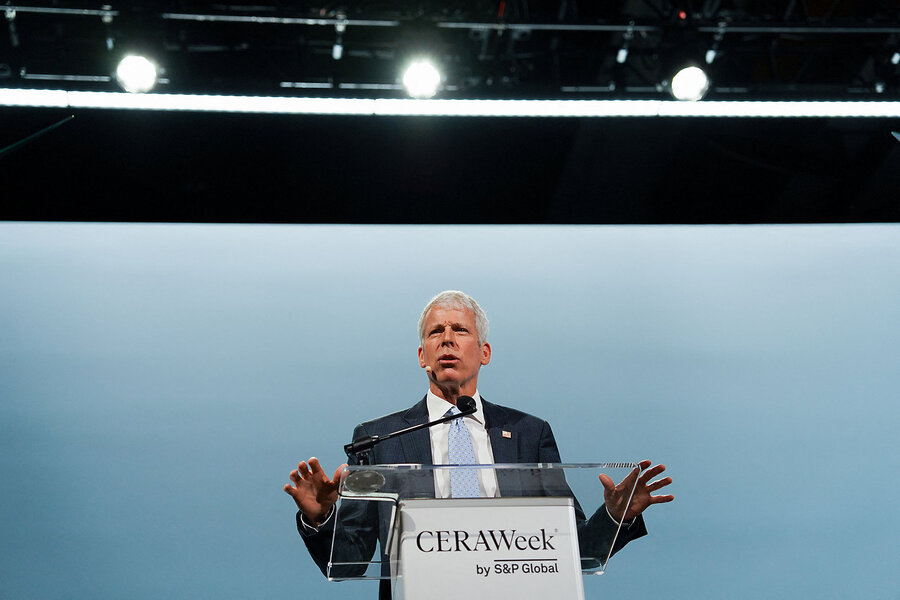
Here in Houston at CERAWeek, the world’s largest energy conference, experts are cautious about the war’s long-term impact on accelerating the move toward green energy and nuclear power.
“It will get some additional impetus,” says Ernest Moniz, a former U.S. energy secretary and founder of the EFI Foundation. “But my caution is that there have been previous big dislocations of the oil markets and the lessons have been short-lived.”
“It’s too early to tell,” says Laurent Odeh, chief commercial officer of the Urenco Group, an international uranium enrichment company.
Even in the United States, which produces enough energy to meet American demand, the race to build artificial intelligence data centers is spurring a push to build and reopen nuclear power plants.
“It’s a defining moment,’’ said Ho Nieh, chair of the U.S. Nuclear Regulatory Commission, speaking at CERAWeek on Thursday. “The things we do today are going to secure our nation’s energy security and help us reestablish global leadership if we all work together.”
The Trump administration has sped up the process of developing domestic nuclear power by streamlining permitting and other regulatory moves. The Energy Department is in talks with Japanese and South Korean companies to finance the construction of new reactors in the U.S.
On the green energy front, however, the administration has pumped the brakes, with dramatic reductions in federal funding and a pause on permitting for wind turbines. On Monday, the Interior Department announced that Washington would pay the French company TotalEnergies $1 billion to abandon two U.S. offshore wind leases and instead fund fossil fuel projects.