THOUSANDS of women with a common form of breast cancer may soon not need any treatment at all, scientists have suggested.
Around a fifth of all breast cancer diagnoses are a slow-growing type of the disease confined to the milk ducts, known as ductal carcinoma in situ (DCIS).
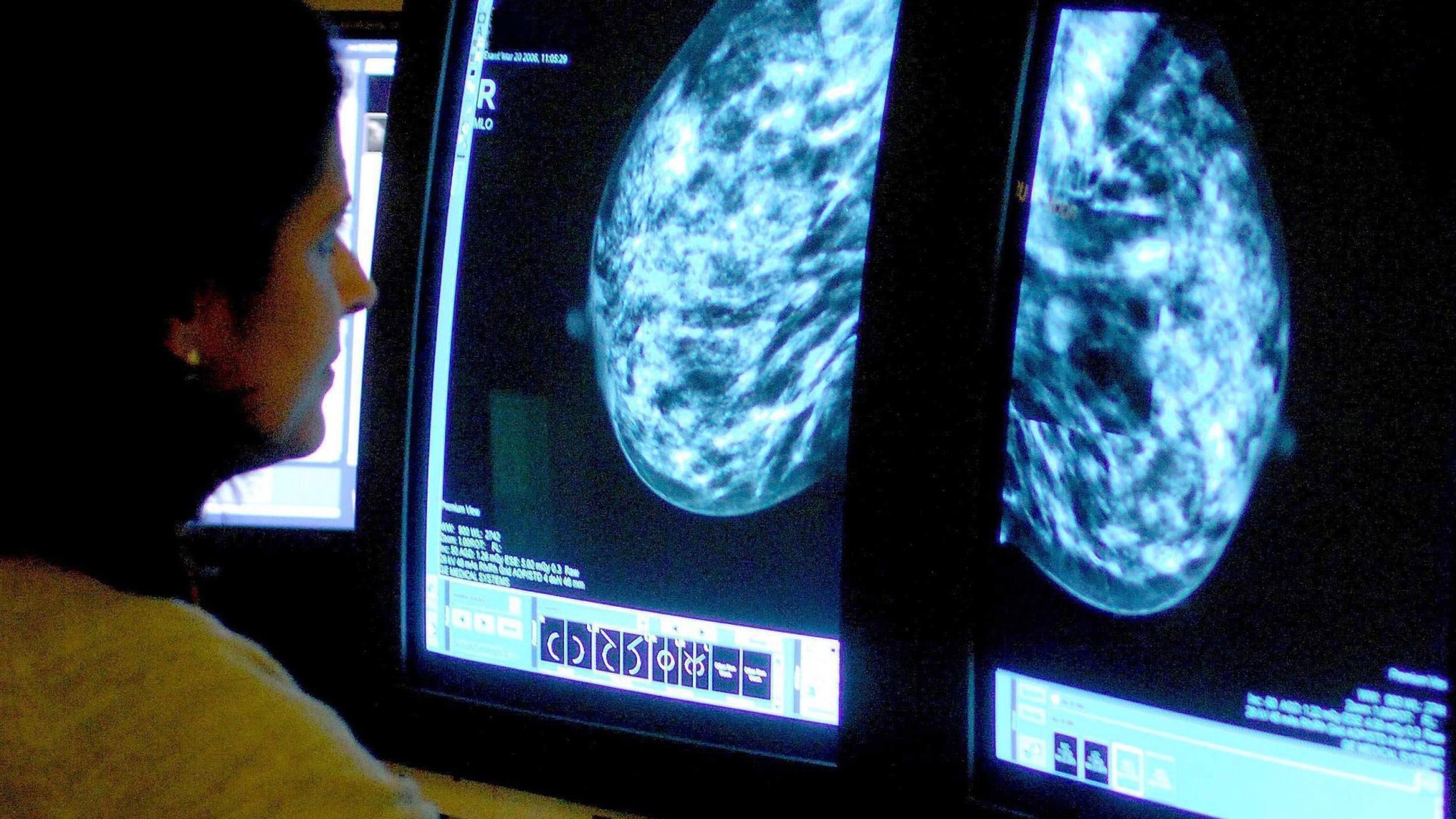
It usually causes no symptoms and cannot be felt, with most discovered only during routine mammograms – breast X-rays.
Currently in the UK, treatment involves surgery followed by radiotherapy to kill off any abnormal cells lurking in breast tissue.
But Dutch researchers, who tracked more than 1,400 women with DCIS for two years, found that this treatment may make little difference as to whether the cancer became more invasive.
Instead, it found a “watch and wait” approach was an even better option.
READ MORE ON BREAST CANCER


This involved monitoring the cancer using scans and physical exams once a year.
Researchers, who labelled the findings “reassuring”, said they could soon pave the way for treating women with DCIS, but that following up longer term with patients involved in the trial to confirm the results was “crucial”.
Professor Jelle Wesseling from The Netherlands Cancer Institute and Leiden University Medical Center, who presented the research at the European Breast Cancer Conference in Barcelona, said: “As a doctor, I am guided by the principle ‘first, do no harm’.
“My motivation for starting the trial was simple – to help make care safer and more balanced.
“We wanted to find out whether carefully selected women with low-risk DCIS can be safely monitored with regular check-ups, known as active surveillance, instead of having immediate surgery.
“The goal is to avoid unnecessary treatment without putting women at risk.”
He added: “For women with low-risk DCIS, these interim results are reassuring.
“There is currently no indication that active surveillance leads to worse early outcomes compared with immediate surgery.
“It’s important to explain that active surveillance does not mean withholding treatment – it does mean that patients are closely monitored and that surgery remains possible at any time.
“More broadly, this study contributes important evidence to the discussion about reducing overtreatment in breast cancer care.
“However, longer follow-up will be crucial before making changes to existing guidelines.”
In the study, researchers tracked 1,423 patients with one of the most common types of DCIS cancer.
Just under three quarters underwent monitoring instead of treatment, and the rest received surgery with or without radiotherapy.
Surgery was given to women in the monitoring group if the tumor showed signs of invasive progression.
Over a follow-up of almost two years, six per cent of the group who received treatment were diagnosed with invasive breast cancer – 33 of the 363.
This means the cancer had spread from where it began in the same breast to surrounding normal tissue.
By comparison, the figure stood at nine per cent among the monitoring group who did not have surgery – 63 among 1,060.
Researchers found that the tumours diagnosed in patients having active surveillance were slightly larger on average, 6mm compared to 9mm).
But they were not more aggressive.
Now, the researchers are continuing to follow-up all patients who are taking part in the trial over the course of a decade to monitor the safety of the two approaches in the long term.
They are also looking in more detail at which patients develop invasive cancer to try to understand which women can safely avoid immediate surgery.
DCIS affects roughly 4,800 Brits a year and is becoming more common because it is readily diagnosed by breast screening.
It is sometimes referred to as “pre-cancer” because some cases can develop into invasive disease.
But doctors do not know which DCIS cases will be dangerous and which will not.
How to check your breasts
IT is important to regularly check your breasts for any changes.
Breast tissue reaches all the way up to your collarbone and across to your armpit, so it’s vital to check these areas too.
If you feel or see any changes in your breast, you should always consult your GP.
Charity CoppaFeel! recommends checking your breasts monthly, so you can pick up on any changes quickly.
Breasts do change naturally as part of your monthly menstrual cycle, so you should get to know your breasts, how they feel and what changes they usually go through to know if anything is out of the ordinary.
Five-step check
There is a five-step self exam you can do at home to check for any changes.
Step one: Begin by looking in a mirror, facing it with your arms on your hips and your shoulders straight. You should be looking for any dimpling, puckering, bulging skin, redness, soreness, a rash or changes to the nipple.
Step two: Still looking in the mirror, raise both arms above your head and check for the same changes.
Step three: With your arms still above your head, check for any fluid coming from the nipples. This can include milky, yellow or watery fluid, or blood.
Step four: While lying down, use your opposite hand to check each breast. Using a few fingers, keeping them flat and together, go in a small circular motion around your breasts. Make sure you feel the entire breast by going top to bottom in these small circles. It helps to develop a system or pattern to make sure every inch is covered. Use light pressure for the skin and tissue just beneath, medium pressure for the tissue in the middle of your breasts, and firm pressure to feel the tissue at the back, feeling down to your ribcage.
Step five: Feel your breasts while either standing or sitting, using the same small circular motions.