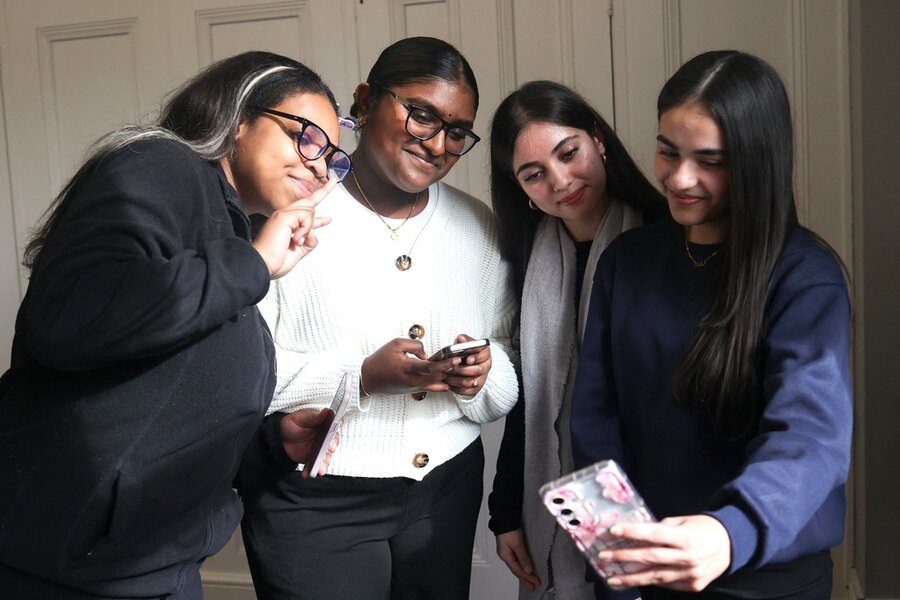
When the ruling party in Britain proposed last year that the voting age be lowered to 16, one smart TV station went out and asked 16- and 17-year-olds what they thought of the idea. Of 500 surveyed, a bare 51% supported it. Only 18% said they would definitely vote.
The Labour Party might have learned a lesson. To nurture maturity in teens, one must respect what maturity they already have – in how they view their own potential and problems. Love means listening first, then legislating. The bill to lower the voting age has yet to pass.
This year, as public pressure builds worldwide to ban teen use of social media, the U.K. government has commissioned a pilot test before making a power slap against tech giants such as Meta, Google, or TikTok. In a research trial in coming months, a few hundred persons ages 13 to 17 (yes, they are persons) will voluntarily be banned from social media in their home for six weeks to measure the impact on their well-being and safety.
The research, led by a team at the University of Cambridge and Bradford Institute for Health Research, is not only scientific but also exemplifies a sensitivity to the nuances of both the harm and benefits of online content. Another group with access to social media will also be watched. The trial’s restrictions will vary, such as setting different time limits, to fine-tune possible regulations.
“We can act at pace on the results of the consultation on young people and social media,” stated U.K. Technology Secretary Liz Kendall.
Focusing only on evil aspects of online content might blind lawmakers – as well as court judges – to the good, such as advances in safe, supportive social media that might drive off the bad. Teens themselves can give advice on how to sift the chaff from the wheat.
A blanket ban might end up not improving children’s safety and well-being. Or teens could devise methods to skirt a ban. Working with them – as many parents have learned – can reduce social media’s harms while enhancing mental growth in dealing with such challenges.
In the United States, a Pew Research Center survey last year found 45% of teens agree that they spend too much time on social media, while a majority says it helps in making connections and expressing their creativity. A minority 20% says it hurts their mental health or grades.
Thousands of lawsuits in the U.S. are now testing courts in deciding if tech companies should be held responsible for such harms. In two separate cases this week, verdicts held social media companies accountable for harm cited by young users.
Solutions might lie in simply giving an ear to teens, both individually and societywide. Close attention to their fears and aims can also spark self-regulation.
This year, Britain launched a campaign called “You Won’t Know Until You Ask.” It provides practical advice for parents in conversations with kids on internet use. Any government action, said Technology Secretary Kendall, must be “informed by the experiences of families themselves.”