Ancient Egyptians may have left behind a cryptic clue to a hidden second Sphinx, carved directly into stone more than 3,000 years ago.
The Dream Stele, positioned between the paws of the Great Sphinx, appears to depict two sphinx figures, hinting that the legendary monument may once have had a twin.
Now, Italian researchers who, in 2025, claimed to have uncovered massive underground structures beneath the Giza Plateau believe they have identified the second guardian buried deep beneath the sands.
Filippo Biondi revealed the discovery on Thursday while speaking on the Matt Beall Limitless podcast, explaining that lines drawn from the pyramids to the known Sphinx point to an identical mirrored location where the buried structure is believed to lie.
‘We are finding precise geometrical correlation, 100 percent of correlation, in this symmetry,’ he said, adding: ‘We are very confident to announce this… we have a confidence about 80 percent.’
Using satellite radar technology capable of detecting subtle ground vibrations, Biondi claimed the data points to a massive structure concealed beneath a 180-foot-high mound of hardened sand, which he said is composed of solidified sand rather than natural bedrock.
Preliminary scans show vertical shafts and passageways strikingly similar to those already found beneath the original Sphinx, with dense vertical lines believed to represent the solid walls of underground shafts rather than empty voids.
Beyond the possible second Sphinx, Biondi believes the findings hint at something even larger, an extensive underground complex beneath the Giza Plateau itself.
‘Down underneath the Giza Plateau, there is something very huge that we are measuring,’ he said. ‘There is an underground megastructure.’
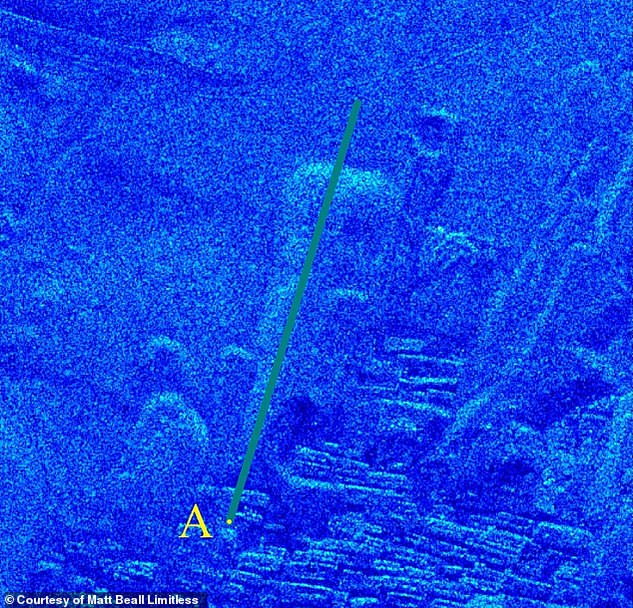
Preliminary scans captured a structure appear to mirror the Great Sphinx. Researchers believe a second sphinx is hiding below the sands not too far from the iconic structure
The Dream Stele, also known as the Sphinx Stele, was erected between the front paws of the Great Sphinx of Giza by Pharaoh Thutmose IV around 1401 BC, during Egypt’s 18th Dynasty.
The ancient inscription, like many created during the New Kingdom, was intended to reinforce the ruler’s divine right to the throne.
Legend has it that the stele justified Thutmose IV’s unexpected rise to power by recounting a dream where the Sphinx promised him the throne in exchange for restoring the monument, blending political propaganda with religious legitimacy and documenting early restoration efforts.
However, Biondi and his team believe there is more truth than myth behind the imagery, saying the carvings showing two sphinx figures may not have been symbolic at all, but instead a clue to the layout of the monuments themselves.
Biondi explained that when they traced a line from the center of the Khafre Pyramid to the existing Sphinx, the alignment created a precise geometric path across the plateau, forming what he described as a mirrored reference line used to identify the second location.
When that same alignment was mirrored from the center of the Great Pyramid, it pointed to another location on the opposite side, the exact spot where scans now suggest a second Sphinx may be buried beneath a mound of hardened sand.
Satellite images of the Giza plateau, which features the Great Pyramid of Khufu, the Pyramid of Khafre, the Pyramid of Menkaure and the Great Sphinx, revealed a mound on the surface, and Filippo believes it is above the second sphinx.
‘That small mountain has a height of approximately 108 feet,’ he explained. ‘The first Sphinx sits slightly below the surrounding surface, in a shallow depression, so it is possible the second Sphinx could be hidden beneath this higher mound.’
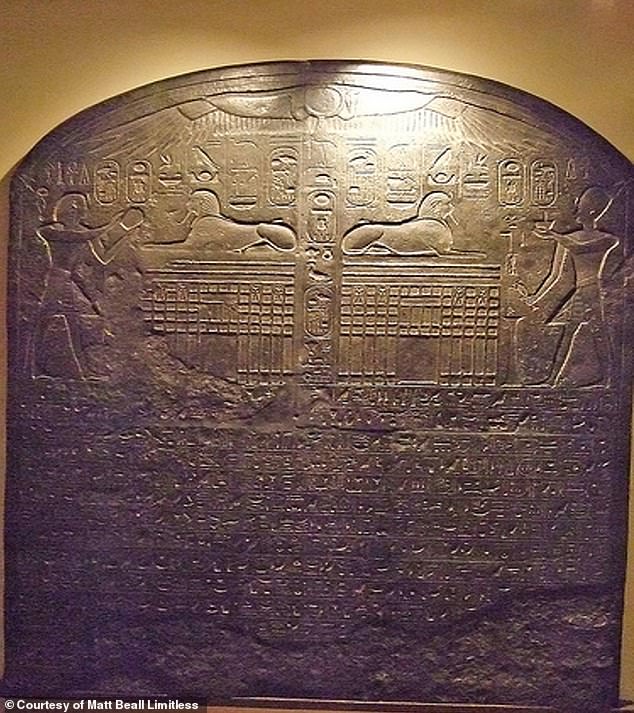
The team believes an ancient stele shows that there were two sphinx statues constructed in Egypt
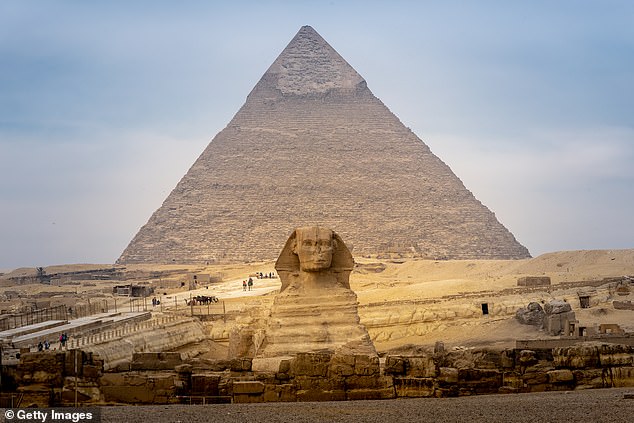
Scans of the original Sphinx also revealed a network of shafts and chambers beneath the monument, features he now believes are mirrored beneath the suspected second structure
He noted that researchers are still working to compare elevations between the known Sphinx and the mound to determine whether their heights align, including measuring how far each sits relative to the surrounding plateau surface.
‘We have to study this more carefully,’ he said. ‘It makes sense to compare the elevations, but we are still analyzing the data.’
Despite the remaining uncertainties, Biondi said the team believes the structure, if it exists, is likely buried beneath the mound rather than exposed above ground.
‘Probably the second Sphinx is under that small mountain,’ he said. ‘Because it is high, about 108 feet above the background.’
Biondi said scans of the original Sphinx also revealed a network of shafts and chambers beneath the monument, features he now believes are mirrored beneath the suspected second structure.
The scans captured shafts on the first Sphinx and shafts on the hypothetical second Sphinx, he explained, noting that the similarities between the two sites are becoming increasingly difficult to ignore.
Pictured is Filippo Biondi (left), who with his team, claimed to have uncovered a megastructure beneath the Giza Platue
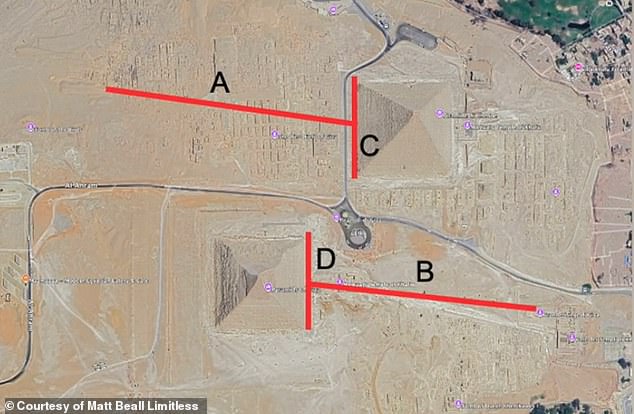
The scans identified the second sphinx where A is shown, sitting adjacent to the Great Sphinx shown as B
Biondi also said that preliminary images from the new scans show not only vertical shafts but also horizontal passages extending from deeper sections underground.
Scans of what the team calls the third, and lowest, shaft also revealed horizontal tunnels branching outward.
He added that researchers are now tracing those passageways, which appear to mirror similar horizontal routes previously identified beneath the first Sphinx, suggesting what he described as ‘incredible symmetry’ between both structures.
‘There is an incredible symmetry between the first and the second,’ Biondi added.
According to Biondi, the vertical features seen in the scans do not represent empty openings, but rather the dense outer walls of underground shafts.
Despite the dramatic implications, he emphasized that fieldwork remains essential before any definitive conclusions can be made.
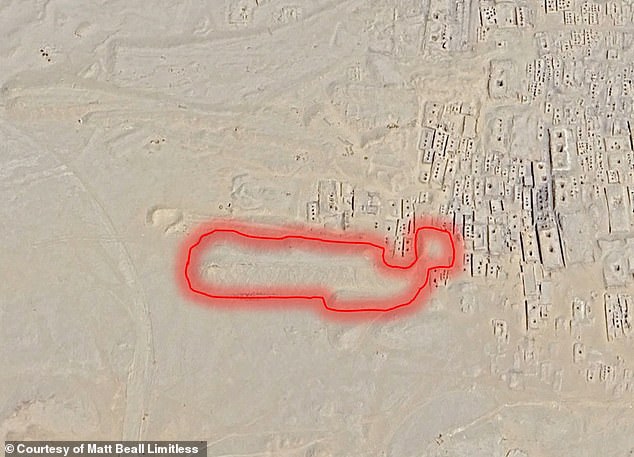
Pictured is the outline where the researchers believe the second sphinx is
‘For the second Sphinx, it is important to go in situ with geologists and carefully study the mound,’ Biondi said. ‘We are very confident that it is not bedrock…. the sand has been solidified.’
The team has already begun preparing formal plans to move forward if permission is granted.
‘We have located some special entrances where we can work in situ. It means that we have written a project proposal that can be submitted to the Egyptian authorities,’ said Biondi.
In this project proposal, we have specifically indicated that some shafts are visible, which are located between the first Sphinx and the Khafre pyramid.
He said researchers have identified two or three shafts in the area, including one particularly large shaft that appears to be blocked by debris, which he said was measured during field visits and appears to obstruct deeper access points, adding that clearing those blockages could be the key to unlocking what lies beneath.’
The debris, according to Biondi, can also be easily removed, allowing him and his team safe access to the underground structures below, potentially opening what he described as entrances into a larger underground network beneath the plateau.