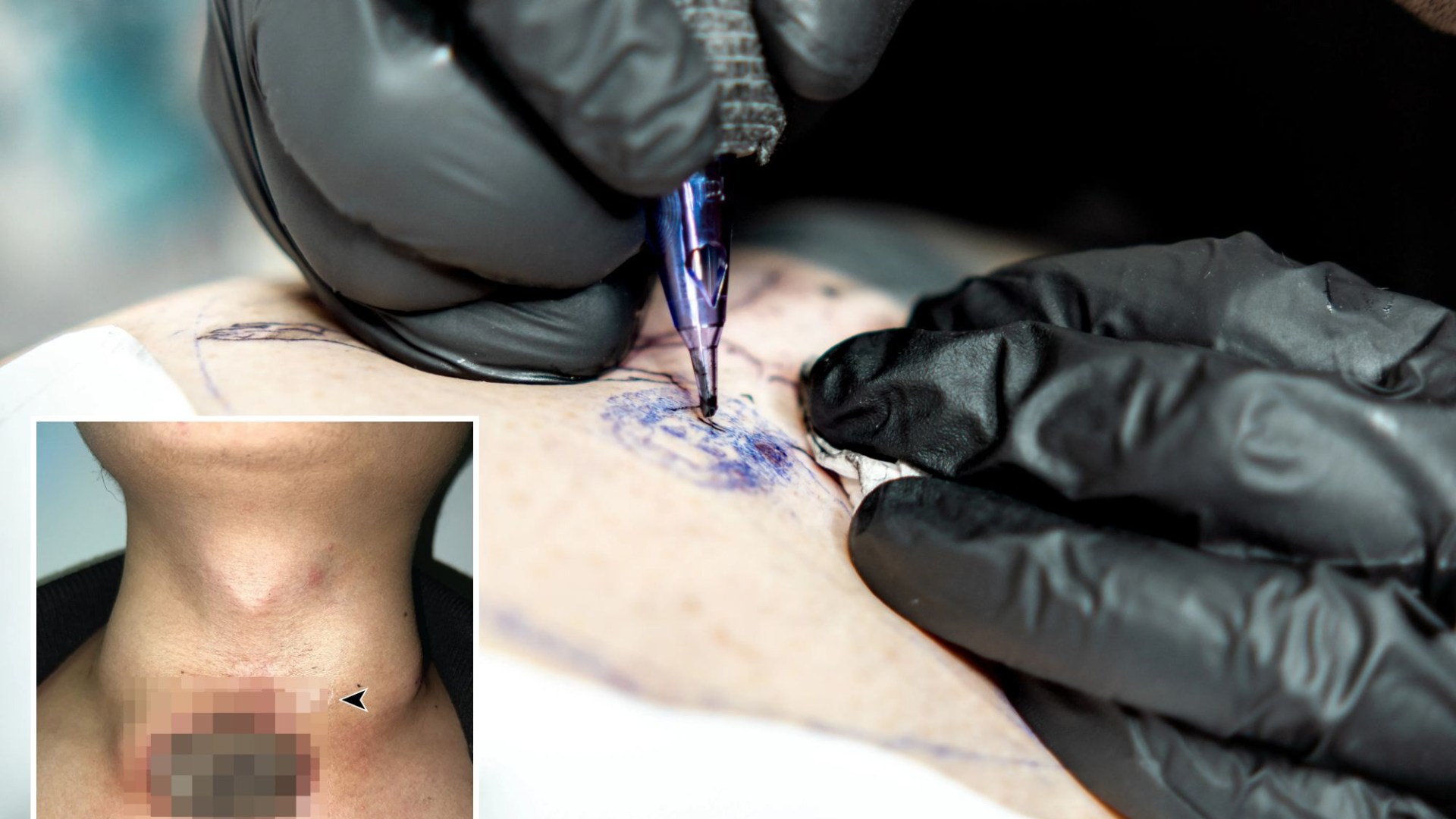
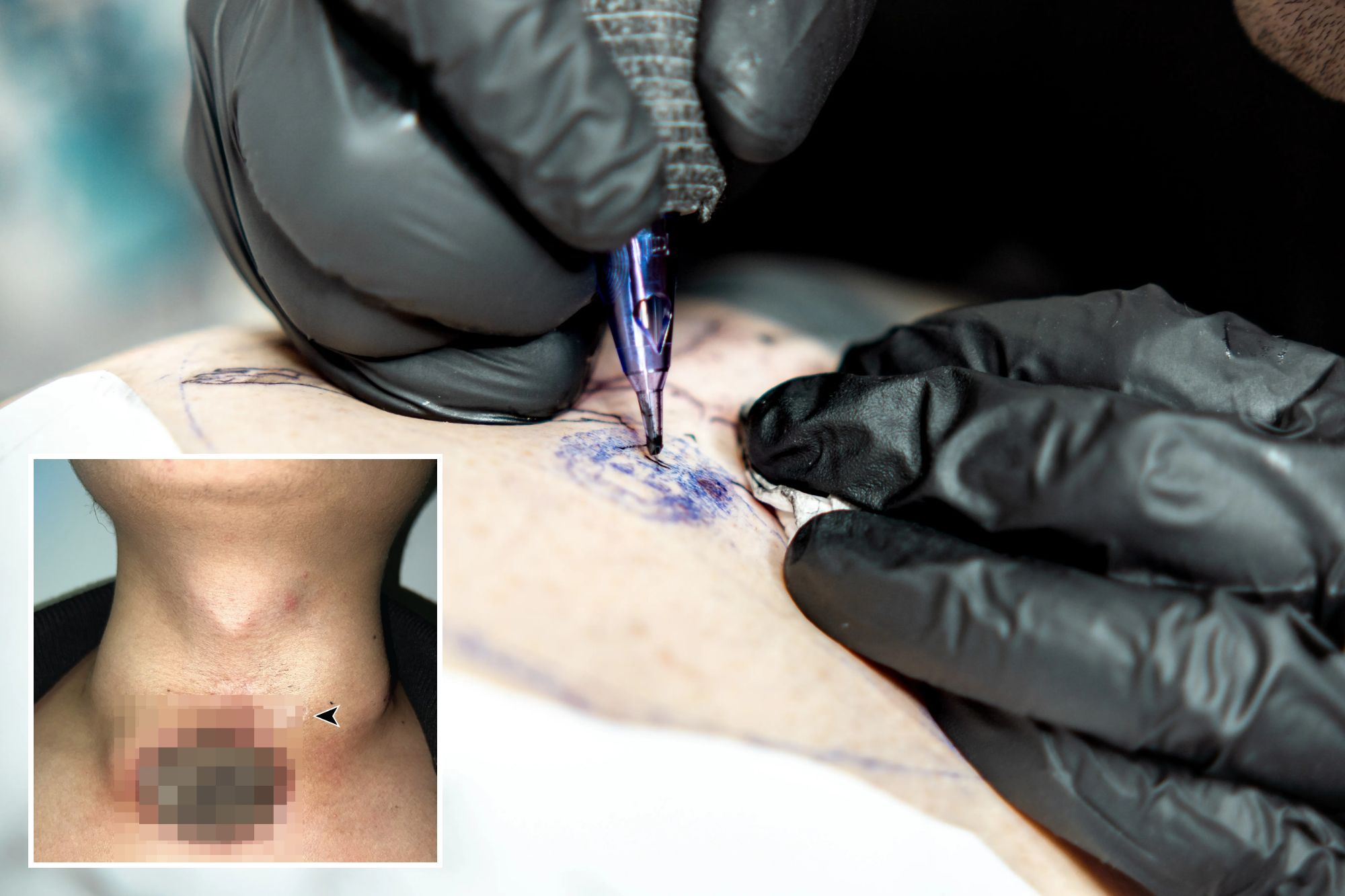
A MAN developed a black, weeping ulcer made up of dead flesh on his neck months after getting a tattoo, which mysteriously disappeared.
Doctors said the colour of tattoo ink may have been to blame, triggering inflammation that cause his skin to blacken and die.
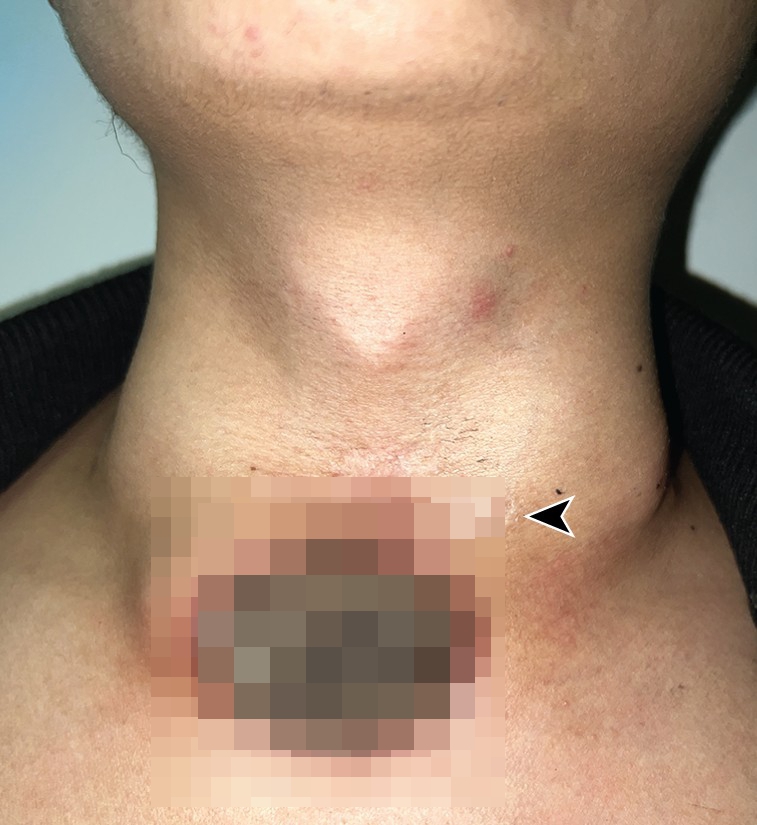
The unnamed 20-year-old man had a red cross tattooed at the base of his neck.
But three months later, the ink “spontaneously faded” – only to be replaced by indented scars where the tattoo had once been, bumps on either side of his neck and a weeping “necrotic ulcer”.
This is when tissue blackens and dies, causing a deep, painful wound.
He went to hospital five months after first getting inked.


Doctors examining him noted the lymph nodes – glands that help fight infections by trapping bacteria and bugs – in his neck were hard and swollen.
They also examined the large, crusted ulcer, which had spread across the base of his neck as well as into the deeper layers of his skin.
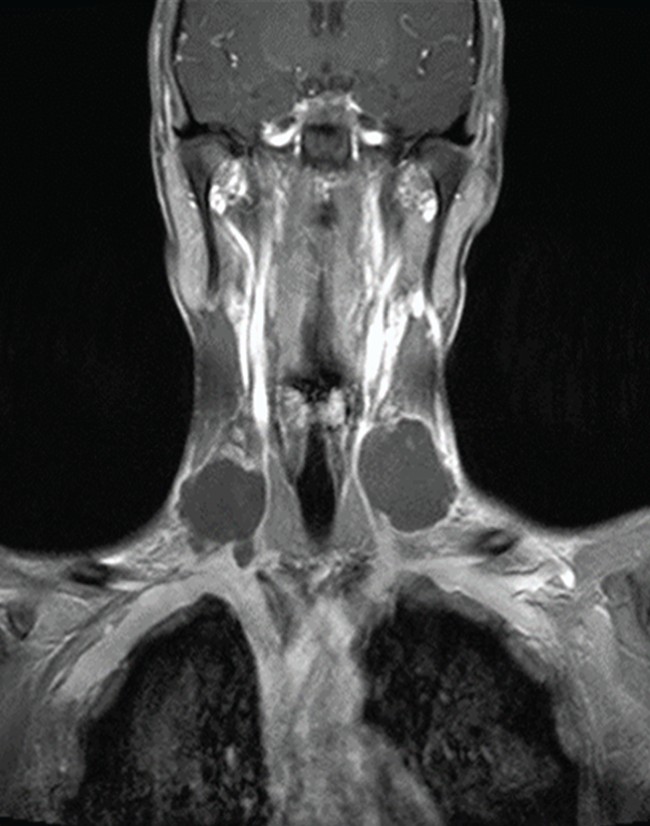
An MRI showed three large lumps around the ulcer, each measuring up to 5cm.
The patient also had two blood clots in his jugular vein.
The doctors took biopsies of the necrotic ulcer, which revealed a mix of dead cells, immune cells and scar tissue.
Though this didn’t reveal what had triggered the necrosis, the team was concerned by the scan results and how fast the man’s condition was progressing, so he was rushed into surgery.
Surgeons removed the patient’s ulcer as well as the masses on his neck.
They then reconstructed his neck using tissue from his thigh.
In their effort to find out what had caused the man’s seeping neck ulcer and lumps, doctors tested him for the Epstein Barr virus and tuberculosis – dubbed the ‘world’s most infectious disease’, which can affect the lungs as well as the skin.
But these tests all came back negative.
Eventually, the patient was diagnosed with necrotising granulomatous lymphadenitis.
This is an inflammatory condition where lymph node tissue dies and forms clumps of immune cells, called granulomas.
It can develop as a response to an injury.
In this case, doctors concluded it was the man’s tattoo.
Are tattoos harmful?
Tattoos can come with various risks – from allergic reactions to skin infections.
On the whole, they’e considered safe.
But a growing body of scientific evidence suggests the long-term health effects of tattoos may not be as harmless as once thought.
“Once tattoo ink enters the body, it does not stay put,” Dr Manal Mohammed, a medical microbiology lecturer from the University of Westminster, says.
“Beneath the skin, tattoo pigments interact with the immune system in ways scientists are only just beginning to understand.”
One issue is that tattoo inks are complex chemical mixtures.
“Some inks contain trace amounts of heavy metals, including nickel, chromium, cobalt and occasionally lead,” according to Dr Mohammed.
“Heavy metals can be toxic at certain levels and are well known for triggering allergic reactions and immune sensitivity.”
Black tattoo inks, commonly made from carbon black, may contain carcinogenic compounds linked to cancer, she explained.
“Whereas coloured inks, particularly red, yellow and orange, are more frequently associated with allergic reactions and chronic inflammation.”
Tattooing involves injecting ink deep into the dermis, the layer of skin beneath the surface.
“The body recognises pigment particles as foreign material,” the expert said.
“Immune cells attempt to remove them, but the particles are too large to be fully cleared.
“Instead, they become trapped inside skin cells, which is what makes tattoos permanent,” she added.
Recent research has also linked tattoos to a higher risk of cancer – with ink migrating to lymph nodes involved in immune response.
Read more on the risks of tattoos here.
They said heavy metals – such as mercury and cadmium – and red organic dyes in tattoo pigments can sometimes trigger a delayed immune response.
But since the ink had vanished from the man’s skin by the time they examined him and there were no traces in the tissue removed during surgery, they couldn’t examine whether this was the case for the 20-year-old patient.
The man made a full recovery from surgery, according to the report published in the journal JAMA Otolaryngology.
The doctors noted that this man’s case is only the second known case of necrosis following a tattoo.
In the other reported case, the patient suffered a rare inflammatory skin condition that causes the collagen in the skin to degrade.
Their patient’s necrotic ulcer was particularly aggressive, doctors noted, and it was unusual in how deep into the skin it had penetrated.
The doctors suggested three potential causes for the man’s severe necrosis.
One option was that the tattoo had triggered inflammation and an immune response, raising the risk of blood clots.
Otherwise, the enlarged lymph nodes on the sides of his neck may have compressed the jugular veins in his neck and slowed blood flow, causing tissue death.
Alternatively, chronic inflammation may have worn down the walls of his veins.