President Donald Trump continues to do his worst. He assures us that all will be well as he carelessly wreaks death, destruction, and chaos abroad.
His reckless Iran war is roiling the Middle East, devastating America’s Persian Gulf protectorates, empowering the radical Israeli government, distancing Washington’s European allies, draining Washington’s finances, wasting America’s military stocks, ravaging world energy markets, and threatening the global economy. It is an extraordinarily perverse achievement for a president who piously preens as a peacekeeper deserving of the Nobel Peace Prize.
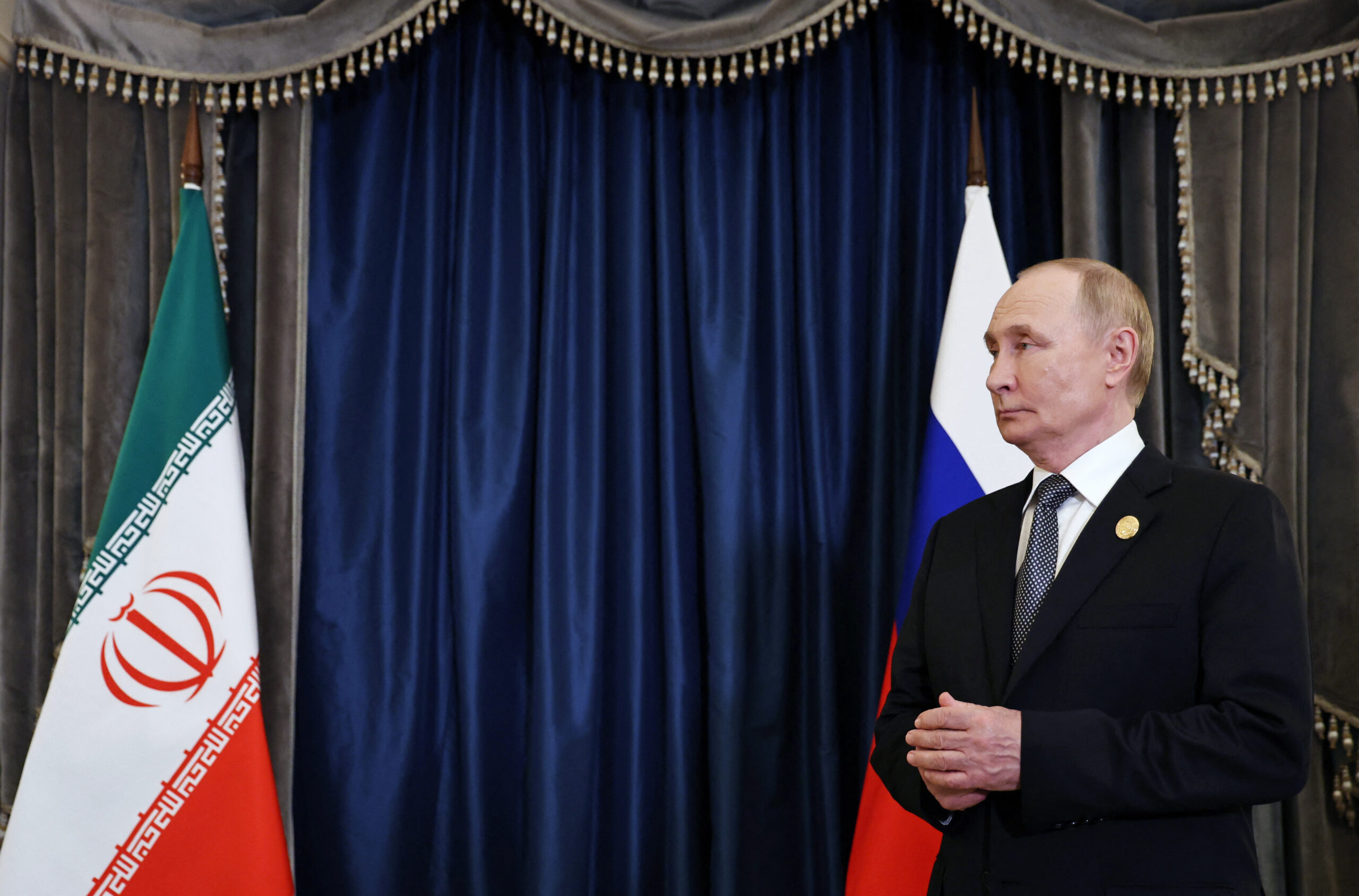
Trump’s best strategy would be a patented retreat portrayed as a grand, even historic triumph of epic proportions. Claimed conversations with Tehran, if true, offer hope of such a result, but the involvement of ignorant and partisan interlocutors such as Jared Kushner and Steve Witkoff remains a substantial barrier to progress. Peace in the Gulf would benefit virtually everyone on the planet, other than Benjamin Netanyahu, who seeks political survival through endless war, and Vladimir Putin, who enjoys increased oil revenues.
Despite widespread concern over the minatory Israeli state’s pursuit of regional hegemony, few U.S. officials are willing to confront Jerusalem. In contrast, those advancing the counterproductive, increasingly dangerous proxy war against Russia are ever ready to challenge Trump’s Moscow policy. They are particularly angry over reports that Russia has been aiding Iran in targeting American bases and forces in the Mideast. Administration critics demand that it do something, though exactly what is not clear.
In this, members of the Washington commentariat mimic distraught Europeans whining about Moscow’s presumed hostile clandestine activity in their nations. The assumption that “we” are entitled to do whatever we please, including wage war, both direct and proxy, without consequence, continues to dominate official policy on both continents.
The Europeans have been wailing about apparent Russian misbehavior for months. Last year the Associated Press detailed 145 incidents in a “sabotage campaign” by Moscow. The Center for European Policy Analysis charged that “Europe as a whole is under a sustained assault.” Explained Piotr Arak of the Atlantic Council:
[BLOCK]Russia has expanded the battlefield into the daily life of European societies. Moscow’s objective is clear: weaken Western unity by creating a constant sense of vulnerability, without crossing the threshold that would trigger a formal NATO response.[/BLOCK]
There is little reason to doubt the truth of such charges, though Europeans do appear to blame any otherwise unexplained and seemingly hostile incident on Russia. The most dramatic example was the almost universal rush to denounce Moscow for blowing up its own natural gas pipeline, a nonsensical claim later recognized as false. Similarly, Ukrainian President Volodymyr Zelensky blamed Russia for a deadly (and accidental) Ukrainian missile strike in Poland. Nevertheless, the only surprise would be if Russia abjured any hostile response against countries that have done so much to bolster Ukraine.
Although Moscow’s murderous aggression against the latter is unjustified, European governments invited Russian retaliation by joining the conflict via proxy. Last November, Polish Foreign Minister Radek Sikorski complained after one incident: “This time, it was not just sabotage, as before, but an act of state terrorism, as the clear intention was to cause human casualties.” However, the allies intend the same, only to kill Russians, as many as possible.
So does the U.S. Yet American officials and commentators are outraged that Moscow would stoop so low, helping another country to—cue manifold expressions of fury and outrage—kill U.S. military personnel. (Some have also claimed that Russia provided intelligence to the Yemeni Houthis targeting Western merchantmen and American warships in the Red Sea, and, less credibly, paid the Taliban to kill Americans in Afghanistan.) Such critics of Moscow are like Captain Renault, who famously discovered gambling occurring at Rick’s Café Américain in the movie Casablanca. Shocking! Shut the establishment!
Those demanding action offer few helpful suggestions, preferring, for instance, to call on the administration to “respond with clarity and resolve.” Meaning what, precisely? Perhaps provide financial and military support to Moscow’s adversary, even planning the latter’s battlefield operations. Oh, wait! That is what Washington has been doing for years. And doing so openly, making no attempt to hide its involvement. U.S. officials even took credit for killing Russian generals and sinking a Russian ship. Which is why, when asked about possible Russian support for Iran, the president said Putin “may be helping them a bit, yeah.” However, added Trump, “They do it, and we do it.”
Although Putin apparently denied the charge, some Russian officials reportedly offered to drop their aid for Iran if Washington did the same with Ukraine. Alas, the Trump administration said no. American sympathies understandably lie with the Ukrainian people. However, fundamental U.S. interests are against acting as a belligerent against a nuclear-armed power fighting a war that it views as existential. The president’s refusal to use his disastrous Mideast misadventure as an excuse for mutual proxy disarmament is tragically unwise.
Indeed, as Washington crashes world markets by fighting Israel’s war against Tehran, it is important to remember that the U.S. shares responsibility with the Islamic Republic of Iran for turning Washington and Tehran into enemies. Without question, the latter is a terrible, repressive, even murderous regime. However, the U.S. has routinely tolerated worse. For instance, Saudi Arabia is a murderous country which until recently exercised totalitarian social as well as political control. Yet Trump gloried in his decision to “save” Crown Prince Mohammed bin Salman after the latter had a critic—and American resident—murdered and dismembered.
Unfortunately, Washington has long treated the Iranian people as enemies. In 1953, the U.S. assisted a coup, destroying a functioning democracy and installing a rapacious, oppressive dictator—because the government nationalized British oil interests. In 1978, the Carter administration backed the tottering Iranian monarchy against a broad opposition movement, encouraging a brutal military crackdown. Reported the New York Times:
Subscribe Today
Get daily emails in your inbox
[BLOCK]Over lunch at the Knickerbocker Club in New York, Mr. Carter’s special envoy to Tehran, Gen. Robert E. Huyser, told the Project Eagle team that he had urged Iran’s top military leaders to kill as many demonstrators as necessary to keep the shah in power.[/BLOCK]
The following year Washington gave the deposed shah refuge, fueling Tehran’s fears that the U.S. would attempt to overthrow the new regime. The Reagan administration backed Iraqi President Saddam Hussein’s subsequent invasion of Iran, which triggered a horrendous eight-year war in which hundreds of thousands died. In 1988, the U.S. Navy, busy safeguarding Gulf oil shipments used to finance Baghdad’s war, shot down an Iranian airliner, killing all 290 people aboard. Since then, Washington has routinely threatened and regularly sanctioned Iran. Is it any surprise that the Iranian regime feels insecure and seeks to bolster its defense, including by preserving the possibility of creating a nuclear deterrent? Nevertheless, before Washington attacked, a diplomatic settlement was apparently close, only to be tossed aside by Trump.
Alas, actions have consequences. Even a superpower is not exempt from reality. Bluster and fantasy are no substitute for judgment and competence. After ending his misbegotten war with Iran, President Trump should drop the proxy war against Russia. If he really wants to win the Nobel Peace Prize, he should actually promote peace, starting with America.