This month, three democracy-tracking organizations released analyses of the state of political, press, and personal freedoms around the world. The title of one report, “The Growing Shadow of Autocracy,” sums up a shared view about backsliding on all these fronts. Yet the data and perspectives also reveal progress – especially in the enduring and widespread appeal of democratic ideals and values.
Looking back at 2025, the Sweden-based Variety of Democracies Institute, known as V-Dem, counts 44 countries worldwide that it says are “autocratizing,” including the United States. In particular for the U.S., V-Dem cites recent “attacks on the press, academia, civil liberties, and dissenting voices.”
On the other hand, the Dartmouth College-based Bright Line Watch finds that declining views of American democracy from earlier in 2025 have “largely stabilized,” and public opinion now shows “mild optimism.” The smooth rollout of state elections last November, as well as court rulings on immigration and tariff issues, appears to have reaffirmed for Americans that their system of checks and balances still works. Speaking on NPR, Bright Line Watch co-founder John Carey pointed to the key role of “government institutions that serve as referees.”
Such institutions can help stem a drift to autocracy in countries that Washington-based watchdog Freedom House defines as only “partly free.” The organization annually tracks 25 indicators of political rights and civil liberties – such as electoral processes and pluralism, freedom of expression, and rule of law. In 2025, these metrics deteriorated in 54 countries.
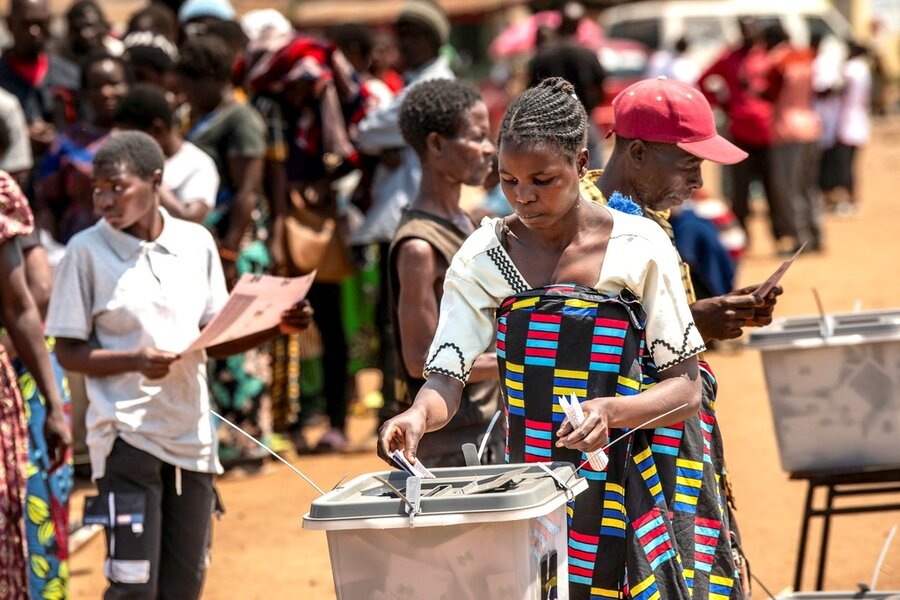
However, they trended upward in 35 others. Three examples are Bolivia, Fiji, and Malawi – among the world’s poorer or smaller nations. They each moved from “partly free” to “free” status. They did this through fair elections and the peaceful transfer of power, as well as steps to root out corruption and boost transparency and judicial independence. Gabon and Syria, both in the “not free” category, saw substantial improvement in scores as they began to loosen restrictions on basic rights after decades of authoritarian rule.
Freedom House makes a point of noting that more than 85% of the countries rated as “free” in 2005 still remain so, two decades later. As the organization’s CEO, Jamie Fly, and research director Yana Gorokhovskaia wrote in The Washington Post, “As more than 50 years’ worth of … data shows, the demand for freedom is universal and unwavering.
“Those who live under repression,” they stated, “require the sustained support of those of us who enjoy the blessings of liberty.”