Sitting in my quiet office with a colleague late one Friday afternoon in the secondary school where I teach, I was thinking ahead: discussing future staffing levels, planning for the next week.
So far, so professional.
Suddenly, my office door was flung wide and an open, freshly shaken can of cola thrown in, hitting the wall behind me and spraying the drink across me and the other teacher.
We dashed into the corridor just in time to see the backs of the perpetrators – two kids aged about 12 – disappearing round the corner. While we mopped ourselves down with paper towels, my colleague sighed wearily and said he’d put in a report in the hope CCTV will identify them.
We then went back to our meeting.
In any other workplace, a scene like this – two senior staff members calmly and resignedly mopping their shirts while discussing year-end budgets – would seem ludicrous.
But as any teacher in a modern comprehensive school, like ours in the Midlands, would tell you: this is an everyday occurrence.
The disruptions I face are so frequent that I barely batted an eyelid at this latest incident. In fact, it was far from the worst thing that happened to me that week. I also got told to f*** off several times and called a c***, a nonce and a paedophile – all by kids too young to buy a lottery ticket.
I suppose you could say it’s a different kind of roll call – ticking off the terms of abuse on my own mental bingo card throughout the day, as I try to work my way through the history curriculum I’m paid to teach.
The abuse isn’t limited to the verbal, either. Over the course of this term, I’ve been kicked on the back of my legs and shoved from behind in front of a class of 30 children – the other kids, to their credit, witnessed this in shocked silence, knowing their classmate had crossed a line.
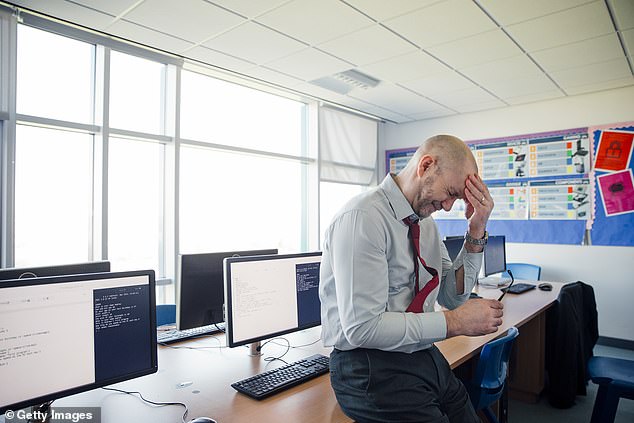
One evening after work it struck me how desensitised I’d become to the abuse I experience, and how it had started to seep into the rest of my life, writes Colin Stephenson
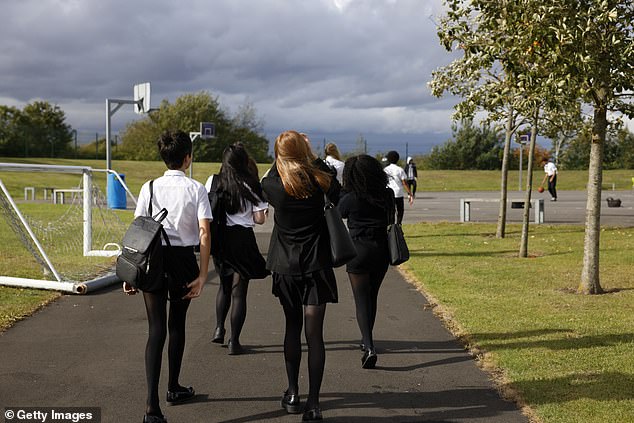
I’ve watched the educational landscape shift dramatically in the decade and a half since I qualified. The truth is, if a pupil decides they’re going to go wild, the system makes it incredibly hard to stop them unless they pose an immediate physical danger. Picture posed by models
I’ve even had to call in the police after three Year 10 pupils – aged 14 and 15 – were found under the influence of ketamine in a stairwell after failing to turn up for maths. The two boys and a girl were found spaced-out and disorientated.
You’re probably imagining that every one of those incidents led to severe punishment. That the pupils involved were swiftly removed, suspended for weeks and made examples of.
But here’s the reality: the boy who shoved me received a couple of days’ suspension; the girl who kicked me while I was trying to stop her attacking another pupil was given half a day.
The pupils who accused me of being a sex offender spent a few hours in internal exclusion. And the cola-throwing boys will most likely receive an internal sanction that will see them spend a day taught separately to their classmates.
As you can see, the consequences don’t match the offence. And don’t the pupils know it.
I’m not arguing for Victorian discipline or mass expulsions. But there has to be a middle ground between chaos and compassion. Where consequences are swift, meaningful and actually felt.
At the moment, too often, they’re neither. Until sanctions are meaningful, and backed up by parents, nothing will change.
Because a big part of the problem is that many pupils know there won’t be consequences at home either. I’ve had parents side with their child before even asking what happened, or treat a sanction as a personal attack on them.
Some children walk back into school knowing the adults in their life will challenge the teacher before they challenge their behaviour, and that removes the last layer of deterrent.
Recently, I dealt with a situation that summed this up perfectly. A pupil had crossed a clear line and had been suspended. Only her mother refused to come and collect her. Presumably she had other stuff going on that she deemed more important than dealing with her child.
So instead of going home, that pupil then spent the afternoon roaming the corridors, wandering into lessons, disrupting classes and swearing at staff.
At one point, she told a colleague of mine to f*** off, loudly, in front of younger pupils.
Of all these incidents, only the drug taking was vaguely close to unusual. The rest: par for the course. As much a part of a teacher’s day now as whiteboards and marking.
I’ve been teaching for almost 15 years, and am currently working as an assistant head of department. The school I work in is large and our intake straddles a range of socio-economic areas – a mix of children with parents on benefits as well as those with more middle-class backgrounds. And, in common with most schools these days, an ever-growing Special Educational Needs (SEN) intake, but without enough ancillary staff to provide the support those students need.
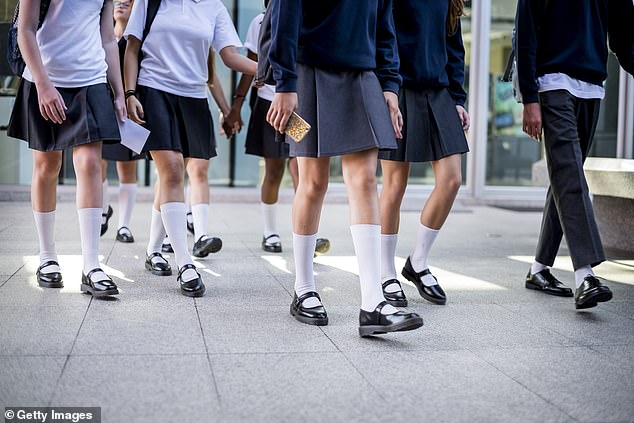
Phones aren’t banned in my school, so their use has to be constantly policed by staff
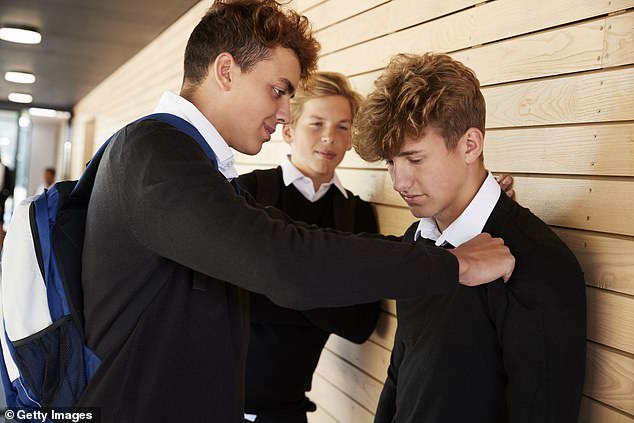
Social deprivation, family stress, mental health issues – the impact all this has on the kids gets brought into school each morning, writes Colin Stephenson. Picture posed by models
Needless to say, I’ve watched the educational landscape shift dramatically in the decade and a half since I qualified.
The truth is, if a pupil decides they’re going to go wild, the system makes it incredibly hard to stop them unless they pose an immediate physical danger.
We can’t simply remove them without parental cooperation and we can’t physically intervene unless strict thresholds are met. You have to tread incredibly carefully, and many pupils know that.
Add social media bravado into the mix – which can turn misbehaviour into a performance for your peers – and you get a situation where there’s very little fear of discipline. It isn’t quite Lord of the Flies, but there are moments when it feels horribly close.
Speak to colleagues and you’ll hear variations on the same themes: chairs thrown across rooms, pupils live-streaming lessons on Snapchat, teachers filmed without consent, parents turning up at reception demanding apologies for sanctions their children have earned, Year 7s – that’s 11 year olds! – vaping in the toilets when they should be in class, staff accused of bullying for confiscating a mobile phone, and colleagues – male and female – reduced to tears after being sworn at in corridors.
None of it makes headlines, but it all eats away at your resilience.
Phones aren’t banned in my school, so their use has to be constantly policed by staff. I honestly wish the Government would just introduce a national ban so it becomes the norm everywhere, not another daily battle we’re expected to manage.
Funding, too, of course, has played a part. Budgets have been tightened year after year, pastoral teams have been stretched ever-thinner, while the communities schools serve have become more pressured.
Social deprivation, family stress, mental health issues – the impact all this has on the kids gets brought into school each morning.
Teaching history means I should be trying to spark curiosity about the past while managing the present. But my role now is as much about behaviour, safeguarding and firefighting disciplinary problems as it is about getting teenagers engaged with the French Revolution or the Cold War.
Most secondary schools now are saturated with CCTV – cameras in corridors, stairwells, entrances. It protects pupils, of course, but increasingly it protects staff.
When an allegation is made, footage gets pulled – it has become almost as necessary in a school as body cameras are in policing. That’s a profound shift even from 15 years ago. The idea that teachers regularly review CCTV footage as evidence in what are effectively workplace investigations would once have seemed extraordinary. Now it’s normal.
Of course, it’s human instinct when faced with such misbehaviour to ask these kids who the hell they think they’re talking to when they are rude or aggressive.
But with time, older teachers like me develop a kind of armour – learning which battles to pick and how to keep your voice level and non-reactive.
New recruits haven’t learnt how to do that yet. And no amount of training can prepare them for the abuse they face.
For younger female teachers, it can be even harder. I’ve mentored early-career teachers in their early 20s facing down 15- and 16-year-old boys who are physically bigger than them and know it.
The comments can edge into the sexual, the tone deliberately intimidating. Even when nothing overt happens, the imbalance in size and confidence can feel threatening.
Little wonder, then, that talented younger teachers I’ve mentored have left for private schools or for jobs abroad.
Others have moved into corporate training or education consultancy. A couple simply walked away from teaching altogether.
Most were exceptional in the classroom; they certainly didn’t leave because they couldn’t teach. They quit because they didn’t have the stomach for what gets in the way of actually doing that.
And unless the behaviour of pupils changes, soon we won’t have any experienced teachers – because no one will stay long enough to become so.
Indeed, a recent report by the charity Education Support found nearly one in three teachers in UK secondary schools considered leaving the education sector last year due to pressures on their mental health and wellbeing.
I nearly walked away myself. Ironically, considering some of the more dramatic abuse I’ve faced, the incident that tipped me over the edge was relatively undramatic.
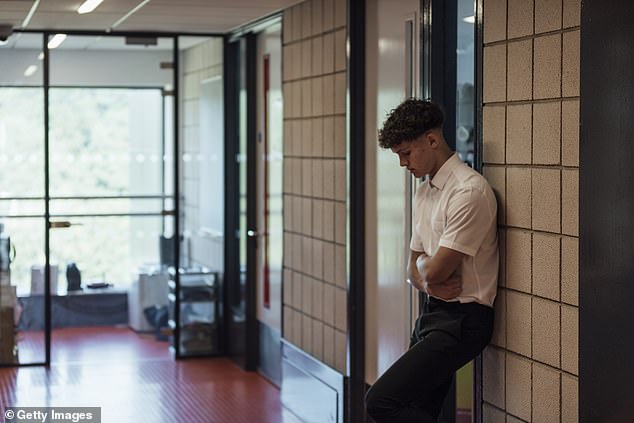
Pupils are commonly given a few hours in internal exclusion or made to spend a day taught separately to their classmates. Punishments rarely match the offence… and the pupils know it. Picture posed by model
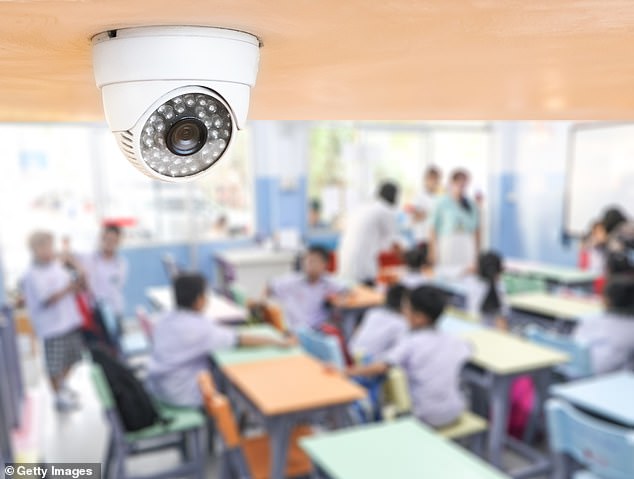
Most secondary schools now are saturated with CCTV – cameras in corridors, stairwells, entrances. It protects pupils, of course, but increasingly it protects staff
In late spring last year, having covered for a colleague, I was standing in the classroom doorway after my students had left, unaware one still needed to get out.
This Year 10 pupil barged into me as she forced her way past. I had one hand on the doorframe as she pushed forward; stepping back I told her to be more careful.
Later that afternoon, I was told she had gone to her next lesson and alleged that I’d yelled at her, then pinned her against the classroom wall having grabbed her by the arm.
This girl had a history of defiance and had already been involved in several behaviour incidents that year. But the accusation was serious and it was treated as such, which was, of course, only right.
There weren’t any witnesses. Statements were taken and CCTV was pulled while I was instructed not to discuss it with colleagues while it was investigated.
For the next couple of days, I walked into work unsure how this would end, replaying that moment in the doorway in my head each night.
Where exactly had my hands been? Had my arm risen higher than I remembered? Could the movement have looked different from the angle of the camera?
As a male teacher, you are constantly aware of physical boundaries, and so you always position yourself carefully, especially around female students.
The footage showed I had done nothing wrong. The allegation was dismissed and the pupil received a five-day suspension as well as being required to write me a formal letter of apology.
I still don’t know why she did it – she must have had some sort of grudge against me – and my relief at being exonerated was tempered by the knowledge that this student had wanted to destroy both my reputation and my career.
What unsettled me most was not just that she made the accusation, but how confidently it was framed. Pupils today are increasingly savvy. They understand language around safeguarding, boundaries and misconduct.
Most of the time that awareness is a good thing. But occasionally it can be weaponised. They know how an allegation triggers formal procedure.
Not long after this, one afternoon I intercepted a group who had skipped lessons and were messing around near the stairwell. When I told them they needed to get to their classrooms one boy stepped closer, held my eye and said, performatively: ‘Are you going to make us? You can’t touch us. You’ll get done.’
It was the confidence behind that assertion that got to me. The certainty that he understood the system well enough to use it as a shield against authority.
I kept my tone steady, told him to move, and gave him a clear instruction without raising my voice. I made a mental note of the witnesses, logged it later and passed it up the chain, exactly as procedure demands. Outwardly, it was handled.
That evening I was sitting at the kitchen table while my wife, who’s a dentist, was finishing her notes from her clinic. She looked up at me and said: ‘If I got treated the way you do at work, the police would be involved.’
It struck me then how desensitised I’d become to the abuse I experience, and how quietly it had started to seep into the rest of my life.
I could still function – I was planning lessons, marking books and turning up for work on time. But I was coming home tight-jawed, distracted and irritable. I didn’t feel like me.
So I took five weeks off with stress. There was no dramatic collapse, I simply realised I didn’t like what the job was turning me into outside the classroom – and I needed to take some time out, before those changes became permanent.
So why did I come back?
I didn’t return because things had dramatically improved… as you can see from how last week played out, they’re as bad as ever.
I went back because, despite everything, I still care about my work.
Teaching, when you get to actually do it, is the best job in the world. During a good lesson, for 50 minutes – despite the usual low-level interruptions – you feel an amazing connection with the kids.
And there’s a camaraderie with colleagues. Schools run on a kind of dark humour that means you can walk into the staffroom after a grim lesson and someone will just make a joke that lightens you.
I work alongside people who are sharper, more resilient and more committed than anyone I’ve met in other professions, and I’m proud of us for continuing to come back for more.
But none of that changes the fact that no one should be called a c*** at work. No one should have to brace themselves before walking a corridor in case a routine interaction is twisted into something career-ending.
When teaching works – when the room settles and you realise something you said three months ago has stuck – it is deeply satisfying in a way that’s hard to replicate elsewhere.
That’s why I went back. Because beneath the dysfunction, the core of the job still matters deeply to me.
Even if at times it feels like I don’t matter one bit – to the pupils who disrespect me, the parents who don’t back me, or the system which doesn’t appreciate the toll the job takes on me, and endless teachers just like me.
Colin Stephenson is a pseudonym. As told to Rachel Halliwell